
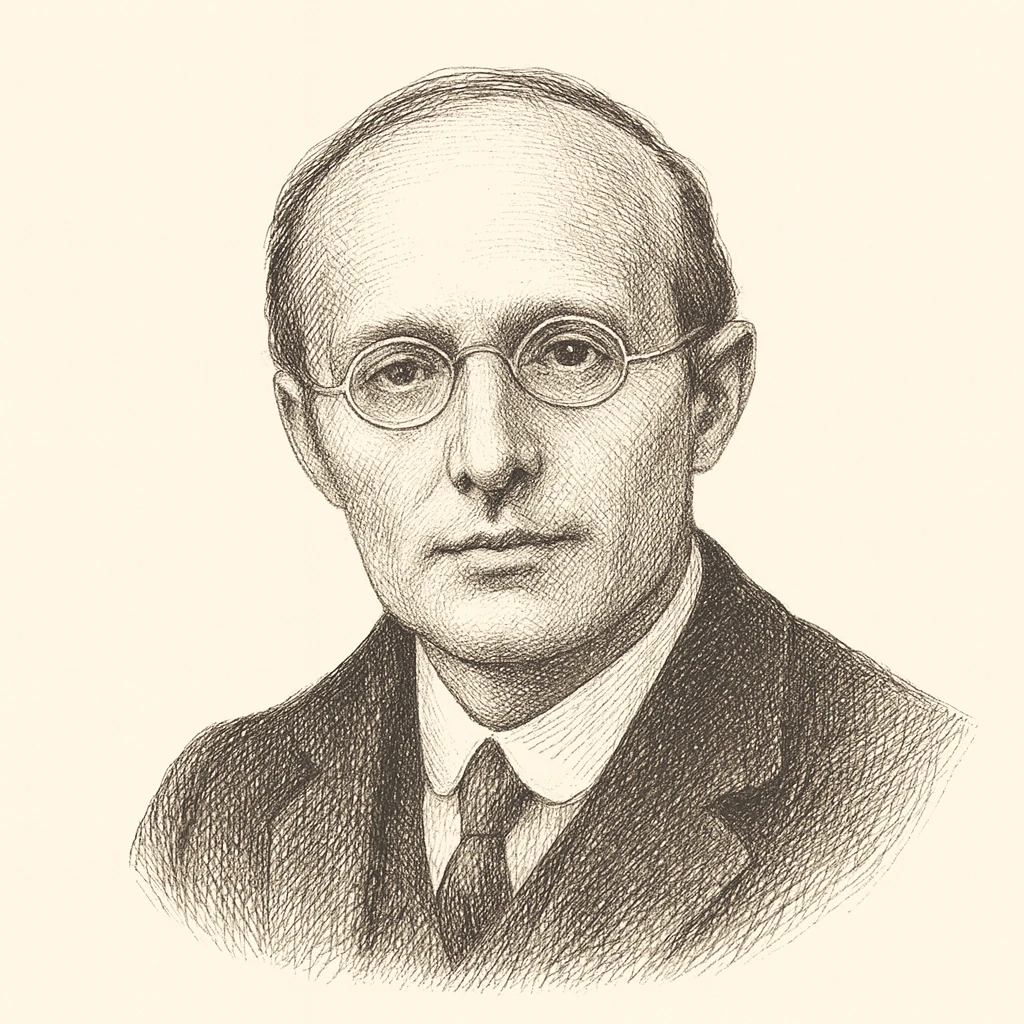
Karl Polanyi was a Hungarian economic historian, journalist, and social theorist whose work reshaped how the left understands the relationship between markets and society. Born in 1886 and raised in Budapest's intellectually vibrant assimilated Jewish milieu, he was active in progressive circles before the First World War, later worked as an economic journalist in Vienna during the interwar years, and emigrated as fascism advanced, eventually teaching and writing in Britain and North America. His signature book, The Great Transformation, published in 1944, remains the anchor of his reputation.
Polanyi's central argument is that the nineteenth-century project of a self-regulating market was not a natural or spontaneous order but a deliberate political construction — and an unsustainable one. Markets, he held, had always been embedded in social relations and institutions; the attempt to disembed them and to treat land, labor, and money as ordinary commodities (his "fictitious commodities") threatened to grind up human beings and nature in the process. Against this he described a "double movement": as market forces expand, society spontaneously generates protective countermovements — factory laws, trade unions, social insurance, tariffs, and other regulations — to shield itself from dislocation. Economic liberalism and social protection thus advance in tension.
This framework gave the democratic-socialist tradition an alternative to both laissez-faire economics and orthodox Marxist determinism. Polanyi located the roots of the crises of his age — depression, fascism, and war — in the strains of the failed attempt to subordinate society to the market. He drew on economic anthropology and history to insist that reciprocity, redistribution, and householding, not exchange alone, had organized most human economies, denaturalizing the assumption that market rationality is universal.
Polanyi's influence grew posthumously, particularly among economic sociologists, heterodox economists, and critics of neoliberal globalization, for whom the concepts of embeddedness and the double movement became touchstones. His work is read as a warning that leaving markets unchecked invites social breakdown and authoritarian reaction. Morris Silver argued in the Journal of Economic History (1983) that the market functions Polanyi said archaic economies lacked were all present in the ancient Near East, but Polanyi's reframing of the market as a political and moral question, not merely a technical one, endures.
Karl Polanyi is associated with Democratic Socialist. See the archetype