
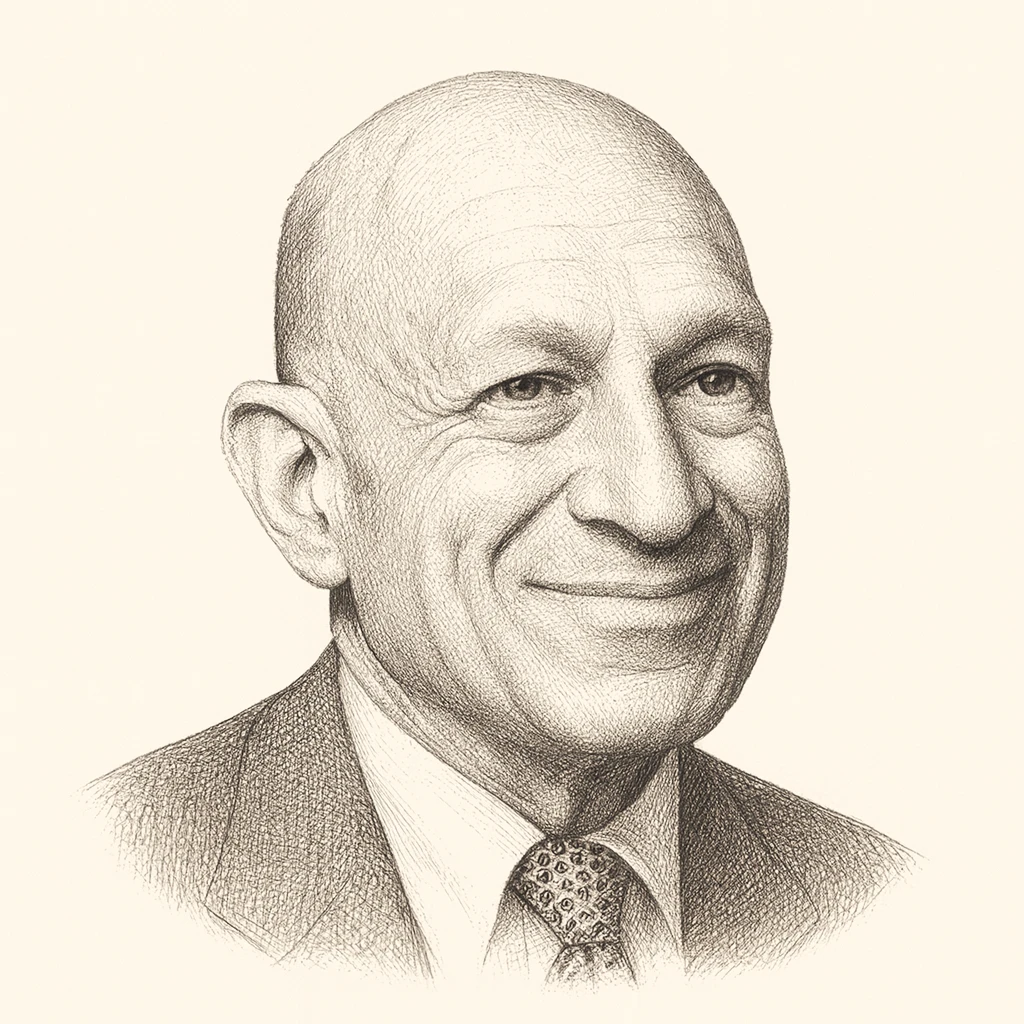
Julian Simon (1932–1998) was an American economist best known for challenging prevailing assumptions about population growth, natural resources, and environmental limits. Working largely against the grain of the neo-Malthusian consensus that gained prominence in the 1960s and 1970s, Simon argued that human beings are not merely consumers who deplete finite resources but producers of knowledge, innovation, and adaptation. His central claim—that human creativity is the "ultimate resource"—held that a growing population, far from being a catastrophe, expands the pool of problem-solvers and thereby tends to make resources more abundant and cheaper over time.
This argument placed Simon in direct opposition to the influential environmental pessimism associated with figures like Paul Ehrlich, whose warnings about overpopulation and imminent scarcity shaped much of the era's policy discourse. Simon is widely remembered for a public wager with Ehrlich over whether the prices of a basket of metals would rise or fall over a decade; the prices fell, and Simon won, an outcome frequently cited as evidence for his thesis that market incentives and technological progress counteract resource depletion. His work drew on price signals and long-run empirical trends to argue that measures of scarcity had generally improved rather than worsened.
Politically, Simon's ideas became foundational to free-market and libertarian-leaning thought on environmental and demographic questions. He was skeptical of centralized population control and of pessimistic environmental forecasts that, in his view, justified expansive government intervention. His arguments have been embraced by advocates of economic growth, market solutions, and technological optimism, and cited in debates over immigration, energy, and climate policy. Critics counter that his framework understates ecological thresholds and the risks of irreversible environmental damage, and that winning a short-run commodity bet does not settle long-run sustainability questions.
Simon's enduring influence lies in his reframing of scarcity as a problem that human ingenuity and functioning markets tend to solve, rather than a fixed constraint. Whether celebrated as a corrective to alarmism or challenged as excessively sanguine, his work remains a touchstone in the ongoing political contest between growth-oriented optimism and precautionary environmentalism.
Julian Simon is associated with Techno-Progressive. See the archetype