
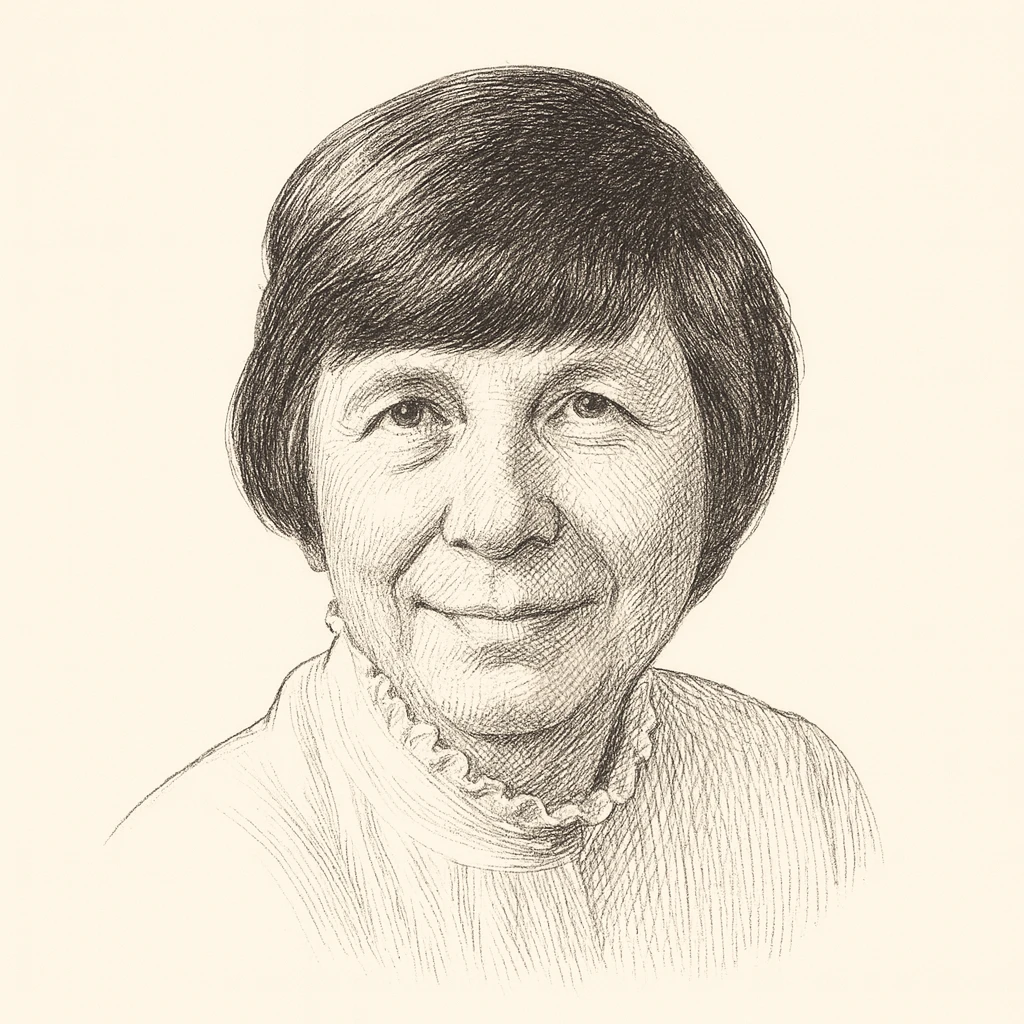
Judith Shklar (1928–1992) was a political theorist who spent most of her career at Harvard University, where she became one of the most influential thinkers in postwar liberal political philosophy. Born in Riga, Latvia, into a Jewish family that fled the twin threats of Nazism and Stalinism, her early experience of exile and displacement deeply informed her later preoccupation with fear, cruelty, and the vulnerability of ordinary people to abuses of power. She was among the first women to hold a senior position in Harvard's government department, and she trained a generation of political theorists.
Shklar is best known for articulating what she called the "liberalism of fear." Rather than founding liberalism on a positive vision of human flourishing, natural rights, or a comprehensive moral doctrine, she argued that liberalism should begin from a negative starting point: the avoidance of cruelty and the systematic prevention of the worst that human beings do to one another. In her account, cruelty—the deliberate infliction of physical and emotional pain—is "the summum malum," the first among vices, and the constant reality of fear that cruelty produces is what a decent political order must guard against. This made her liberalism minimalist and hard-headed rather than utopian: its aim was to secure a space of dignity and safety by limiting concentrations of power and protecting individuals from official terror.
Her thought drew on a close, often skeptical reading of the political and moral traditions, and she wrote extensively on figures such as Montesquieu and Rousseau, as well as on the passions and vices that shape political life, including studies of injustice, hypocrisy, betrayal, and the felt experience of being wronged. She insisted that political theory attend to the perspective of victims and to ordinary sense of injustice rather than only to tidy philosophical definitions of justice.
Shklar's influence has been substantial and enduring. Her emphasis on cruelty, fear, and the abuse of power offered an alternative to both rights-based and welfare-based liberal traditions, and it shaped the work of later thinkers, including her students, who developed themes of judgment, memory, and the moral seriousness of politics. Her insistence that liberalism take evil and suffering seriously, without lapsing into grand metaphysical claims, remains a touchstone for debates about the foundations and purposes of liberal politics.
Judith Shklar is associated with Moderate Liberal. See the archetype