
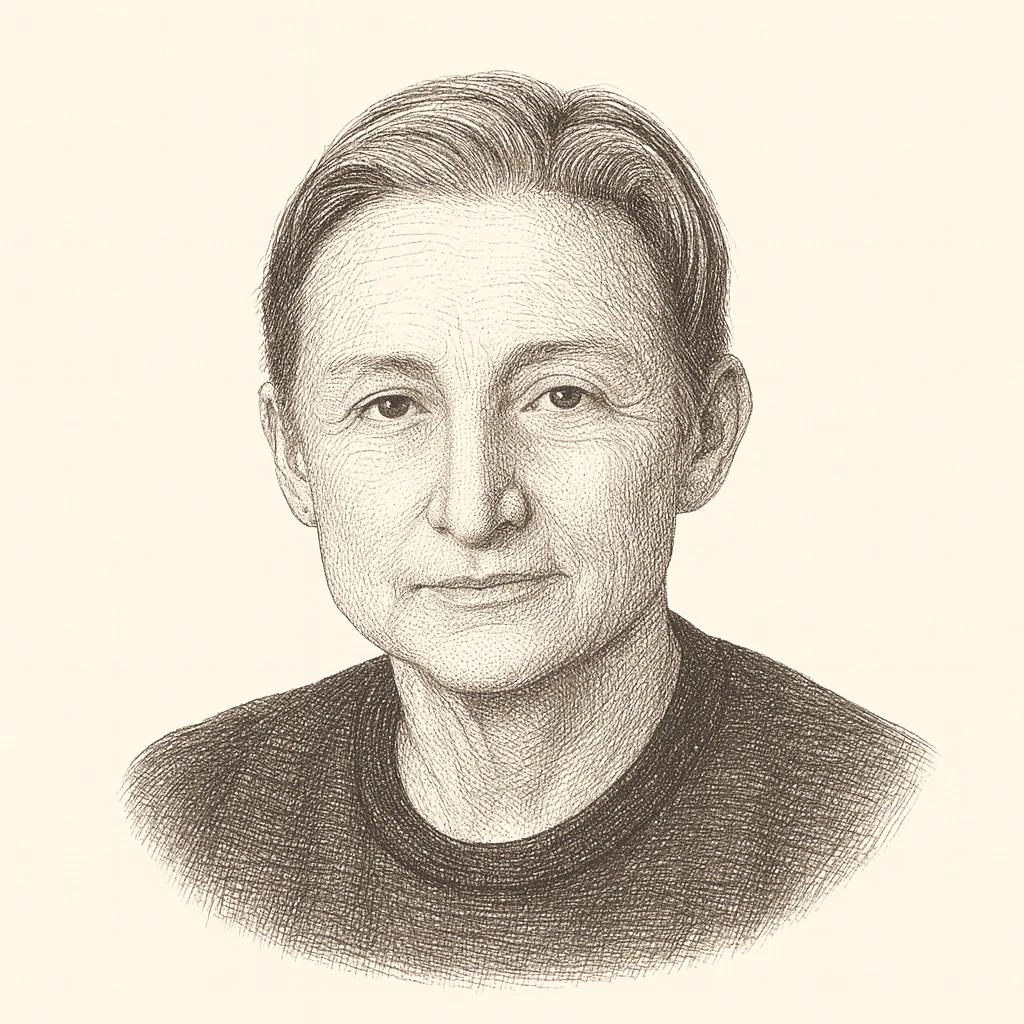
Judith Butler is an American philosopher and gender theorist whose work has become foundational to contemporary feminist and queer political thought. Trained in continental philosophy and drawing on figures such as Hegel, Foucault, and Derrida, Butler is best known for the argument that gender is not an inner essence but a performative accomplishment—produced through repeated social acts, gestures, and norms rather than expressing a stable prior identity. This claim, developed most influentially in Gender Trouble, challenged the assumption that feminist politics required a unified category of "women," and reframed the boundaries of sex and gender as effects of regulatory power rather than natural givens.
Politically, Butler's thought has supplied a vocabulary for movements that contest fixed identity categories and insist that norms governing bodies and desire are contingent and open to subversion. The idea that identities are constructed and can be reworked has shaped LGBTQ organizing, feminist theory, and broader debates about recognition and inclusion. In later work Butler turned toward questions of precariousness, mourning, and vulnerability—arguing that shared exposure to loss and dependency can ground an ethics and politics of solidarity—and engaged with nonviolence, state violence, and the conditions under which some lives are recognized as grievable and others are not.
Butler has also been a public intellectual on contested terrain, notably in criticism of Israeli state policy and advocacy of certain forms of political solidarity, positions that have drawn both support and sharp opposition. Their writing is frequently criticized for its density and abstraction, and the concept of performativity has been widely misread as claiming gender is merely a voluntary choice—a reading Butler has repeatedly rejected, stressing that norms are coercive and not simply optional. Critics from various directions dispute the political usefulness of anti-foundationalist theory, while admirers see it as essential to loosening the grip of naturalized hierarchies.
Across these debates, Butler's enduring influence lies in the insistence that categories treated as natural—gender chief among them—are historically produced and therefore politically changeable, a premise that continues to animate progressive and emancipatory movements.
Judith Butler is associated with Progressive Activist. See the archetype