
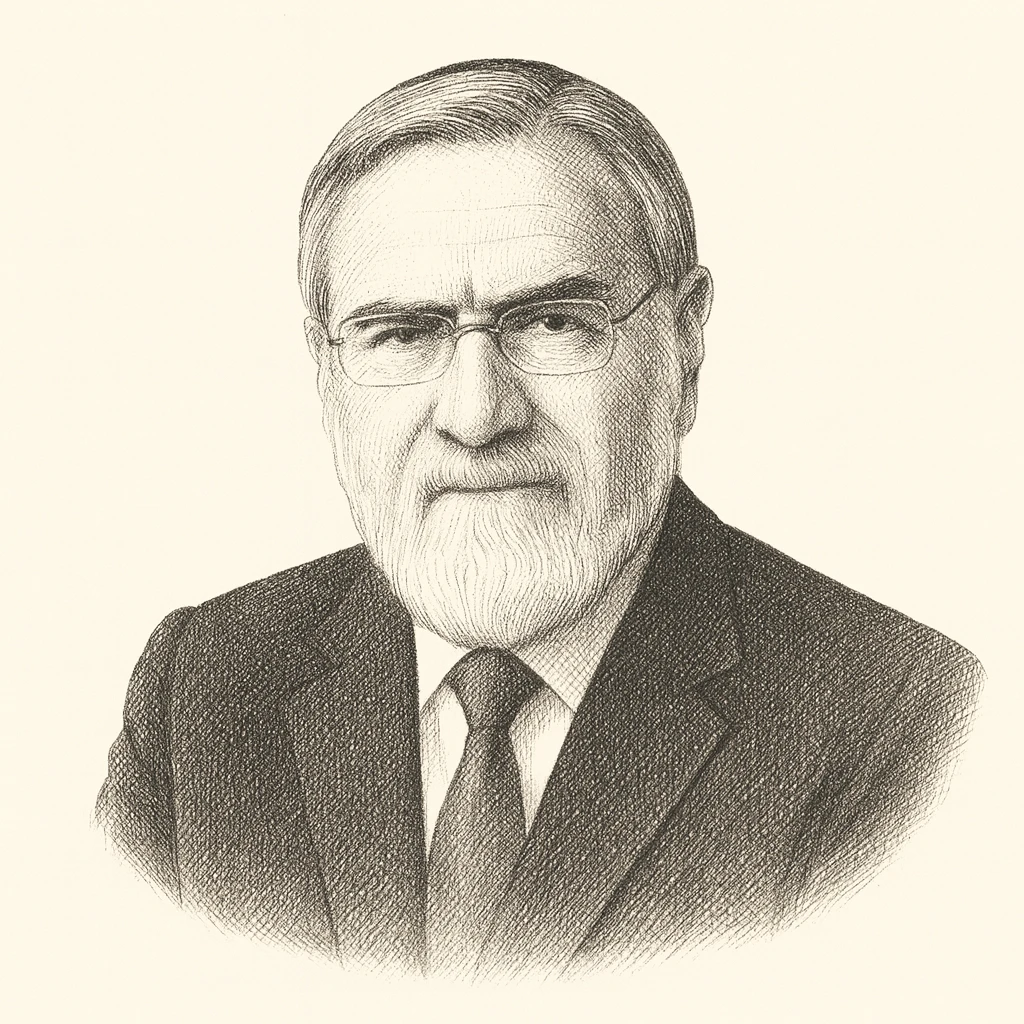
Jonathan Sacks served as Chief Rabbi of the United Hebrew Congregations of the Commonwealth from 1991 to 2013, but his political significance lay in his role as a public philosopher who addressed a broad, secular audience about the moral foundations of Western liberal societies. Trained in philosophy at Cambridge before entering the rabbinate, he became one of the most widely read religious voices in British public life, appearing regularly on broadcast media and writing prolifically for general readers. His central concern was the fate of the moral and social bonds that he believed a market economy and a liberal democracy quietly presuppose but cannot replenish by themselves.
Sacks argued that free markets and free institutions rely on habits of trust, responsibility, and self-restraint that are cultivated by families, communities, and religious traditions rather than by the state or the market. In works such as The Dignity of Difference, he made the case that religious diversity need not lead to relativism or conflict, contending instead that particular traditions can hold their own truths while recognizing the dignity of others. In his later book Morality, he warned that a shift from a shared "we" toward an atomized "I" had hollowed out the covenantal bonds on which liberty depends, leaving individuals freer but lonelier and more anxious.
His thought drew on the distinction between contract and covenant: a contract is a transactional exchange of interests, while a covenant is a binding moral relationship that creates a shared community of obligation. He held that politics and economics operate largely by contract, but that a healthy society needs the covenantal dimension supplied by religion and civil association. This framing made him a natural reference point for religious conservatives, communitarians, and critics of unfettered individualism, though he generally avoided partisan alignment and emphasized responsibility, hope, and the value of tradition over any specific policy program.
Sacks's influence extended across religious and political lines, and he was cited by figures ranging from communitarian thinkers to market-friendly conservatives seeking a moral vocabulary for capitalism. His work is best understood not as a party platform but as a sustained argument that liberty, prosperity, and pluralism are sustainable only when anchored in shared moral commitments.
Jonathan Sacks is associated with Religious Conservative. See the archetype