
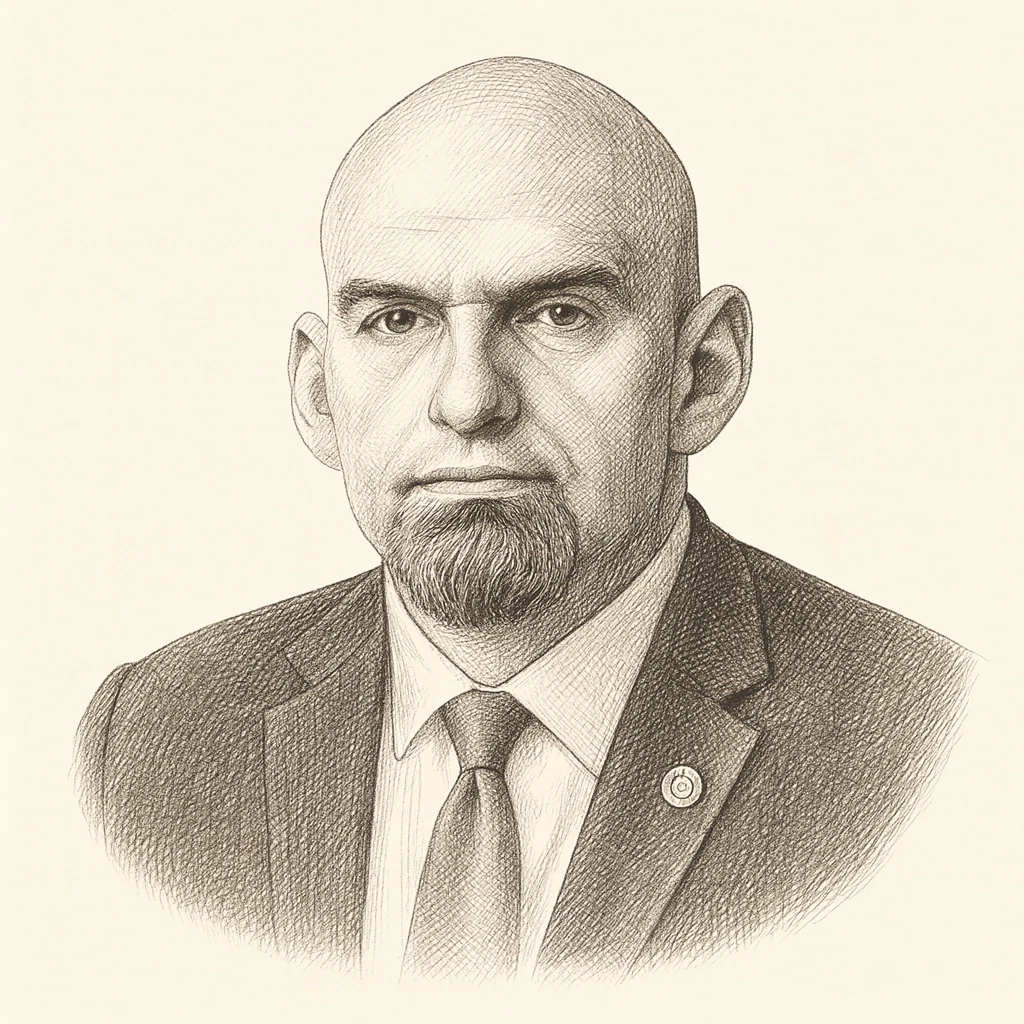
John Fetterman rose to national prominence as a figure who tried to fuse economic populism with an unpolished, working-class political persona. As mayor of the struggling steel town of Braddock and later as lieutenant governor of Pennsylvania, he cultivated an image at odds with conventional political presentation—tattoos, hoodies, and gym shorts—which he treated not as mere style but as an argument about authenticity and about which Americans the Democratic Party should represent. His early political identity leaned progressive, emphasizing revitalization of deindustrialized communities, criminal justice reform, and a skepticism of elite gatekeeping.
As a senator elected in 2022, Fetterman came to embody a strand of Democratic thought that prizes plainspoken appeal to working-class voters over ideological consistency. He has resisted being defined by the progressive label, arguing that his positions reflect common sense rather than a fixed doctrine. This has led him to stake out heterodox stances, most notably a strongly supportive posture toward Israel that placed him at odds with much of the party's left, and a hawkish view on border security and immigration enforcement that broke with many Democratic colleagues. He has framed these positions as consistent with a pragmatic, non-purist politics rather than as a rightward conversion.
His significance in political thought lies less in any systematic body of ideas than in what he represents: the contested question of how a center-left party should relate to the working-class and non-college electorate it has increasingly lost. Fetterman's trajectory has become a reference point in debates over realignment, over the tension between activist-driven orthodoxy and broad electoral coalitions, and over whether authenticity and independence can substitute for programmatic clarity. Critics on the left read his post-2023 drift as opportunism or abandonment of principle, while supporters see a politician willing to say unpopular things and to reject litmus tests. In either reading, he functions as a case study in the strains within contemporary American liberalism and in the durability of populist appeals that do not map neatly onto left-right axes.
John Fetterman is associated with Conservative Democrat. See the archetype