
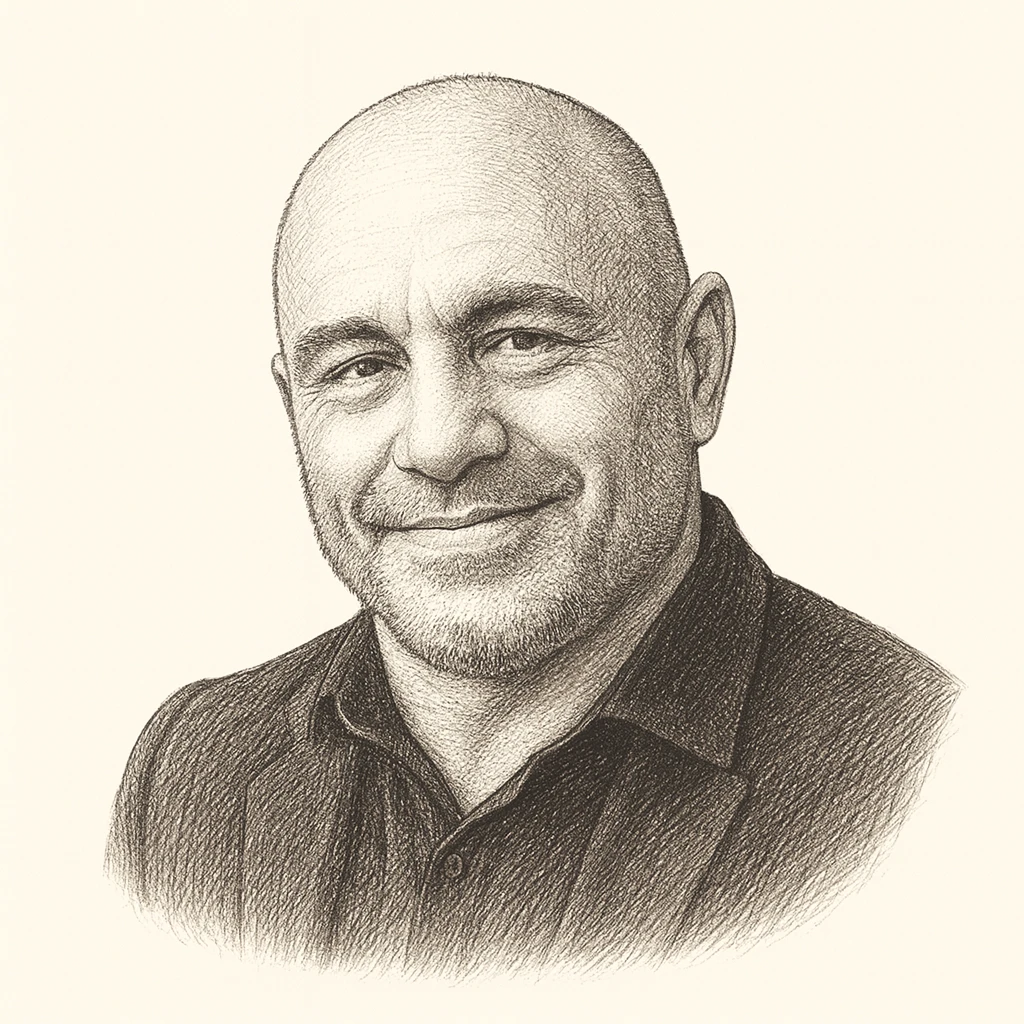
Joe Rogan is an American comedian, mixed-martial-arts commentator, and podcaster whose program, The Joe Rogan Experience, became one of the most widely consumed media platforms in the world. Though he is not a political thinker in any formal sense and resists ideological labeling, his influence on contemporary political discourse is substantial. His format—hours-long, unscripted conversations with guests ranging across the political spectrum—positioned him as a countercultural alternative to traditional broadcast media, appealing to audiences skeptical of institutions, mainstream journalism, and expert consensus.
Rogan's outlook is often described as broadly libertarian-leaning and populist, though inconsistently so. He has voiced support at various times for figures on both the left and right, expressing sympathy for Bernie Sanders during the 2020 Democratic primary while later hosting and speaking favorably about figures associated with the right, including Donald Trump. Recurring themes in his commentary include free speech, personal autonomy, skepticism of centralized authority, distrust of corporate media, and a valorization of frank, unfiltered debate. He frames his platform as a space for open inquiry where ideas excluded from mainstream venues can be aired and tested.
This approach has made him a focal point in debates over the boundaries of legitimate discourse. Supporters credit him with fostering real curiosity and giving voice to unconventional perspectives, while in January 2022 some 270 doctors, scientists, and health workers wrote to Spotify that, after an episode featuring Robert Malone, the show was spreading "false and societally harmful assertions" about the COVID-19 pandemic. Controversies over pandemic-related content and past inflammatory remarks generated significant public backlash and prompted debates about platform responsibility, especially after his exclusive licensing deal with a major streaming service.
Rogan's larger political significance lies less in any coherent doctrine than in what his rise represents: the migration of influence away from legacy institutions toward decentralized, personality-driven media, and the growing power of long-form podcasting to shape political attitudes, particularly among younger men. His prominence during recent U.S. election cycles, when candidates sought appearances on his show, made plain how alternative media ecosystems have reshaped the terrain of political persuasion and the definition of who counts as a gatekeeper of public conversation.
Joe Rogan is associated with Independent Localist. See the archetype