
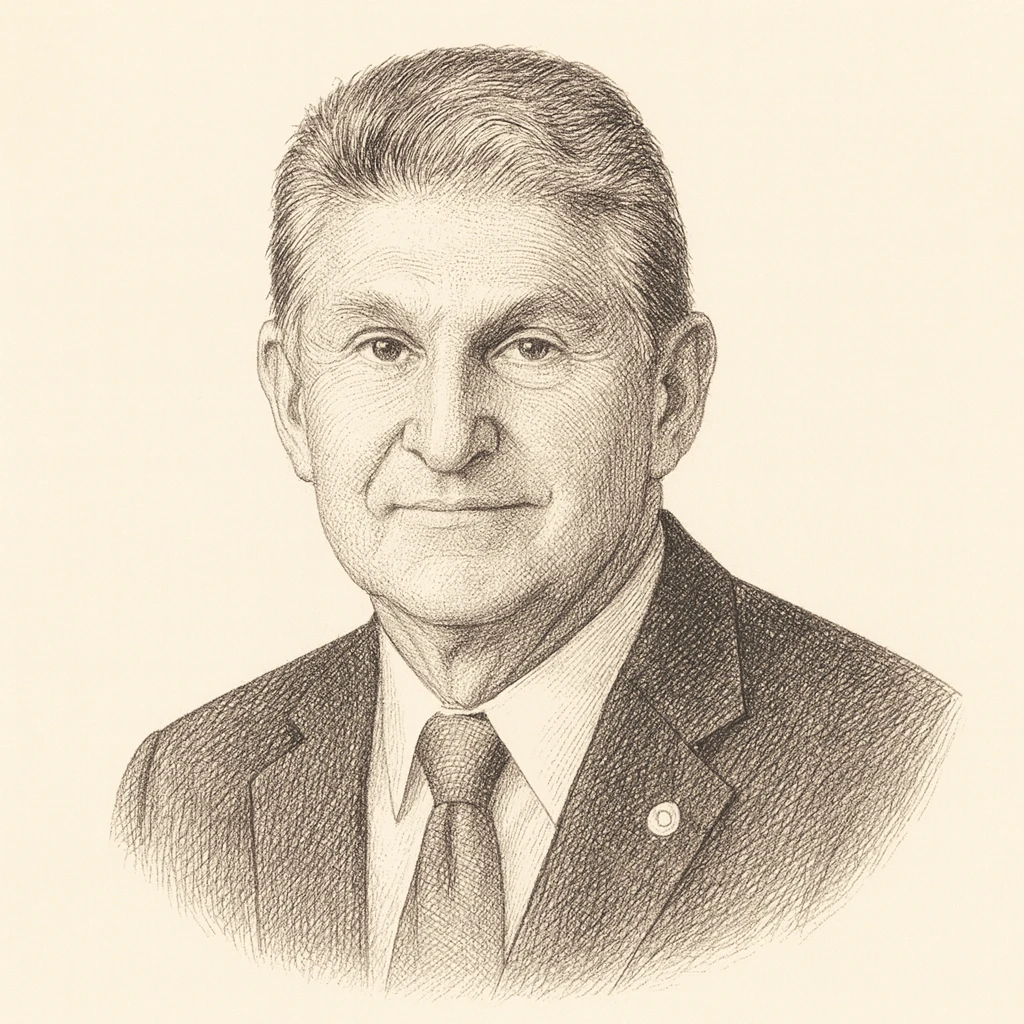
Joe Manchin built his political identity around a brand of centrism increasingly rare in American national politics: a conviction that governance should proceed through negotiation, compromise, and incremental consensus rather than partisan maximalism. Rooted in the political culture of West Virginia—a state with strong labor traditions, deep ties to the coal and energy industries, and a growing conservative electorate—Manchin positioned himself as a Democrat who could bridge his party's national platform with the values of a constituency that trended sharply Republican. As governor and then as senator, he cultivated an image as a pragmatist skeptical of ideological purity on both the left and right, framing his role as representing his state above his party.
Manchin's political thought centered on fiscal restraint, energy policy, and the defense of institutional norms. He was a persistent advocate for an "all of the above" energy strategy that balanced fossil fuels with newer sources, reflecting both his state's economic interests and his belief that climate policy must be gradual and economically sustainable. He repeatedly warned against expanding federal spending in ways he considered inflationary or fiscally irresponsible, and he defended procedural traditions such as the Senate filibuster as guardrails against sweeping single-party legislation. These positions made him one of the most consequential swing votes of his era, particularly when narrow Senate majorities gave individual members outsized leverage over major legislation.
Because of that leverage, Manchin became a lightning rod in debates about the direction of the Democratic Party and the viability of centrism itself. Critics on the left saw him as an obstacle to ambitious reform, while admirers portrayed him as a defender of moderation and bipartisan process. His eventual decision to leave the Democratic Party and register as an independent in 2024 crystallized a broader argument he had long made: that the two major parties had drifted toward their extremes and abandoned the persuadable middle. In this sense, Manchin's career functions as a case study in the tensions between representing a distinctive local electorate and belonging to a nationalized party, and in the enduring but embattled place of centrism in a polarized political system.
Joe Manchin is associated with Conservative Democrat. See the archetype