
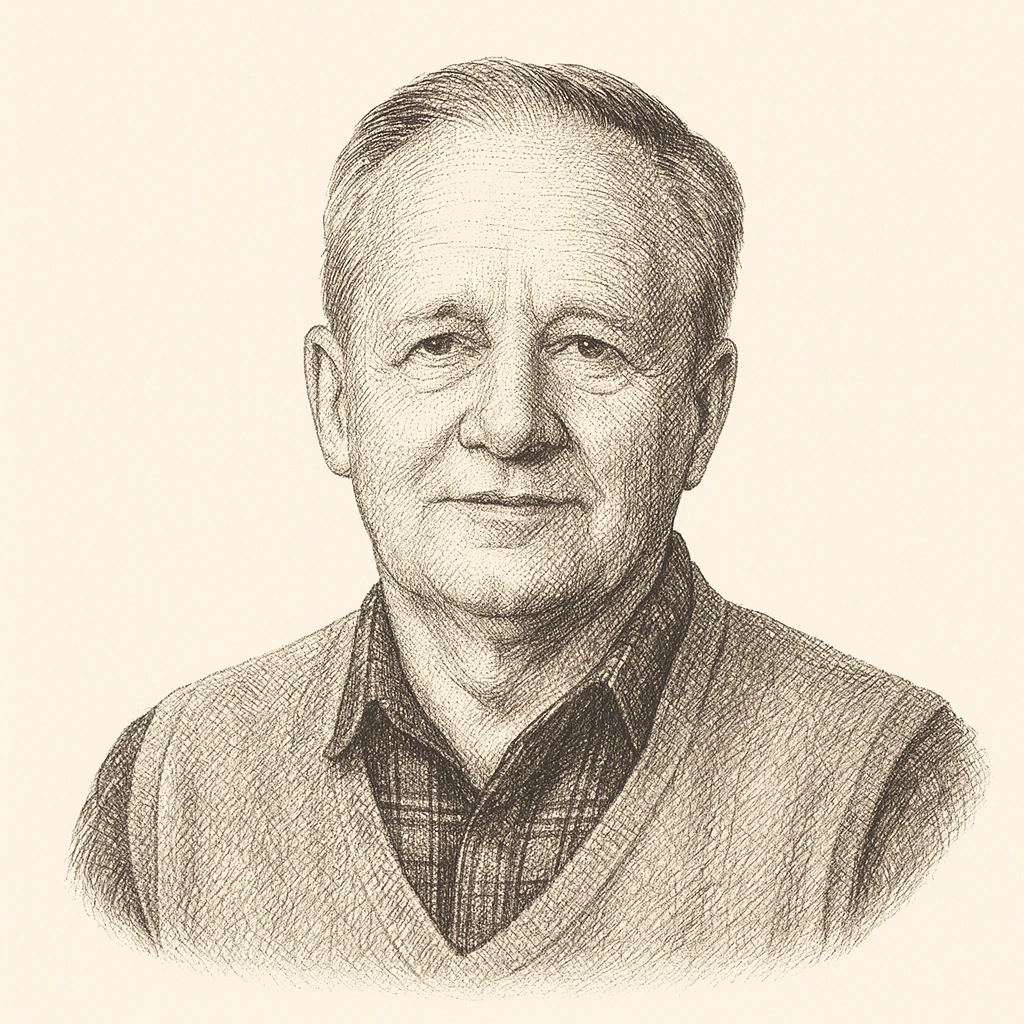
Jaroslav Vanek (1930–2017) was a Czech-born economist best known for developing a systematic economic theory of the labor-managed firm and the self-managed market economy. Working within neoclassical analytical methods, he sought to model an economy in which enterprises are controlled by the workers who staff them rather than by outside owners of capital, and in which those workers share in the firm's net income. This project gave academic rigor and respectability to ideas about economic democracy that had often circulated more as political aspiration than as formal theory. His writing became a central reference point for the study of participatory and cooperative economics.
Politically, Vanek's thought occupies a distinctive position between the capitalist market economy and centrally planned state socialism. He argued that market mechanisms and worker control were not incompatible, and that firms governed by their members could operate within a competitive market while distributing decision-making authority and income more equitably. His interest was partly stimulated by real-world experiments in worker self-management, most notably the Yugoslav model, which offered a concrete case for examining how labor-managed enterprises might behave. Vanek examined both the promise of such arrangements—greater participation, dignity, and shared stake in outcomes—and the theoretical problems they might face, including questions about investment incentives and enterprise growth.
Among economists his contribution is associated with formal analysis of how a labor-managed firm makes decisions and how such firms might respond to prices and market conditions differently from conventionally owned firms. Beyond technical economics, his work carried a normative and political charge: it treated economic organization as a matter of who holds power and how the fruits of production are distributed, and it insisted that alternatives to conventional ownership deserved serious theoretical treatment rather than dismissal. He also gave attention to the practical conditions and institutions that might allow self-managed enterprises to emerge and be sustained.
Vanek's legacy lies in helping to establish self-management and worker cooperatives as legitimate subjects of economic and political inquiry. His ideas continue to inform debates about economic democracy, cooperative enterprise, and the reform of the workplace, and they resonate with broader traditions of democratic socialism and participatory economics that seek to extend democratic principles from the political sphere into economic life.
Jaroslav Vanek is associated with Market Socialist. See the archetype