
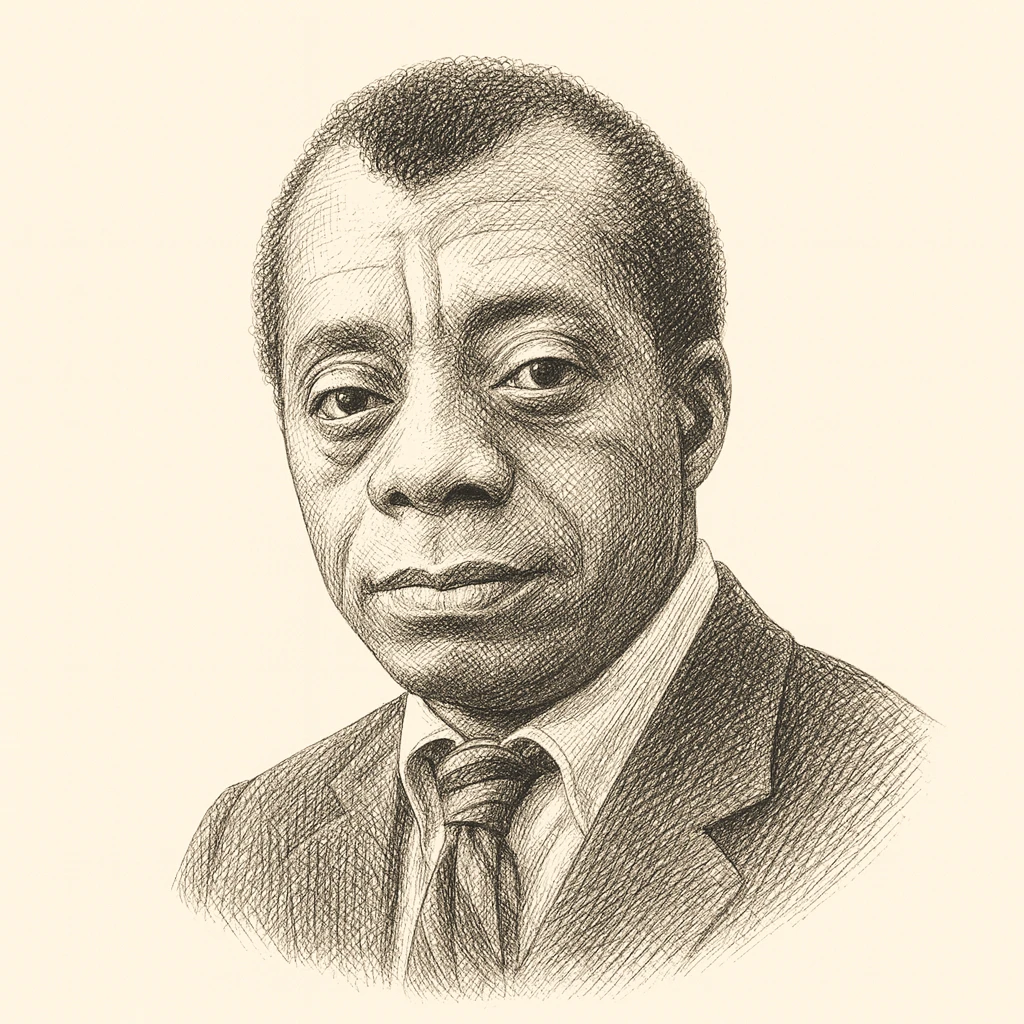
James Baldwin's political thought grew from his conviction that racism was not merely a set of laws or injustices but a moral and psychological condition afflicting the whole society, corrupting the oppressor as well as the oppressed. Writing in the era of the civil-rights movement, he insisted that white Americans clung to a flattering national myth that could only be sustained by denying the reality of Black life, and that genuine freedom required a painful reckoning with that denial. In essays such as those collected in "The Fire Next Time," he framed the struggle for racial justice as a test of whether the country could face its own history honestly enough to survive it.
Baldwin resisted the tidy political categories of his time. He was skeptical of the redemptive optimism of some integrationist rhetoric yet also wary of separatist and purely nationalist answers, and his exchanges with figures across the movement—from those in the mainstream civil-rights leadership to more militant voices—reflected an effort to hold moral clarity and complexity together. He treated love, in a demanding rather than sentimental sense, as a political category, arguing that liberation depended on a shared willingness to see one another without illusion. His years living in France gave him distance from which to examine the American condition, and he wrote about exile, belonging, and identity as inseparable from questions of power.
His writing also linked race to sexuality and personal freedom, refusing to separate the private self from public justice, which made him a forerunner for later thinking that treats identity and dignity as central political concerns. Baldwin's influence is felt less as a program than as a moral vocabulary: the idea that a society must confront the stories it tells about itself, that silence and comfort are forms of complicity, and that describing reality truthfully is itself a political act.
Because he worked as an essayist and novelist rather than an organizer or theorist, his legacy is contested in emphasis—some read him as a prophet of reconciliation, others as an unsparing critic who held out little hope for easy redemption. What endures across those readings is his insistence that the personal and the political are bound together, and that honesty about the past is the precondition for any just future.
James Baldwin is associated with Progressive Activist. See the archetype