
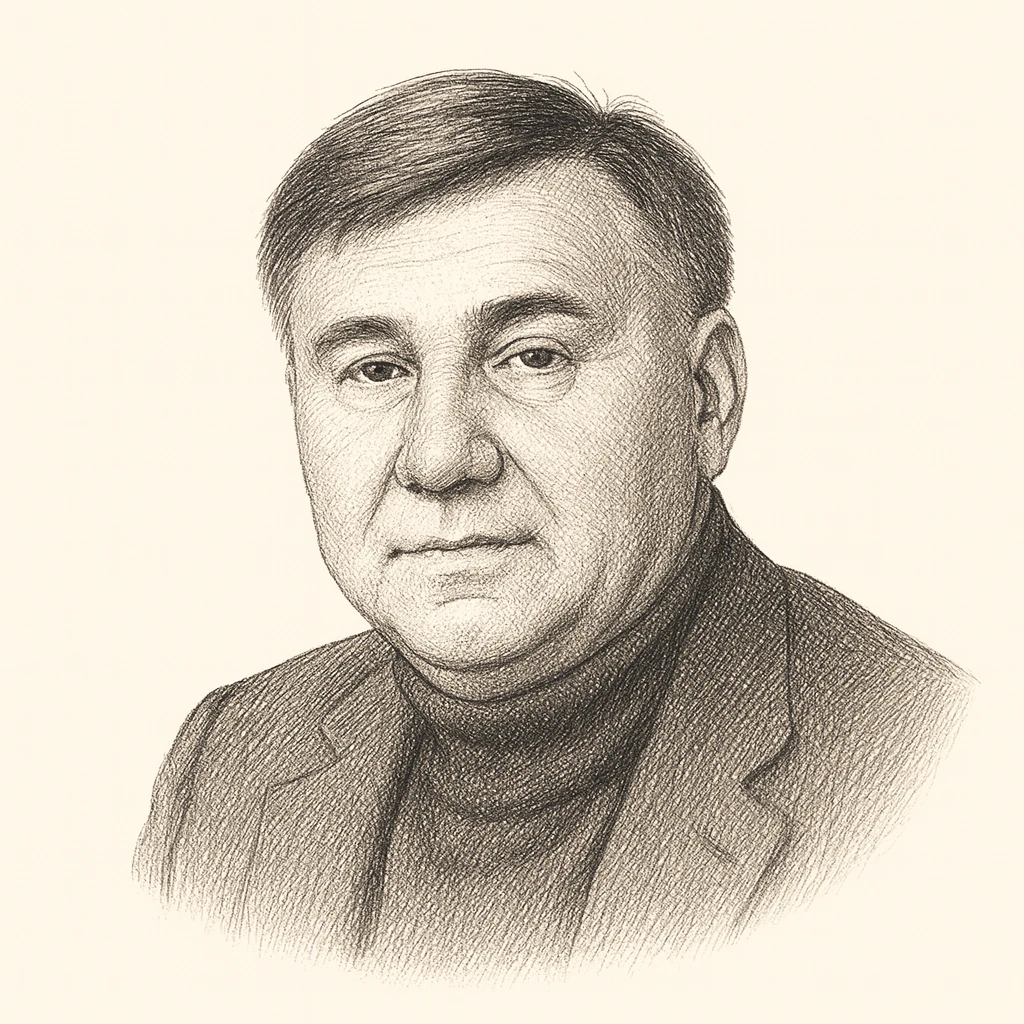
Ivan Krastev is a Bulgarian political scientist and public intellectual widely regarded as one of the most incisive analysts of the fate of liberal democracy in the post-Cold War world. Based in Sofia, where he chairs the Centre for Liberal Strategies, and affiliated with the Institute for Human Sciences in Vienna, he writes and comments extensively for an international audience, including as a regular contributor to major European and American publications. His vantage point from Central and Eastern Europe gives his work a distinctive angle: he interprets the anxieties of Western democracies through the lens of the region's own turbulent experience of transition after 1989.
Krastev's political thought centers on the disenchantment that has followed the initial optimism of the democratic transitions. He has argued that the promise of liberal democracy, once treated as the inevitable endpoint of history, produced its own backlash—fueling nationalist, populist, and illiberal movements across Europe. A recurring theme in his work is the tension between democracy and its liberal constraints, and the ways in which majorities can turn against the institutions, elites, and cosmopolitan values associated with the liberal order. He has been especially attentive to the politics of demography, migration, and emigration, suggesting that fears of population decline and cultural change have become powerful engines of resentment in Eastern Europe.
Much of his influence stems from his reflections on the European Union's cohesion and vulnerabilities, and on the growing distance between political elites and citizens who feel unheard. He has explored the phenomenon of imitation—the sense that post-communist societies were expected to copy Western models—and the humiliation and reaction that this dynamic can generate. Rather than treating populism as mere irrationality, he tends to read it as a symptom of deeper structural strains within representative democracy, globalization, and the erosion of trust in expertise.
Krastev's contribution is less a fixed doctrine than a sensibility: skeptical, comparative, and alert to paradox. He is generally sympathetic to liberal and European values while remaining a candid critic of their complacencies, and he has helped shape how policymakers, journalists, and scholars think about democratic backsliding, the crises of the EU, and the global drift toward distrust and disorder.
Ivan Krastev is associated with Welfare Nationalist. See the archetype