
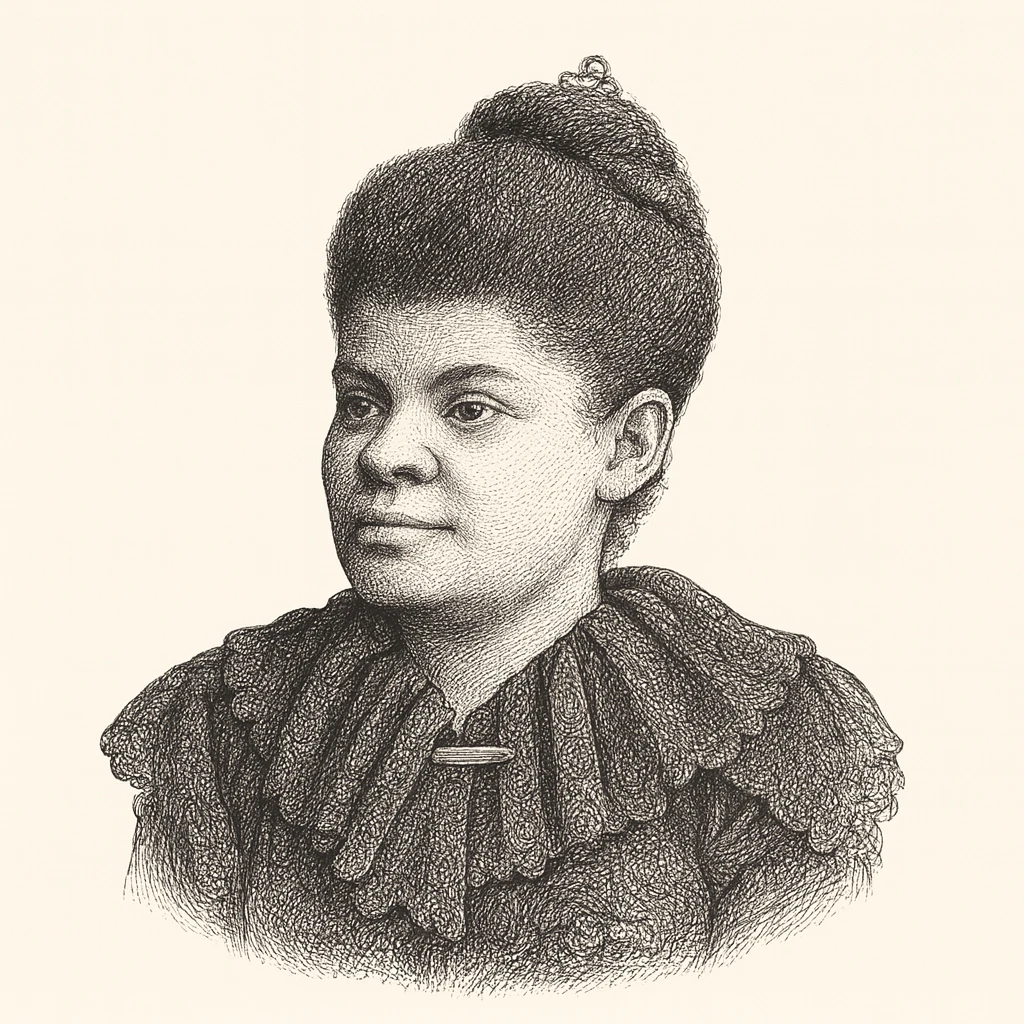
Ida B. Wells was a journalist, educator, and reformer whose political thought centered on the idea that documented fact could be a weapon against organized violence and injustice. Born into slavery in Mississippi during the Civil War and freed as an infant by emancipation, she came of age in the Reconstruction and post-Reconstruction South, becoming a teacher and then a newspaper editor and part-owner in Memphis. Her turn toward anti-lynching activism was catalyzed by the murder of acquaintances, an event that pushed her to investigate lynching not as isolated frontier justice but as a systematic mechanism of social and economic control directed at Black Americans.
Wells's central intellectual contribution was to attack the dominant public justification for lynching — the claim that it punished the rape of white women — by gathering and publishing statistics and case details that showed most victims were killed for other reasons, including economic competition and challenges to white authority. In doing so she pioneered a form of journalism-as-activism in which careful accumulation of evidence was meant to strip away rationalizations and force a reckoning with the truth. Her pamphlets and lecture tours, including campaigns carried to Britain, treated publicity and international pressure as tools to shame a nation that professed democratic and Christian values while tolerating extralegal killing.
Her politics also insisted that racial justice was inseparable from questions of gender and civic membership. She was active in the women's club movement and in suffrage organizing, and she resisted the compromises of accommodationist leadership, favoring agitation, self-defense, and the assertion of full legal and political rights. She was among the figures associated with the founding milieu of the NAACP, though her uncompromising temperament kept her at some distance from more cautious organizational leadership.
Wells is remembered as a foundational figure in the tradition that treats muckraking and moral witness as instruments of political change. Her work established a template later carried forward by civil rights organizers and investigative reporters alike: that documenting atrocity precisely, and refusing euphemism, is itself a political act. Her insistence on naming violence plainly and confronting the excuses that sustained it continues to shape how activists think about the relationship between evidence, publicity, and justice.
Ida B. Wells is associated with Progressive Activist. See the archetype