
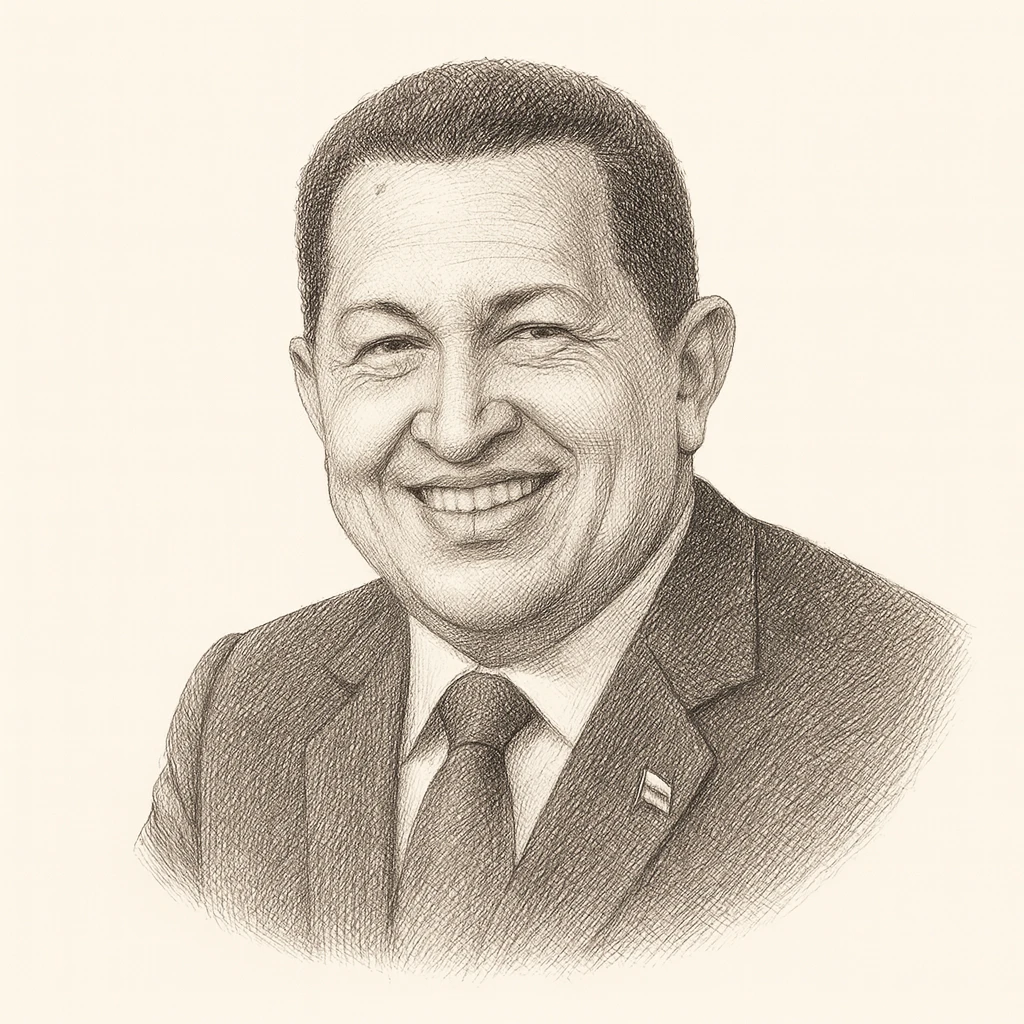
Hugo Chávez rose from a career military officer who led a failed 1992 coup attempt to become Venezuela's president in 1999, governing until his death in 2013. His political thought drew on an eclectic mix of sources: the anti-colonial nationalism of Simón Bolívar, whom he invoked constantly and whose name he gave to his "Bolivarian Revolution"; Latin American dependency theory and its critique of foreign, especially U.S., economic domination; and a broadly Marxist-inflected socialism that he came to call "socialism of the 21st century." He argued that formal liberal democracy masked entrenched elite power, and that genuine sovereignty required redirecting the country's oil wealth toward the poor majority and building participatory institutions—communal councils, missions, and popular assemblies—that would bypass traditional parties and bureaucracies.
Chávez's central mechanism was the direct bond between a charismatic leader and a mobilized popular base, legitimated through frequent elections and referenda while power concentrated around the executive. Buoyed by high oil prices, his government funded expansive social programs in health, literacy, and food subsidies, achieving measurable reductions in poverty and drawing intense loyalty from Venezuela's working class. He championed regional integration against U.S. influence, promoting bodies like ALBA and positioning himself as a leader of a wider Latin American "pink tide." His rhetoric cast politics as a Manichean struggle between the people and an oligarchy allied with imperialism.
His record is seriously contested. Critics document the steady erosion of institutional checks: packing the courts, weakening the independent press, undermining electoral oversight, and personalizing state authority in ways that laid groundwork for the authoritarianism and severe economic collapse that followed under his successor. Supporters counter that he empowered the excluded and defied a hostile domestic and international establishment. What is not in dispute is his enduring influence on how the left and its opponents think about petro-populism, plebiscitary leadership, and the promise and peril of using state and resource power to pursue rapid social transformation. Chávez remains a reference point—celebrated and reviled—for debates about whether radical redistribution can be reconciled with pluralism.
Hugo Chávez is associated with Vanguard Collectivist. See the archetype