
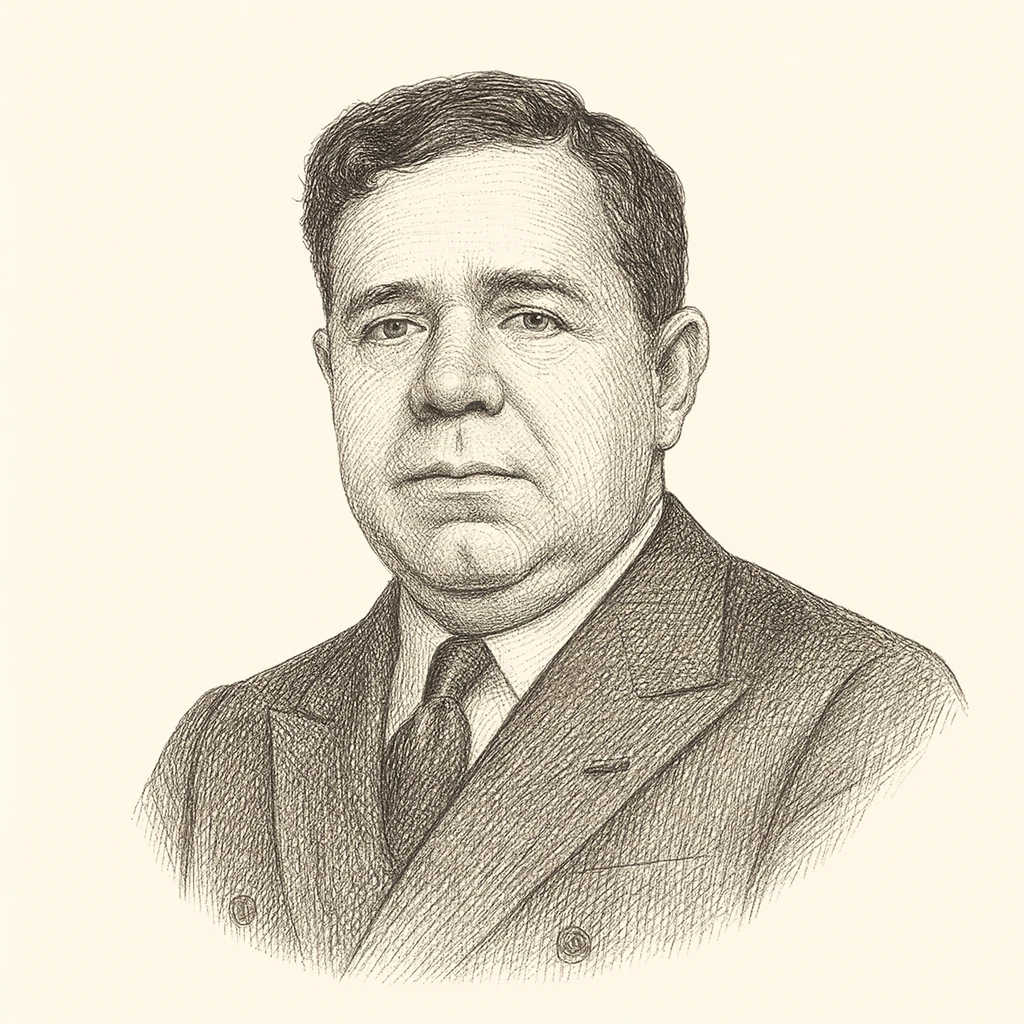
Huey Long built his political thought around a single, incendiary proposition: that concentrated wealth was the root of American misery and that the state could and should redistribute it directly. As governor of Louisiana and later a U.S. senator, he argued that a small number of families controlled a grossly disproportionate share of the nation's resources while ordinary people went without. His answer, launched during the Great Depression as the "Share Our Wealth" program, proposed steep taxes and caps on large fortunes and incomes, paired with guarantees of a household grant, an annual living wage, pensions, and support for education. Whatever the arithmetic problems critics identified, the appeal was its moral simplicity and its promise that prosperity could be spread rather than trickled down.
Long's politics fused this economic radicalism with an intensely nationalist, folksy populism aimed at the "common man" against banks, corporations, and entrenched elites. He positioned himself both as an ally and a rival of Franklin Roosevelt, pressing the New Deal from the left and insisting it did not go far enough in confronting inequality. In Louisiana he delivered tangible results—roads, bridges, free textbooks, expanded public services—that cemented his reputation as a builder who delivered for the poor, and that gave his rhetoric a record to point to.
Yet Long's methods make him one of the most seriously contested figures in American political history. In consolidating power he centralized control over the state's institutions, patronage, and machinery of government to a degree many observers regarded as near-dictatorial, and critics both then and now describe his rule as authoritarian. He inspired anxieties about demagoguery that fed into the era's fiction and commentary about the fragility of American democracy. His career was cut short by assassination in 1935, before he could mount the presidential challenge many expected.
His enduring influence lies in demonstrating that redistributive economic populism could command a mass following in the United States, and in embodying the tension between that appeal and the concentration of power. "Share Our Wealth" remains a reference point whenever politicians promise to break up great fortunes on behalf of ordinary people, and Long himself remains a cautionary study in how popular economic grievance can be mobilized by a charismatic leader.
Huey Long is associated with Welfare Nationalist. See the archetype