
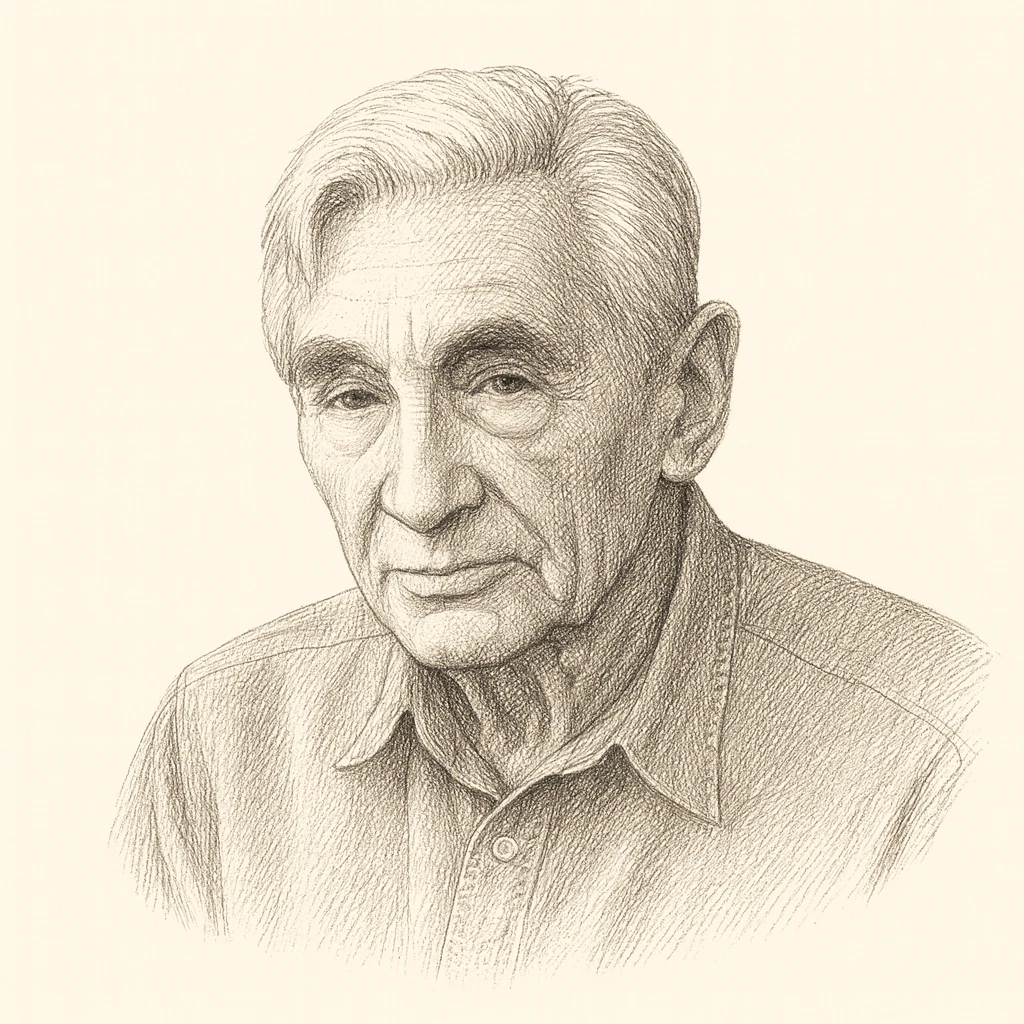
Howard Zinn (1922–2010) was an American historian, playwright, and activist best known for A People's History of the United States, a sweeping narrative that told the national story from the perspective of ordinary and marginalized people rather than presidents, generals, and industrialists. Against triumphalist accounts of American progress, Zinn foregrounded Indigenous peoples, enslaved Africans, laborers, women, and dissenters, arguing that the country's professed ideals were repeatedly betrayed in practice and advanced only through popular struggle. His central methodological claim—that historians inevitably write from a point of view and that neutrality in the face of injustice is itself a political choice—made him a defining figure in the movement to write history "from below."
Zinn's political thought drew on the traditions of the radical left, democratic socialism, anarchism, and pacifism, though he resisted rigid ideological labeling. A veteran of the Second World War who later became a sharp critic of American militarism, he was active in the civil rights movement and among the most prominent academic opponents of the Vietnam War. He was skeptical of state power, hierarchical institutions, and the notion that meaningful change flows from elites or electoral politics; instead he emphasized grassroots organizing, civil disobedience, and collective action by ordinary citizens as the true engines of reform. This orientation shaped his enduring insistence that the moral test of a society lies in how it treats those with the least power.
His influence has been both wide and contested. A People's History became a staple of high-school and college classrooms and a touchstone for popular movements, shaping how generations of readers understand power, race, class, and empire in American life. Critics, including some professional historians, faulted the work for its selective emphasis, moral certainty, and tendency to subordinate complexity to a story of oppression and resistance. Yet even detractors acknowledge that Zinn helped shift the terms of public debate about whose experiences count as history. His broader argument—that citizens should question authority, resist injustice, and recognize their own agency—positioned him less as a detached scholar than as a public intellectual who saw the writing and teaching of history as a form of political engagement.
Howard Zinn is associated with Progressive Activist. See the archetype