
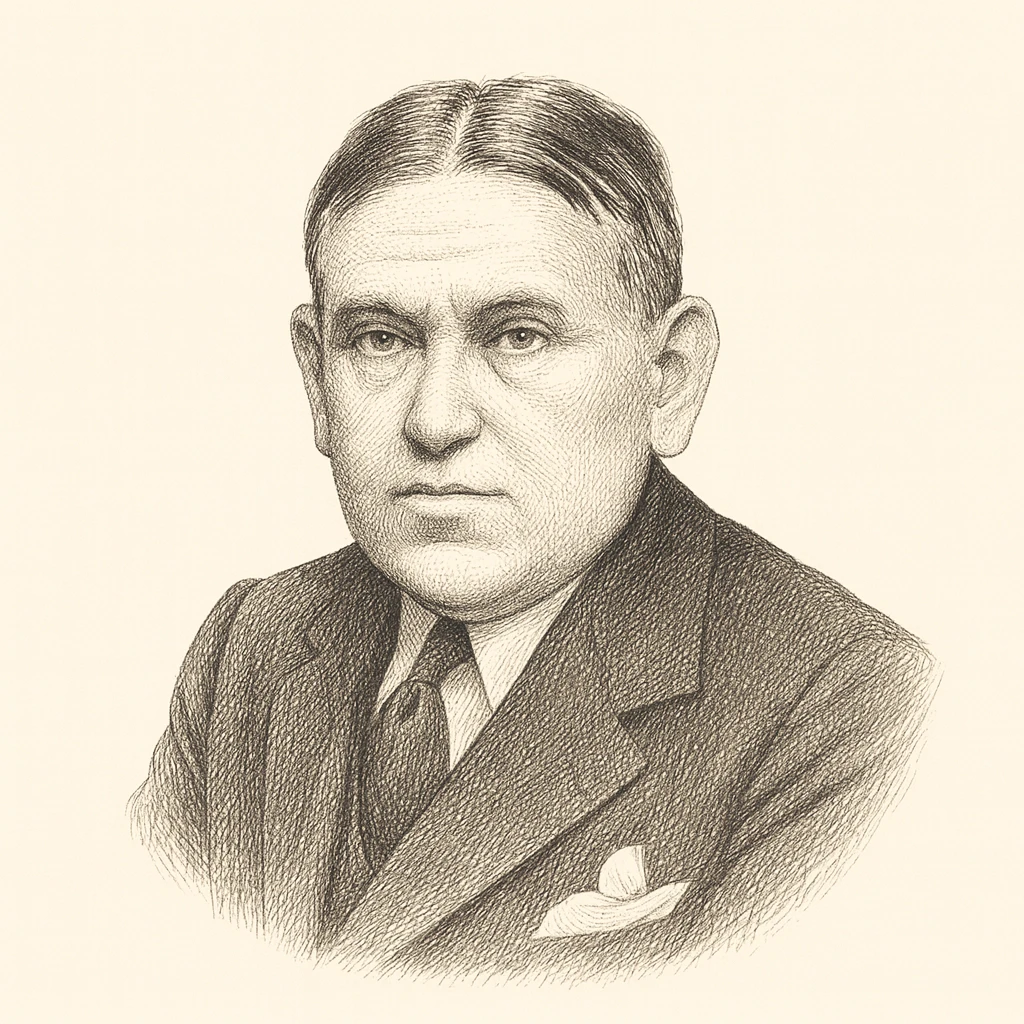
H.L. Mencken was among the most influential American journalists and cultural critics of the early twentieth century, a Baltimore-based writer whose essays, editorials, and books made him a national figure in the 1920s. Politically, he is best understood as a fierce individualist and skeptic of mass democracy. Drawing on a Nietzschean and libertarian temperament, he distrusted majorities, popular enthusiasms, and the moralizing reformers he lumped together as the "booboisie" and the Puritan spirit in American life. He championed free thought and free expression against censorship, Prohibition, and the policing of private conduct, and his defense of civil liberties was rooted less in egalitarian sympathy than in contempt for coercion and cant.
Mencken's most famous political intervention was his coverage of the 1925 Scopes "Monkey Trial" in Dayton, Tennessee, where he pilloried anti-evolution laws and the populist religiosity of William Jennings Bryan, framing the case as a battle between free inquiry and enforced conformity. His skepticism extended to democracy itself: he doubted that ordinary voters could govern wisely and mocked the demagoguery he thought majority rule invited. This anti-populist streak has made him a touchstone for those who prize individual autonomy over collective sentiment, even as critics note his elitism and his disdain for the common person.
His record is genuinely contested. His posthumously published diaries and private writings revealed anti-Semitic and racist passages that have complicated his legacy, and his opposition to American entry into both world wars, along with sympathies that struck many as pro-German, drew sustained criticism. Readers who admire his defense of liberty must reckon with prejudices that sit uneasily beside it.
Mencken's lasting political influence lies in his style and stance more than any systematic doctrine. He modeled a mode of skeptical, iconoclastic journalism that treats government power, moral reform, and popular passions with equal suspicion, and he helped establish the American libertarian sensibility as a cultural posture: irreverent, anti-authoritarian, and hostile to the pieties of the crowd. His prose remains a reference point for writers who defend the individual conscience against the state and the mob alike.
H.L. Mencken is associated with Civil Libertarian. See the archetype