
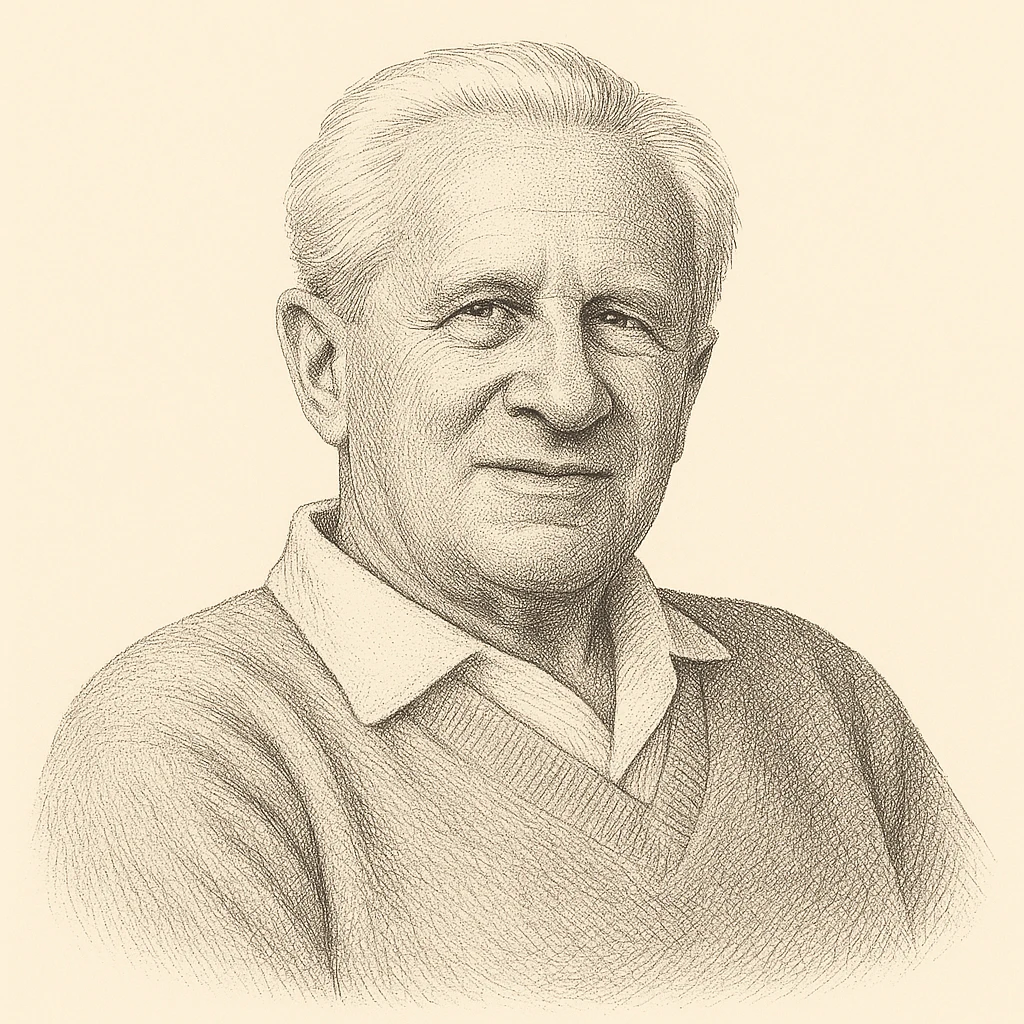
Herbert Marcuse was a German-American philosopher associated with the Frankfurt School of critical theory, alongside figures such as Theodor Adorno and Max Horkheimer. Trained in the German philosophical tradition and influenced by Hegel, Marx, and Freud, he sought to fuse Marxist social critique with an analysis of psychology, culture, and everyday consciousness. A Jewish intellectual who fled Nazi Germany, he emigrated to the United States, where he spent the rest of his career and became, unusually for a dense theorist, a recognizable public presence.
Marcuse's central political argument was that advanced industrial society had developed powerful new means of containing opposition. In his best-known work, One-Dimensional Man, he contended that consumer capitalism satisfies and manufactures needs so effectively that it absorbs criticism and narrows the range of thinkable alternatives, producing a comfortable but unfree conformity. Technology and rising living standards, on this view, do not liberate but integrate people into a system that reproduces domination while appearing rational and benign. This diagnosis reframed exploitation as something operating through culture, media, and consumption, not merely through wages and factory ownership.
Because he doubted that the traditional industrial working class remained a revolutionary force under these conditions, Marcuse looked instead to those on the margins of affluent society—students, racial minorities, and the excluded—as potential agents of change. This move, along with writings on liberation, sexuality, and the emancipatory possibilities of art and imagination, made him a touchstone for the New Left and the protest movements of the 1960s. He also advanced a controversial critique of liberal tolerance, arguing that formal neutrality can effectively protect entrenched power; Alasdair MacIntyre replied that the right of revolutionary minorities to suppress rival opinions was "perhaps the most dangerous of all Marcuse's doctrines," a debate that continues around his legacy.
Marcuse remains a contested figure. Admirers credit him with a searching account of how freedom can be hollowed out amid material abundance and with keeping utopian ambition alive within Marxist thought. Detractors, from the right and from more orthodox Marxists, fault his pessimism about the working class, his abstraction, and the authoritarian implications some read into his views on tolerance and revolutionary change. Either way, his work durably shaped how people think about culture, consumption, and consent as political forces.
Herbert Marcuse is associated with Trad Socialist. See the archetype