
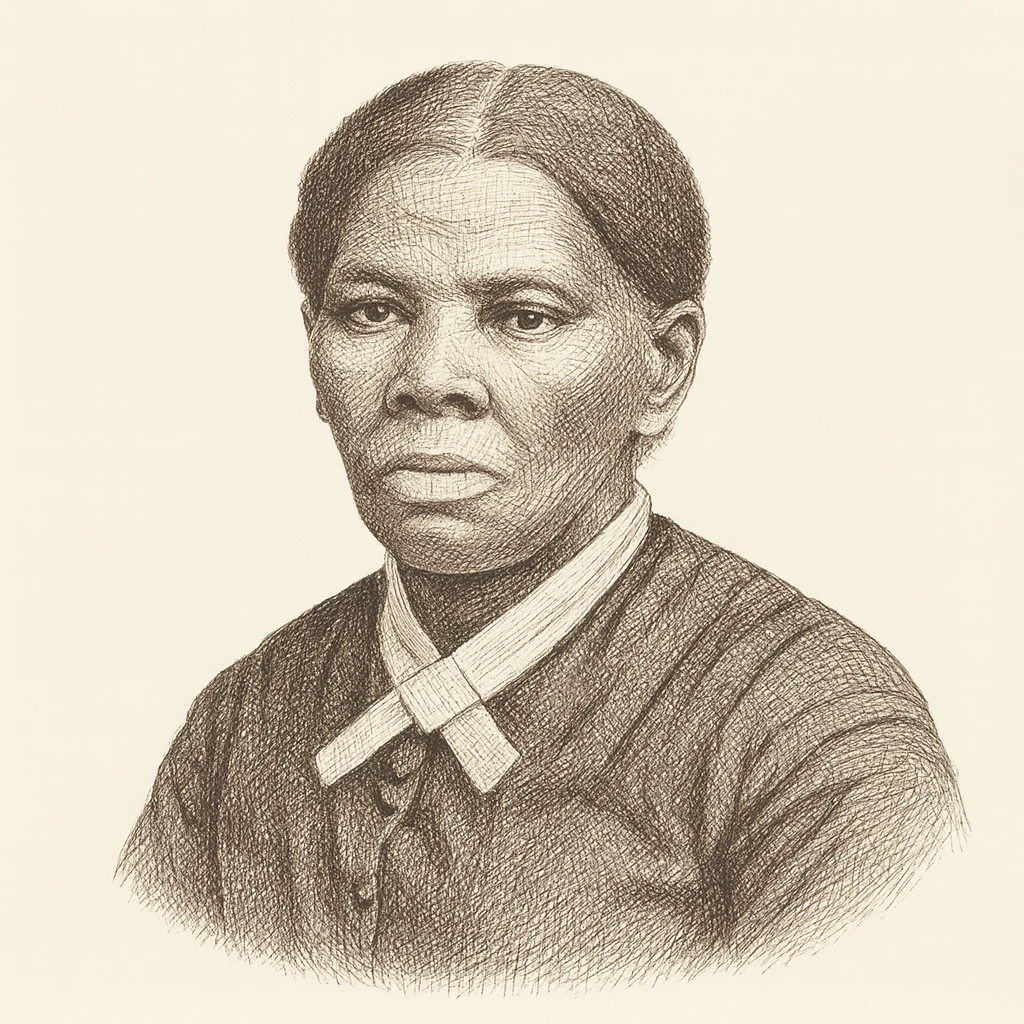
Harriet Tubman was the most famous 'conductor' on the Underground Railroad, personally leading approximately 70 enslaved people to freedom over 13 missions into the South. Born into slavery in Maryland, Tubman escaped in 1849 and then repeatedly risked her life returning to guide others north.
Tubman's courage was legendary—she carried a pistol to discourage any who might turn back, and slaveholders offered a $40,000 bounty for her capture. During the Civil War, she served as a spy, scout, and nurse for the Union Army, and led the Combahee River Raid, freeing over 700 enslaved people—the first woman to lead an armed assault in American history.
Tubman worked less through published argument than through action, but her convictions were coherent and radical for their time. She rejected any notion that emancipation could wait for gradual persuasion or legal reform; her repeated returns to slave territory embodied a belief that freedom was a right to be seized rather than petitioned for, and that those already free bore an obligation to liberate others. This placed her within the militant wing of American abolitionism that had lost patience with moral suasion alone. She was closely tied to the broader antislavery network, associating with figures such as Frederick Douglass and the radical abolitionist John Brown, who admired her knowledge of clandestine routes and reportedly called her 'General Tubman'; she aided his planning before the Harpers Ferry raid.
After the war, Tubman settled in Auburn, New York, where she supported women's suffrage and established a home for elderly African Americans. She spoke at suffrage gatherings and worked alongside leaders of the movement, framing the vote as a natural extension of the freedom struggle and insisting that the sacrifices of Black women be recognized in the fight for the ballot. Her deeply Christian faith motivated her activism; she understood her missions in providential terms, describing visions and a sense of divine guidance that gave her conduct the character of a religious as well as political calling.
Tubman became an icon of American freedom, though she lived in poverty until her death, struggling for years to secure a federal pension for her wartime service. Later generations of civil-rights and feminist thought claimed her as a founding example of direct action and Black women's leadership. Her face will appear on the $20 bill, replacing Andrew Jackson.
Harriet Tubman is associated with Progressive Activist. See the archetype