
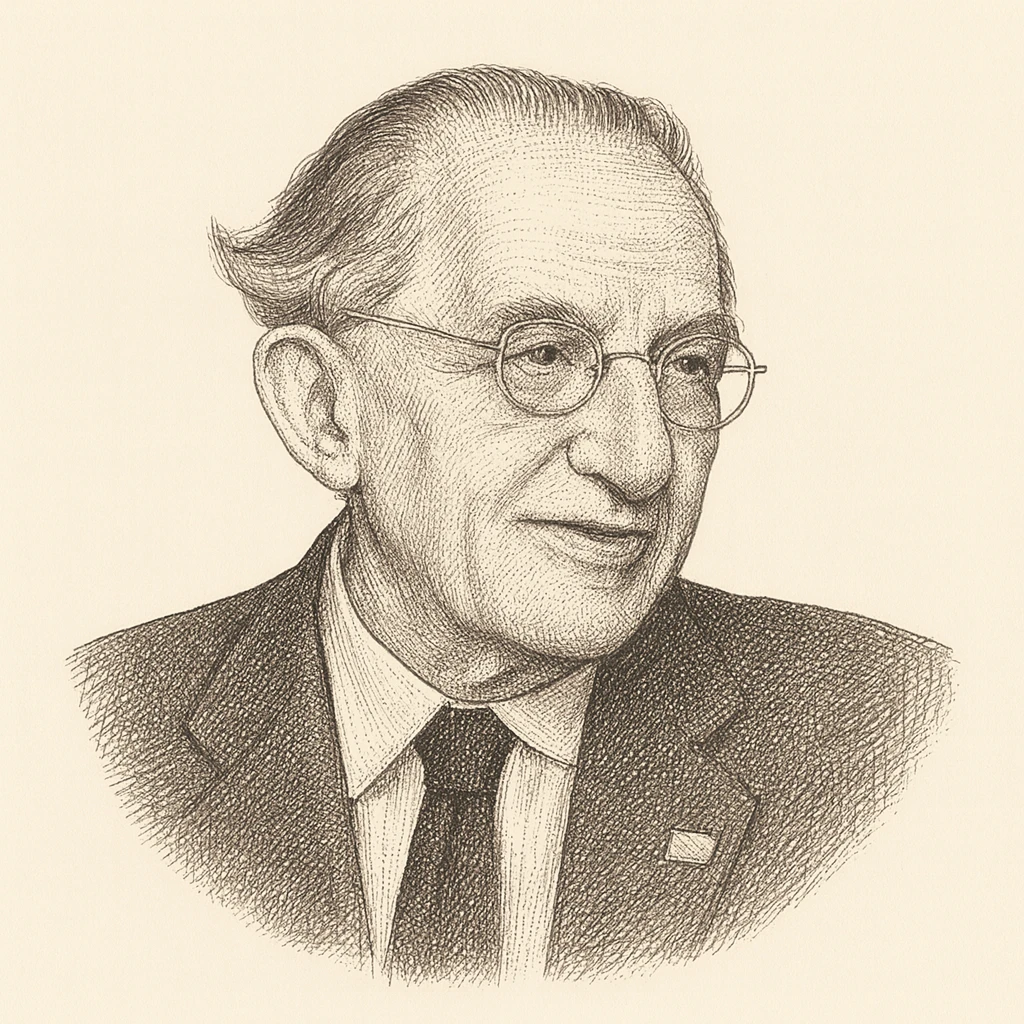
György Lukács began as an aesthete and ended as the philosopher communists argued about for half a century. Born in 1885 to a wealthy Budapest banking family, he made his first reputation with literary essays (Soul and Form, 1910; The Theory of the Novel, 1916) admired across German-speaking Europe. In December 1918, weeks after publishing an essay treating Bolshevism as an unresolved moral problem, he joined the Hungarian Communist Party. When the Hungarian Soviet Republic took power in 1919, Lukács served as a commissar for education and culture; when it collapsed after four months, he escaped to Vienna.
History and Class Consciousness (1923) is the book that matters. Its central concept, reification, extends Marx's analysis of the commodity into a theory of modern consciousness: in a society organized by markets, relations between people take on the appearance of relations between things, and arrangements humans made come to feel like laws of nature. Only the working class, Lukács argued, occupies a position from which the whole process becomes visible. But the consciousness in question is imputed rather than observed, what the class would think if it fully grasped its situation, and the disciplined party stands in as its carrier. That step gave vanguardism its most rigorous philosophical defense.
The movement he defended condemned the book. The Comintern attacked it in 1924, and Lukács disavowed it, the first of several recantations that marked his long accommodation with Soviet orthodoxy. He survived exile in Moscow through the purge years, returned to Hungary after 1945, and served as minister of culture in Imre Nagy's government during the 1956 uprising; after Soviet troops crushed it, he was deported to Romania, then permitted home, where he wrote until his death in 1971.
The book he renounced outlasted the orthodoxy he submitted to. History and Class Consciousness became the founding text of Western Marxism, the tradition that runs through the Frankfurt School into postwar critical theory, and its reconstruction of alienation anticipated arguments in Marx's early manuscripts, which were not published until nearly a decade later. Few political thinkers have had their central work canonized by readers and repudiated by its author at the same time.
György Lukács is associated with Vanguard Collectivist. See the archetype