
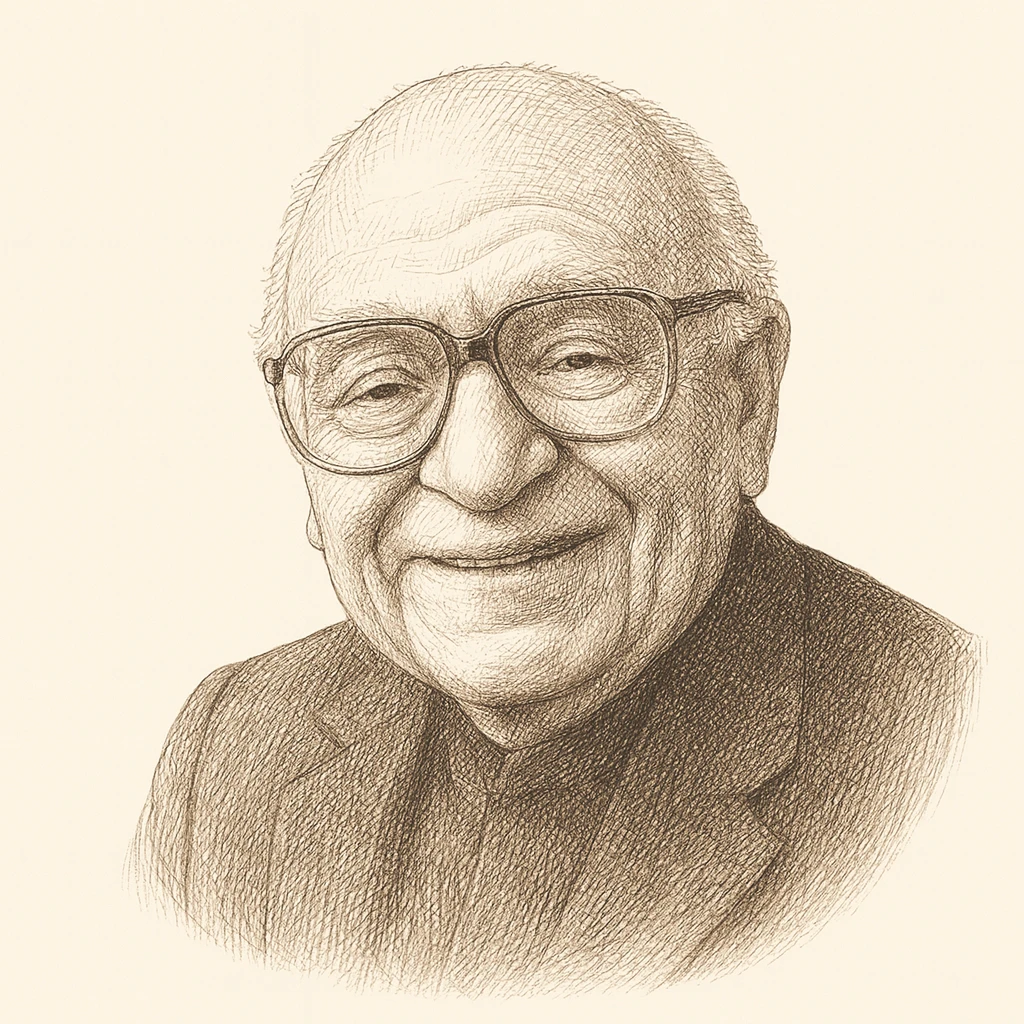
Gustavo Gutiérrez was a Peruvian Dominican priest and theologian widely regarded as the founding figure of liberation theology, the current of Christian thought that emerged in Latin America in the late 1960s and 1970s. His book A Theology of Liberation gave the movement its programmatic statement, arguing that theology should begin not from abstract doctrine but from the concrete condition of the poor and the structures that produce their poverty. In this framework, salvation and human liberation were understood as intimately connected, and the church was called to engage the social, economic, and political realities of the marginalized rather than remain neutral before them.
Gutiérrez is closely associated with the phrase "preferential option for the poor," a formulation that reframed Christian charity as a matter of justice and solidarity rather than paternalistic assistance. Drawing on the biblical prophetic tradition, on Catholic social teaching, and—more controversially—on tools of social and economic analysis attentive to inequality and dependency, he characterized poverty as the result of unjust structures that could and should be transformed. His thought emphasized "praxis": the idea that reflection on faith is inseparable from committed action alongside the oppressed, and that theology is a "second act" that follows lived engagement with the world.
This political theology proved influential far beyond academic circles. It shaped grassroots religious communities across Latin America, informed debates within the broader church, and entered wider conversations about the relationship between religion, capitalism, and social change. Liberation theology drew sharp scrutiny from Vatican authorities during the 1980s, who warned against its use of certain analytical categories and its potential politicization of the faith, even as they affirmed the moral urgency of confronting poverty. Gutiérrez himself remained within the church and continued to develop and clarify his positions over the following decades.
His enduring political significance lies in reframing how many people think about the moral obligations of institutions toward the powerless. By insisting that concern for the poor is central rather than peripheral to Christian and civic life, Gutiérrez helped legitimize a language of structural justice that has resonated with movements, activists, and thinkers across religious and secular divides.
Gustavo Gutiérrez is associated with Christian Socialist. See the archetype