
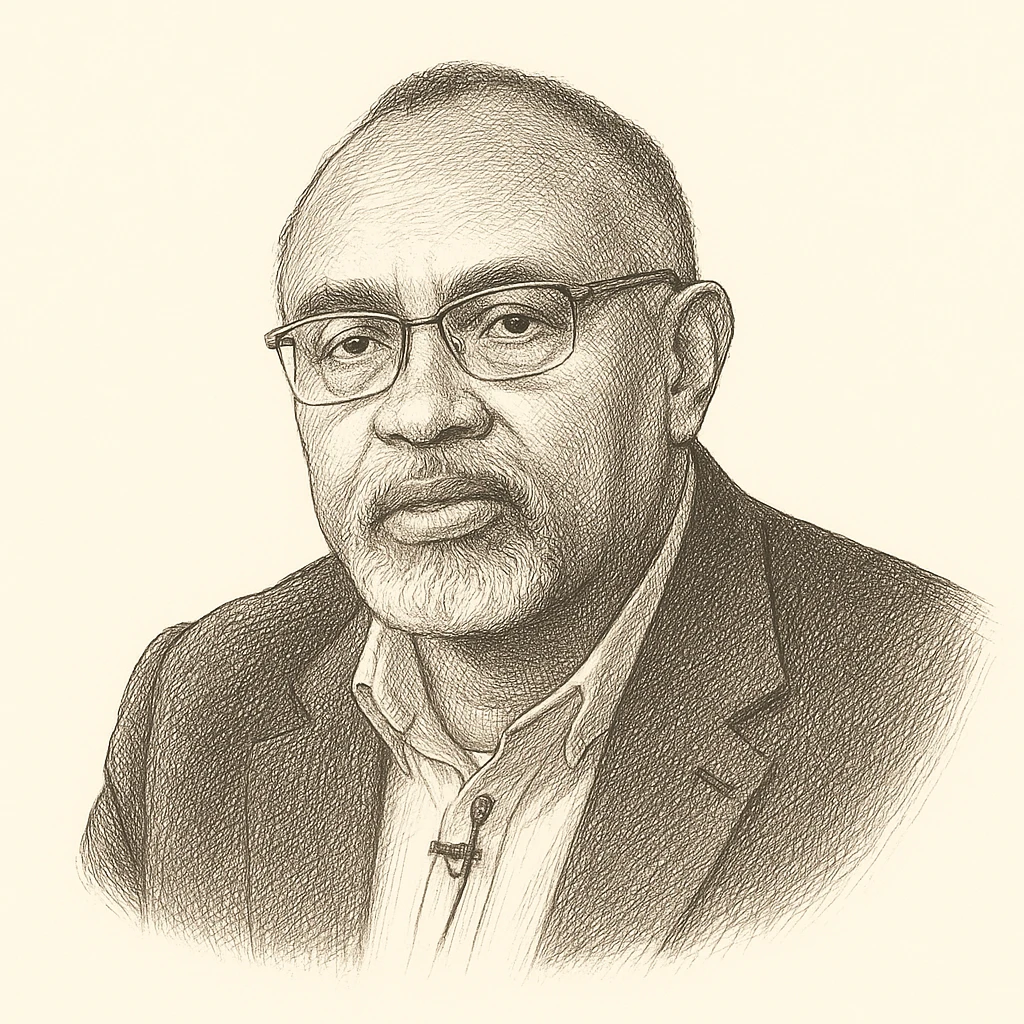
Glenn Loury is an American economist and public intellectual known for his pioneering theoretical work in economics and his prominent, evolving voice in debates over race, inequality, and social policy in the United States. Trained as an economist, he became one of the first Black scholars to hold a tenured professorship in economics at a major research university, and his early academic contributions included influential work introducing the concept of social capital into economic analysis and modeling persistent group inequality. This theoretical grounding shaped his later arguments about how discrimination, human capital, and community-level dynamics interact to produce durable racial disparities.
Politically, Loury has occupied a distinctive and shifting position. In the 1980s he rose to prominence as a leading Black conservative voice, skeptical of affirmative action and emphasizing self-help, personal responsibility, and the limits of government remedies for problems he located partly within Black communities themselves. He later distanced himself from the conservative movement and moved toward the left on several issues, before shifting again in more recent decades toward a heterodox stance critical of what he regards as excesses in contemporary anti-racist discourse. This trajectory has made him difficult to categorize and central to arguments about the value of dissent within Black intellectual life.
Much of Loury's contemporary influence flows through public argument rather than academic journals alone. He has become widely known for his willingness to challenge prevailing narratives about systemic racism, insisting that group disparities cannot be explained by discrimination alone and that questions of behavior, culture, and individual agency must remain part of honest analysis. He is frequently positioned as a counterweight to writers who frame American life primarily through structural racism, and he has cultivated an audience through public dialogue that prizes candid, sometimes uncomfortable debate.
His emphasis on cultural and behavioral factors puts him at odds with writers who stress structural constraints. Loury himself has been unusually public about revising his views over time, treating intellectual inconsistency across a career as the honest result of following arguments where they lead. That combination of analytical rigor, moral seriousness, and refusal to align permanently with any camp is what secures his reputation as an independent thinker on race and American politics.
Glenn Loury is associated with Independent Localist. See the archetype