
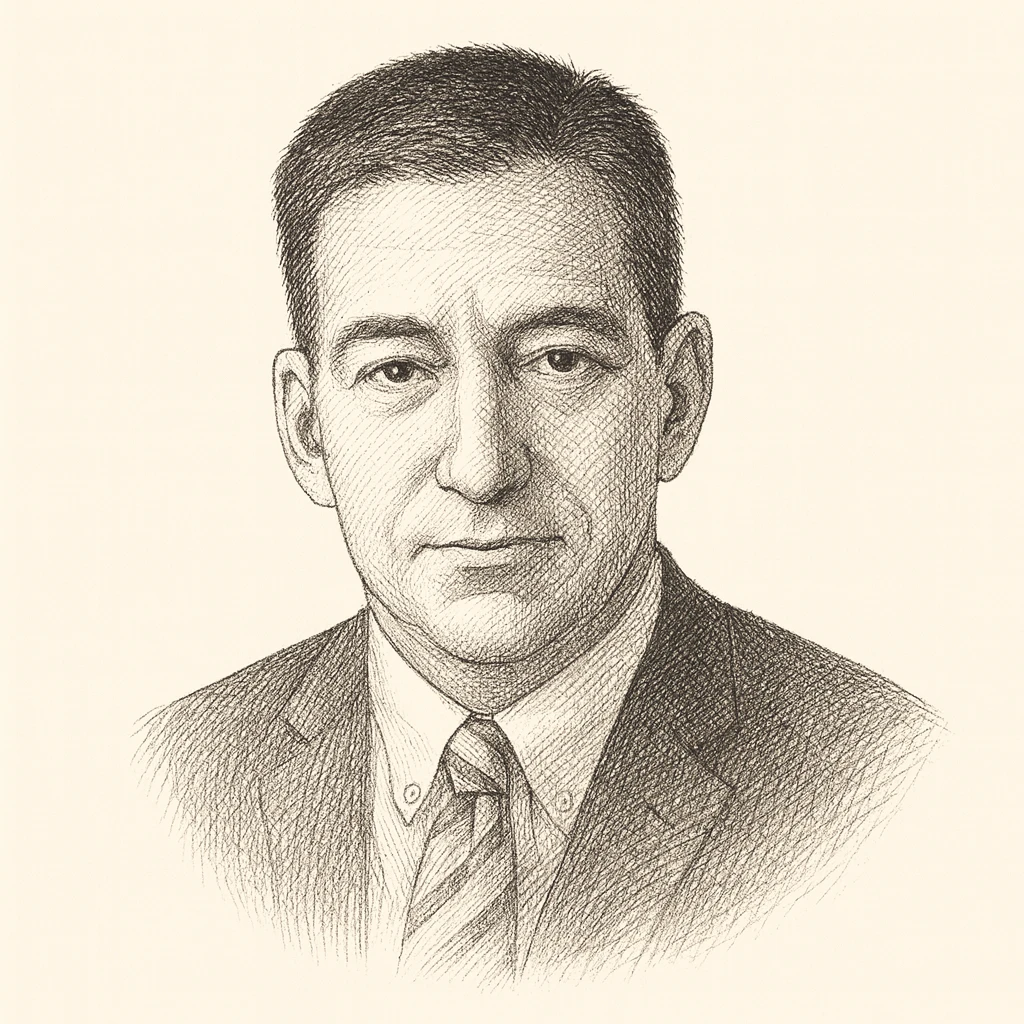
Glenn Greenwald is an American journalist, lawyer, and commentator whose work centers on civil liberties, executive power, government secrecy, and press freedom. Trained as a constitutional and civil rights lawyer before turning to writing, he built his public reputation as a fierce critic of the expansion of state power in the post-9/11 era, arguing that the "war on terror" produced systematic erosions of privacy, due process, and constitutional constraints under both Republican and Democratic administrations. A defining feature of his political thought is a refusal to align permanently with either major party, insisting instead that abuses of power be judged by consistent principles regardless of who holds office.
Greenwald came to global prominence through his central role in reporting the disclosures of former National Security Agency contractor Edward Snowden, which revealed the scale of mass electronic surveillance conducted by the United States and allied governments. That reporting, which earned major journalism awards, crystallized his argument that pervasive secret surveillance is incompatible with democratic accountability and individual autonomy, and that a free press must serve an adversarial function against the powerful rather than a deferential one. He co-founded the online outlet The Intercept to pursue this kind of investigative, confrontational journalism, though he later departed from it amid disputes over editorial independence.
Intellectually, Greenwald draws on a civil-libertarian tradition that prizes the First and Fourth Amendments, skepticism of concentrated executive authority, and vigilance against the security state. He is a persistent critic of what he describes as a merger between establishment media, intelligence agencies, and political elites, and he has increasingly framed his work around defending free speech, dissent, and unpopular views against censorship. These positions have earned him admirers across the political spectrum for consistency and independence, and the charge that his contrarianism aligns him with the political right or serves adversarial foreign governments.
His broader influence lies in shaping how many people think about the tension between security and liberty, the role of whistleblowers, and the responsibilities of journalism toward power. Whether embraced or disputed, his insistence that principles of civil liberties should not bend to partisan loyalty has made him a recurring reference point in debates over surveillance, transparency, and press freedom in the digital age.
Glenn Greenwald is associated with Civil Libertarian. See the archetype