
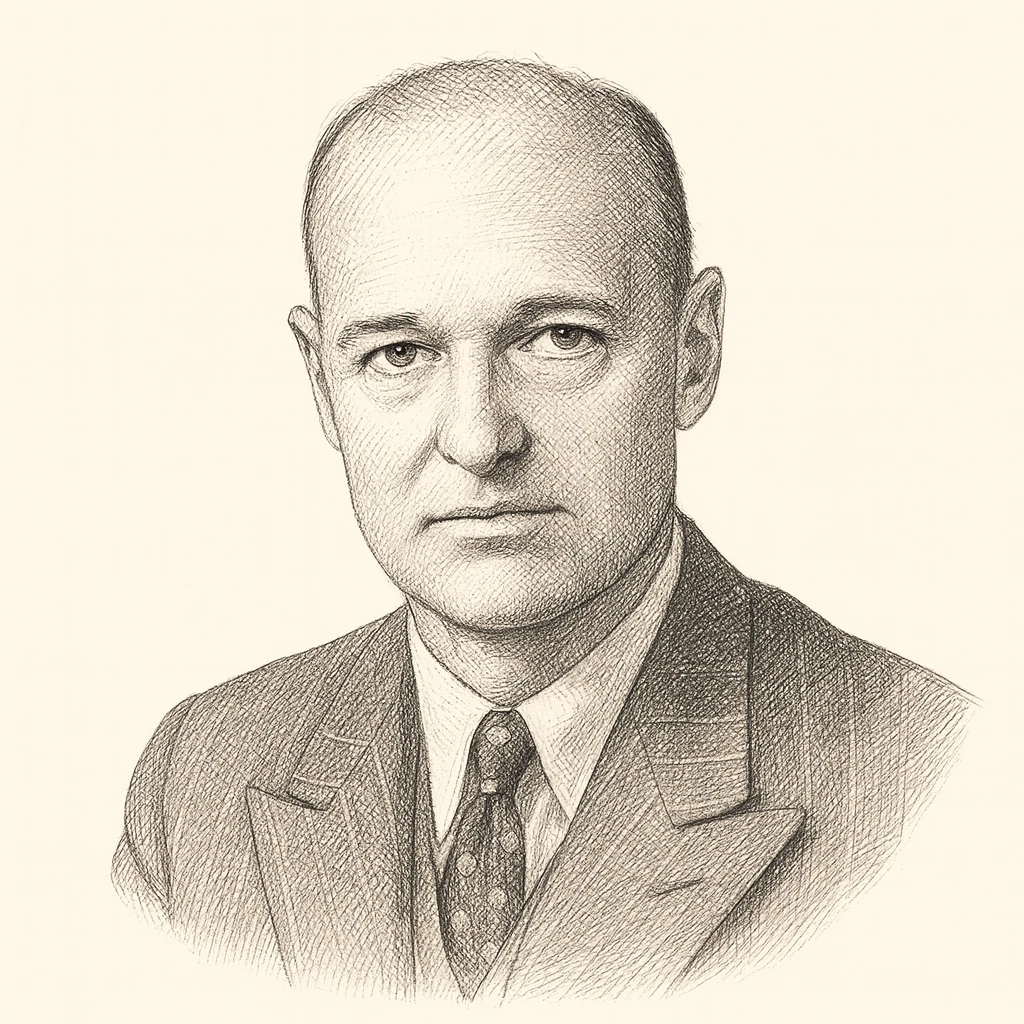
George Kennan was an American diplomat, historian, and foreign-policy thinker best known as the intellectual architect of "containment," the strategy that framed the United States' posture toward the Soviet Union for much of the Cold War. Steeped in the study of Russian history and culture, and posted in Moscow during the Stalin era, Kennan argued that Soviet expansionism sprang from a mixture of Marxist-Leninist ideology and older Russian insecurities, and that it could be met not by war but by the patient, firm application of counter-pressure at points where Soviet ambition threatened Western interests. His 1946 Long Telegram and the subsequent anonymous "X" article gave this analysis its canonical form and enormous influence in Washington.
Kennan belonged to the realist tradition of thinking about international politics, which treats states as pursuing interests and power within a competitive order rather than acting on moral crusades. He was skeptical of ideological zeal in foreign policy, of moralism and legalism as guides to statecraft, and of the assumption that American values could or should be exported wholesale. This made him a proponent of restraint: he favored limited, calculated commitments over open-ended ones, and he prized diplomacy, prudence, and a clear sense of proportion between ends and means.
Almost immediately, Kennan grew alarmed at how his idea was received. He objected that containment had been read as a primarily military doctrine, applied indiscriminately around the globe, when he had intended something more selective and political. He became a critic of the arms race, of the militarization of the Cold War, and later of American interventions he judged reckless, including his opposition to the expansion of NATO after the Soviet collapse. That tension—between the strategist who named the policy and the dissenter who warned against its excesses—defines his legacy.
As a scholar he wrote extensively on diplomatic history and won major literary prizes, and he remained a respected, sometimes gloomy public voice into old age. His thought endures as a touchstone for those who counsel calibrated engagement over both isolationism and crusading interventionism.
George Kennan is associated with Pragmatic Centrist. See the archetype