
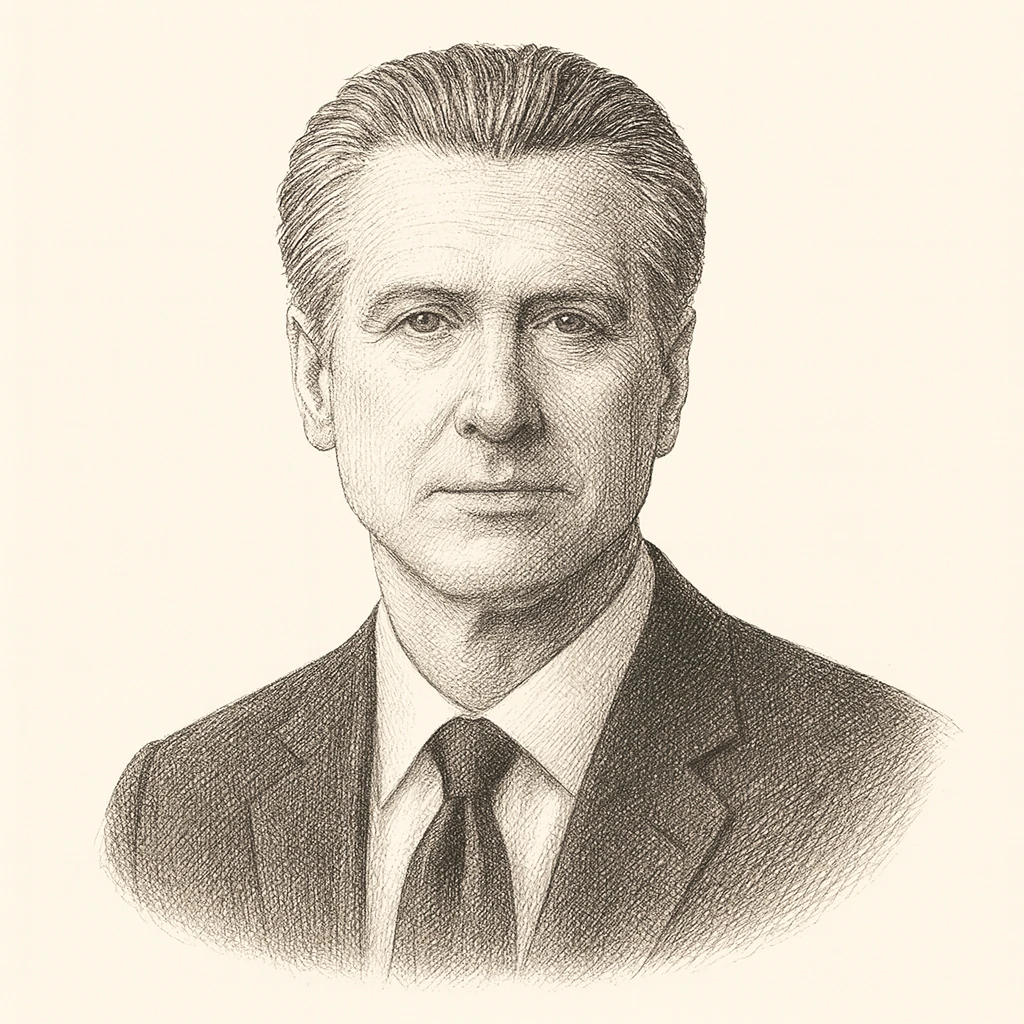
Gavin Newsom's political thought is rooted in a distinctly Californian brand of progressivism that fuses socially liberal positions on cultural questions with an embrace of market activity, technological innovation, and public-sector ambition. He first drew national attention as mayor of San Francisco, when he directed the city to issue marriage licenses to same-sex couples years before such unions were legally recognized nationally. That decision established a recurring feature of his political identity: a willingness to use executive authority to press ahead of prevailing consensus on civil-rights and equality questions, framing them as matters of fundamental fairness rather than incremental policy.
As lieutenant governor and then governor of the nation's most populous state, Newsom has positioned California as a self-conscious counterweight to conservative governance, promoting expansive climate policy, an aggressive regulatory posture toward carbon emissions and vehicle standards, and broad state investment in health care, housing, and social programs. He often casts California as a laboratory demonstrating that progressive governance and economic dynamism can coexist, invoking the state's scale and wealth as evidence for a governing model. This posture has also made him a target for critics who point to the state's persistent problems with housing costs, homelessness, and cost of living as evidence against the model he champions.
More recently, Newsom has become associated with a combative, nationally oriented style of Democratic politics that seeks to contest conservative arguments directly rather than avoid cultural conflict. He has argued that his party should defend its values assertively on issues such as reproductive rights, gun regulation, and democratic norms, and he has framed contests between states as a broader argument about competing visions of freedom and governance. In doing so he has helped popularize the idea that governors can act as national political actors and ideological spokesmen, not merely administrators.
His significance lies less in a distinctive body of theory than in his role as a prominent exponent and combatant for contemporary American liberalism. He embodies debates within the Democratic coalition about how boldly to advance progressive commitments, how to reconcile ambitious government with practical results, and how aggressively to confront the political right in an era of intense partisan polarization.
Gavin Newsom is associated with Moderate Liberal. See the archetype