
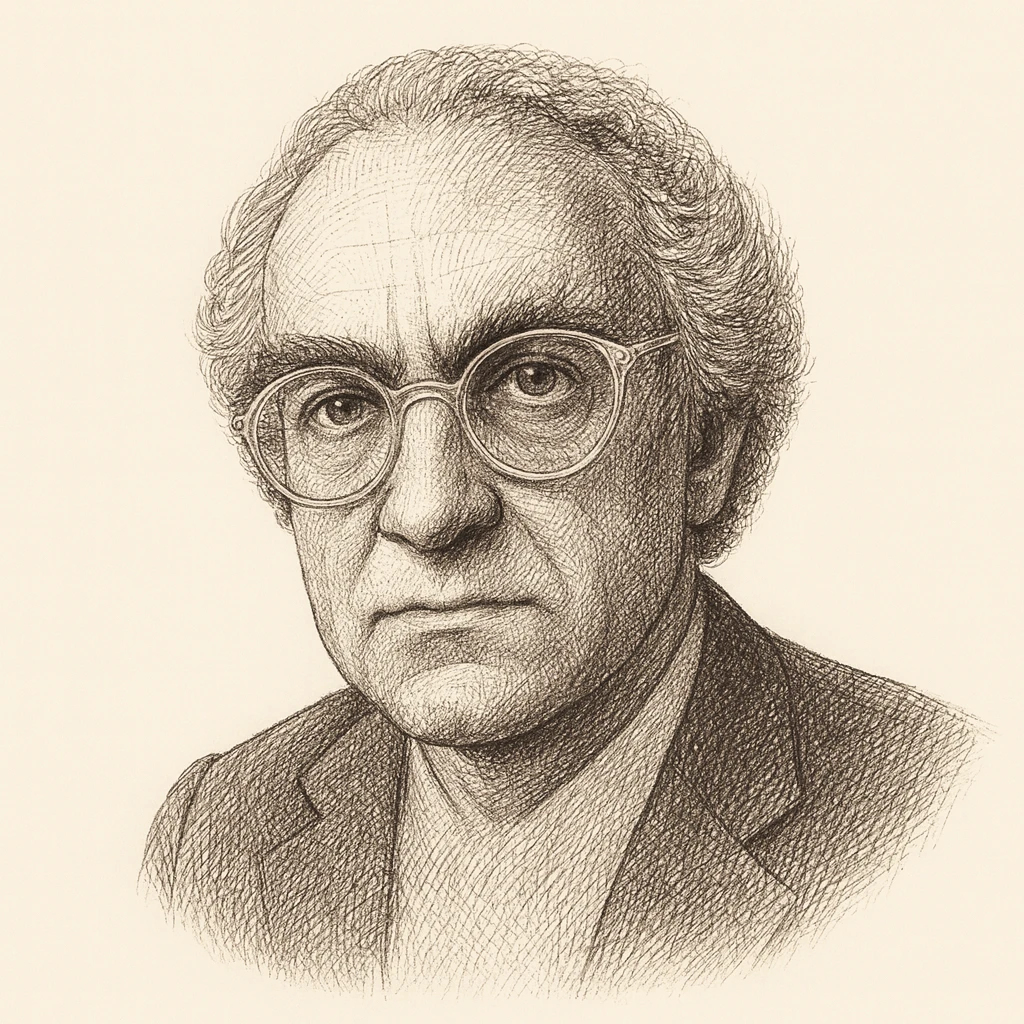
Gerald Allan Cohen (1941–2009) was a Canadian-born philosopher who became one of the most influential figures in what came to be known as Analytical Marxism, a movement that sought to reconstruct Marxist claims using the tools of analytic philosophy and rigorous conceptual clarity rather than dialectical rhetoric. Raised in Montreal in a working-class, communist Jewish milieu, he studied at McGill and Oxford and spent much of his career teaching in Britain, eventually holding the Chichele Professorship of Social and Political Theory at Oxford. His early landmark work offered a systematic defense of Marx's theory of history, arguing that it could be understood as a coherent, functional explanation in which the development of productive forces shapes economic structures and, in turn, political and ideological life.
Cohen was a founding member of the informal circle of scholars sometimes called the September Group, which insisted on subjecting Marxist ideas to the same standards of argument demanded elsewhere in philosophy—famously described as "non-bullshit Marxism." Over time his focus shifted from historical materialism toward normative political philosophy, and especially toward the foundations of equality. He engaged closely and critically with libertarian arguments, particularly the idea of self-ownership associated with Robert Nozick, contending that the intuition of owning oneself did not entail the sweeping property rights and market outcomes libertarians derived from it.
In his later years Cohen became a searching critic of the egalitarian liberalism of John Rawls. He questioned whether justice could be reconciled with the incentives that reward the talented for their cooperation, arguing that a thoroughly just society depends not only on institutions and rules but on an ethos of justice governing personal choices. He also pressed egalitarians to confront the gap between their professed convictions and their own comfortable lives, treating this as a serious philosophical challenge rather than mere hypocrisy.
Cohen's political thought matters because it fused radical egalitarian commitment with analytic precision, insisting that left-wing convictions must survive rigorous scrutiny. His interrogation of self-ownership, incentives, and the demands of justice continues to shape debates among political philosophers across the ideological spectrum, and his work remains a reference point for anyone examining what equality requires in practice.
G.A. Cohen is associated with Democratic Socialist. See the archetype