
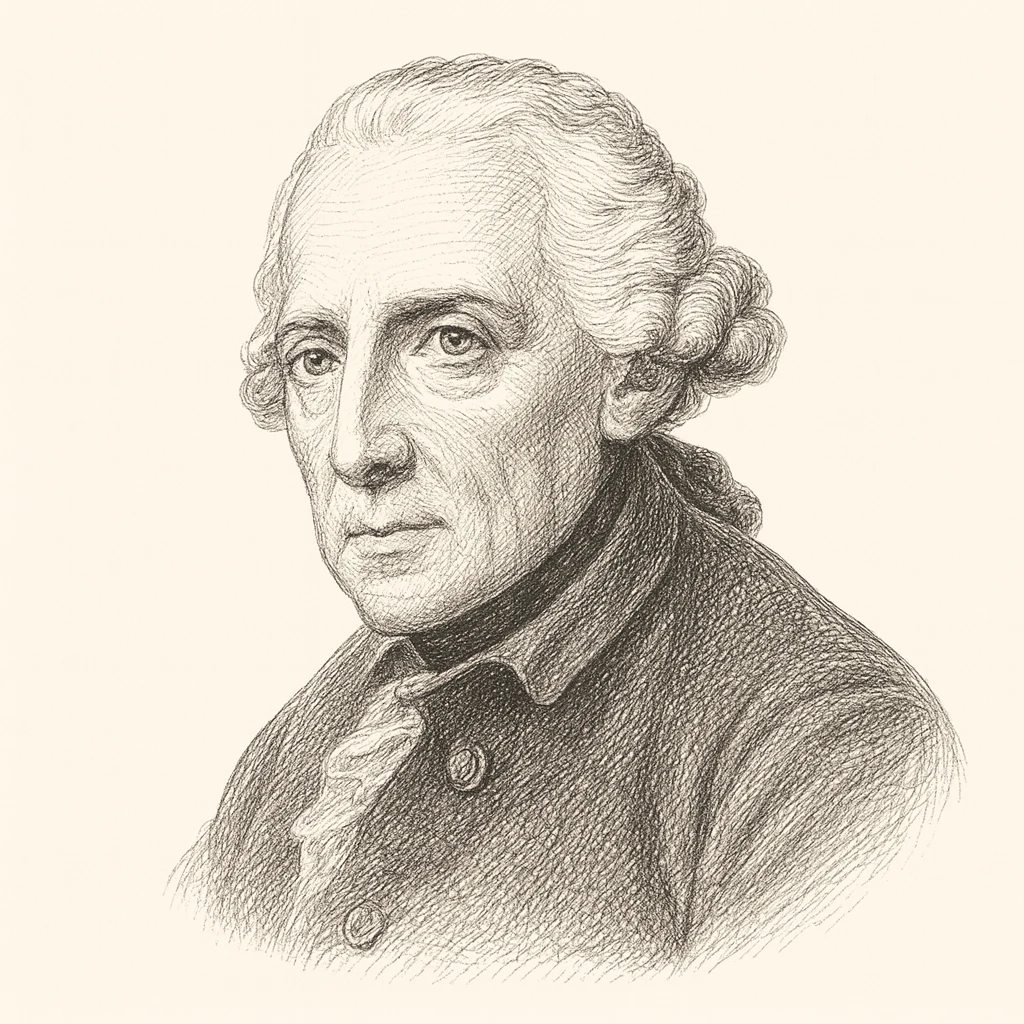
Frederick II of Prussia was the best-known of the eighteenth century's 'enlightened despots'—a philosopher-king who corresponded with Voltaire and other philosophes, composed flute concertos, and made Prussia a major European power through war and administrative reform. His father, Frederick William I, treated him harshly, imprisoning him after an attempted flight and forcing him to watch the execution of his friend Hans Hermann von Katte; Frederick nonetheless kept up the literary, philosophical, and musical interests his father had tried to suppress.
Frederick's seizure of Silesia from Austria (1740) demonstrated his Realpolitik—he attacked without provocation, exploiting the uncertainty over Maria Theresa's succession to the Habsburg lands. The Seven Years' War (1756-1763) nearly destroyed Prussia, but Frederick held his kingdom against a coalition of Austria, Russia, and France, helped by Russia's withdrawal from the war in 1762. In the First Partition of Poland (1772) he annexed Royal Prussia, apart from Danzig and Thorn. These wars embodied a conception of statecraft in which the interests of the state (raison d'état) overrode dynastic sentiment, treaty obligation, and moral scruple; the ruler's task was to calculate advantage and act decisively when the balance of power allowed.
At home, Frederick practiced 'enlightened absolutism'—religious tolerance, legal reform, agricultural improvement, and intellectual patronage combined with absolute royal power. He called himself the 'first servant of the state,' recasting monarchy not as personal privilege but as duty: the king existed to serve the commonwealth rather than the reverse. This was the theoretical basis of enlightened absolutism: reform imposed from above by a rational sovereign, without any corresponding surrender of authority to representative institutions. Toleration extended to Catholics, Protestants, and others on the pragmatic ground that subjects should be free to seek salvation in their own way, and legal codification aimed at rationalizing and unifying a patchwork of jurisdictions.
Before taking the throne he wrote Anti-Machiavel, a refutation of Machiavelli's view of princely conduct, arguing that the ruler owed justice and benevolence to his people. Voltaire edited it for publication in 1740, the year Frederick became king and invaded Silesia, and his conduct of the Silesian wars followed the reasoning of state interest the book had rejected.
Frederick established the Prussian tradition of military efficiency and a professional bureaucracy that shaped German history through Bismarck and beyond.
Wondering where you land? Take the 4-minute assessment