
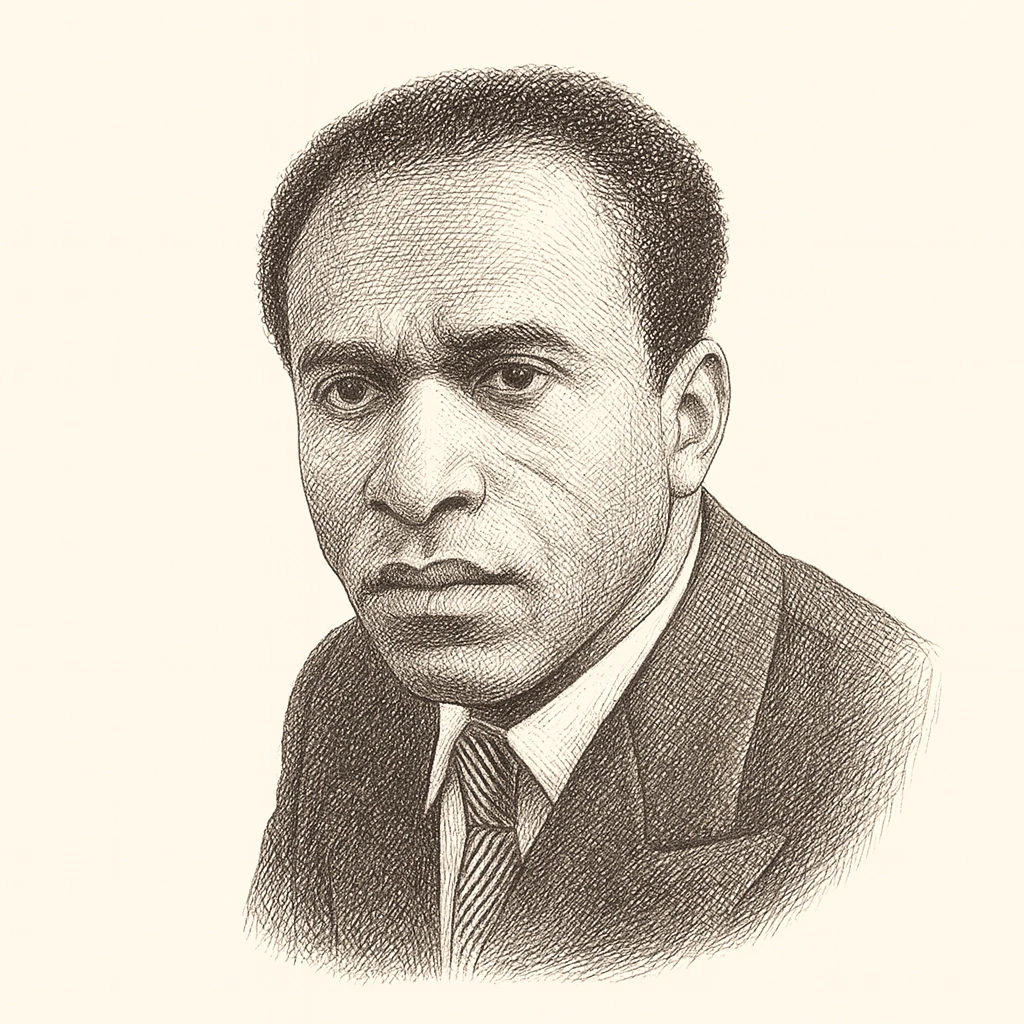
Frantz Fanon was born in Martinique in 1925, served in the Free French forces during the Second World War, and trained as a psychiatrist in France. His early work drew on his own experience of racism and his clinical practice to examine the psychological wounds inflicted by colonialism. In his first book he analyzed how colonized people internalize the values and self-image imposed by the colonizer, arguing that racial domination operates not only through economic and political structures but through the deformation of consciousness and identity.
Fanon's political thought crystallized after he took up a psychiatric post in colonial Algeria and became committed to the Algerian struggle for independence against French rule. He came to see colonialism as a system of organized violence that dehumanized both the colonized and the colonizer, and he argued that decolonization was necessarily a confrontational and often violent process of overturning that order. His most influential work brought together a critique of colonial economics, a warning about the pitfalls of national middle classes who might inherit and reproduce colonial structures, and an appeal to the peasantry and the dispossessed as agents of transformation.
He is best known for the argument, developed in his final book, that anticolonial violence could serve a psychologically restorative and politically constituting function for the oppressed—a claim that has been widely debated, admired, and condemned. Hannah Arendt, in On Violence (1970), attacked what she took to be his glorification of violence, while defenders stress that he was describing the dynamics of colonial systems rather than issuing a simple prescription. His reflections on national consciousness were themselves double-edged, warning that a narrow nationalism could collapse into corruption and new forms of oppression unless it deepened into a genuine social and political program.
Fanon died of leukemia in 1961, shortly before Algerian independence. His writings became foundational texts for national liberation movements, Third Worldism, Black radical thought, and later postcolonial theory. Thinkers and activists across Africa, the Caribbean, Latin America, and the United States drew on his analysis of race, colonialism, and revolution, and he remains a central reference point for debates about the relationship between nationalism, class, and emancipation.
Frantz Fanon is associated with Left Nationalist. See the archetype