
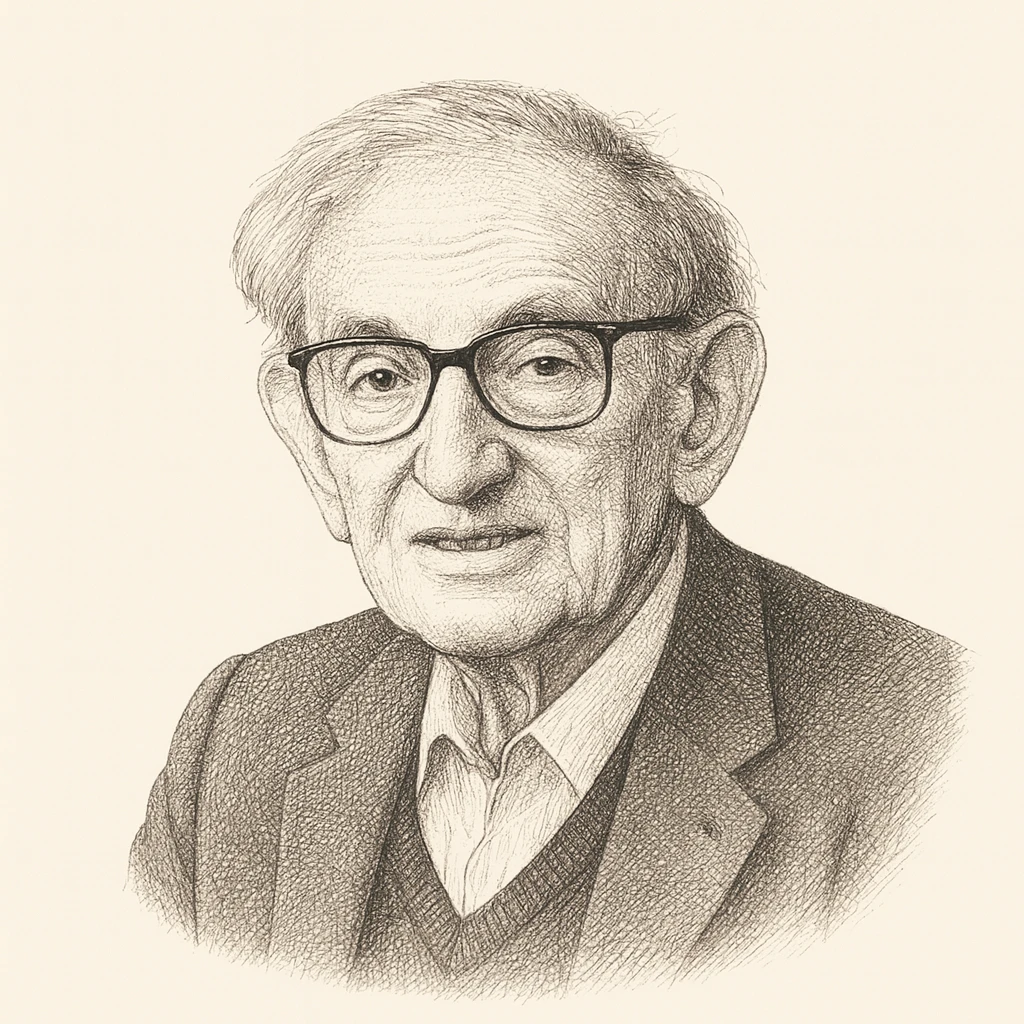
Eric Hobsbawm (1917–2012) was among the most influential Marxist historians of the twentieth century, a scholar whose work sought to explain the making of the modern world through the lens of economic and social forces. He is best known for a series of interpretive histories tracing the rise and trajectory of capitalism and industrial society from the late eighteenth century through the twentieth. Across these works he framed the modern era as a story of revolution, industrial transformation, imperial expansion, and the recurring tensions between capital and labor, offering a materialist account in which class relations and productive forces did much of the explanatory work.
A lifelong member of the Communist Party and a committed Marxist, Hobsbawm remained loyal to that intellectual tradition even as many contemporaries broke away, particularly after the crises of the mid-twentieth century Communist movement. This persistence drew sharp objections alongside admiration for the range of his history: Tony Judt, who called him "the most naturally gifted historian of our time," wrote in 2003 that he "never engages the moral as well as the political heritage of Stalin and his works." He was a central figure among the British Marxist historians, a milieu that pioneered 'history from below,' attending to the experiences, movements, and consciousness of ordinary working people rather than elites alone.
Hobsbawm's most enduring contribution to political thought may be his analysis of nations and nationalism. He argued that nations are not primordial or natural but modern constructions, and he drew attention to the ways collective identities and traditions are deliberately fashioned and propagated to serve political ends. This 'modernist' and constructivist understanding of national identity influenced debates far beyond Marxism, shaping how scholars across the social sciences think about the origins and functions of nationalism.
He also engaged directly with the politics of the left, reflecting on the labor movement's fortunes and the strategic dilemmas facing socialist and social-democratic parties in late-industrial societies. His interventions on the difficulties confronting the labor movement stirred debate within the British left about its future direction. Read together, his scholarship and commentary offered a distinctively long-range, materialist perspective on how economic change reshapes politics, identity, and the prospects for collective action.
Eric Hobsbawm is associated with Rooted Progressive. See the archetype