
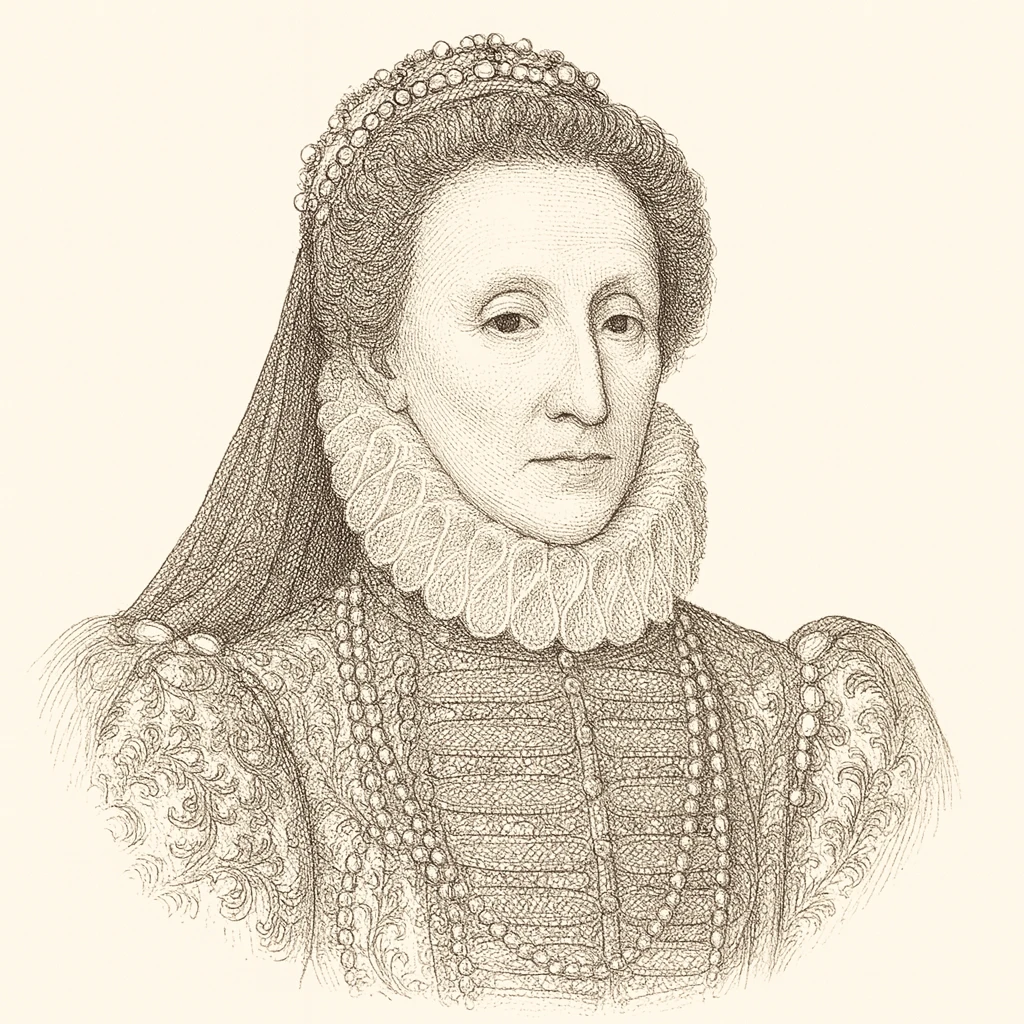
Elizabeth I was the 'Virgin Queen' whose 45-year reign established England as a Protestant nation and emerging world power. The daughter of Henry VIII and Anne Boleyn, Elizabeth survived the dangerous reigns of her siblings to claim the throne in 1558. Having lived through the Catholic restoration under her sister Mary I and the political precariousness of her own status, she governed with a caution born of experience.
Elizabeth's religious settlement established the Church of England as Protestant but tolerant of Catholic practice—a via media that avoided the religious wars devastating Europe. 'I have no desire to make windows into men's souls.' The formula demanded outward conformity and public obedience while declining to interrogate private belief, a pragmatic answer to an age in which confession and loyalty were treated as one. This restraint was contested at both extremes: Catholics chafed under recusancy penalties, while Puritan reformers pressed for a more thoroughly Protestant church, and Elizabeth resisted both. Her refusal to marry preserved her independence and kept foreign powers competing for England's alliance, turning a potential vulnerability into a diplomatic instrument.
Elizabeth's statecraft rested on the doctrine of monarchical authority and prerogative, yet she governed through persuasion and management rather than raw command. She worked with skilled counsellors, notably William Cecil, and cultivated a working relationship with Parliament while guarding the Crown's prerogatives on marriage, succession, and religion from parliamentary intrusion. Her careful management of faction, Parliament, and foreign powers kept England stable through religious conflict.
Central to her rule was the deliberate cultivation of royal image. The cult of 'Gloriana' fused portraiture, pageantry, and rhetoric to present the queen as the embodiment of the realm—a strategy that helped legitimate female sovereignty in a culture deeply sceptical of women's rule. Elizabeth turned her unmarried state and her personal identification with the nation into a source of authority, a self-fashioning that later commentators have studied as an early mastery of political symbolism.
The Elizabethan era saw cultural flowering—Shakespeare, Spenser, Marlowe—and the beginnings of English naval and colonial power. The defeat of the Spanish Armada (1588) was Elizabeth's greatest triumph, celebrated as vindication of Protestant England. 'Gloriana' became England's mythical queen, embodying national identity and female sovereignty, and her reign supplied a lasting model of pragmatic, image-conscious statecraft that shaped later English conceptions of monarchy and nationhood.
Wondering where you land? Take the 4-minute assessment