
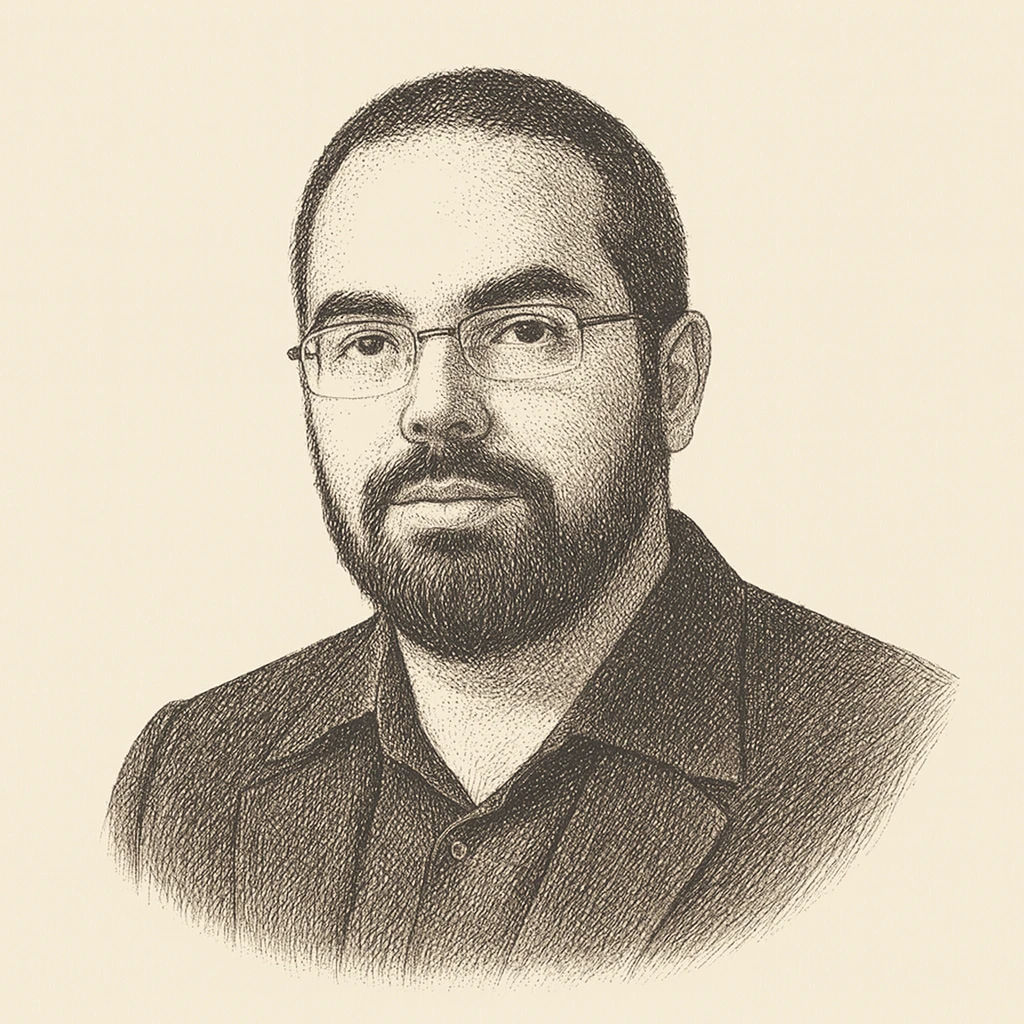
Eliezer Yudkowsky is an American writer and self-taught theorist best known for founding the Machine Intelligence Research Institute and for building the online community around the blog LessWrong. Working largely outside conventional academic and political institutions, he became one of the earliest and most insistent voices arguing that advanced artificial intelligence poses a catastrophic, potentially civilization-ending risk if its goals are not carefully aligned with human values. His writing on this theme, alongside his long sequences of essays on human cognition and bias, helped crystallize a distinctive intellectual movement often called "rationalism."
Although Yudkowsky is not a conventional political thinker, his ideas carry strong political implications and have shaped a recognizable worldview. He treats reasoning itself as a civic project—arguing that better-calibrated individual and collective judgment is a precondition for good decisions about high-stakes technologies. This outlook emphasizes probabilistic thinking, decision theory, and a willingness to take low-probability, high-consequence dangers seriously, and it feeds directly into the effective altruism and existential-risk communities that treat the long-term future as a subject of moral and policy concern. His arguments cluster naturally with those of Nick Bostrom, Robin Hanson, and the writer Scott Alexander, all of whom share his fascination with how emerging technologies reshape human prospects.
In recent years Yudkowsky has become notably pessimistic, publicly arguing that humanity is unprepared to control powerful AI systems and calling for drastic restrictions on their development. Admirers credit him with foreseeing debates that later reached mainstream governments and technology firms; skeptics find his forecasts overstated and his tone alarmist, and point to his lack of formal credentials. His influence is best understood less through any single institution than through the vocabulary and habits of thought he helped popularize—terms and framings now common in discussions of AI safety, governance, and the ethics of technological progress.
Eliezer Yudkowsky is associated with Techno-Progressive. See the archetype