
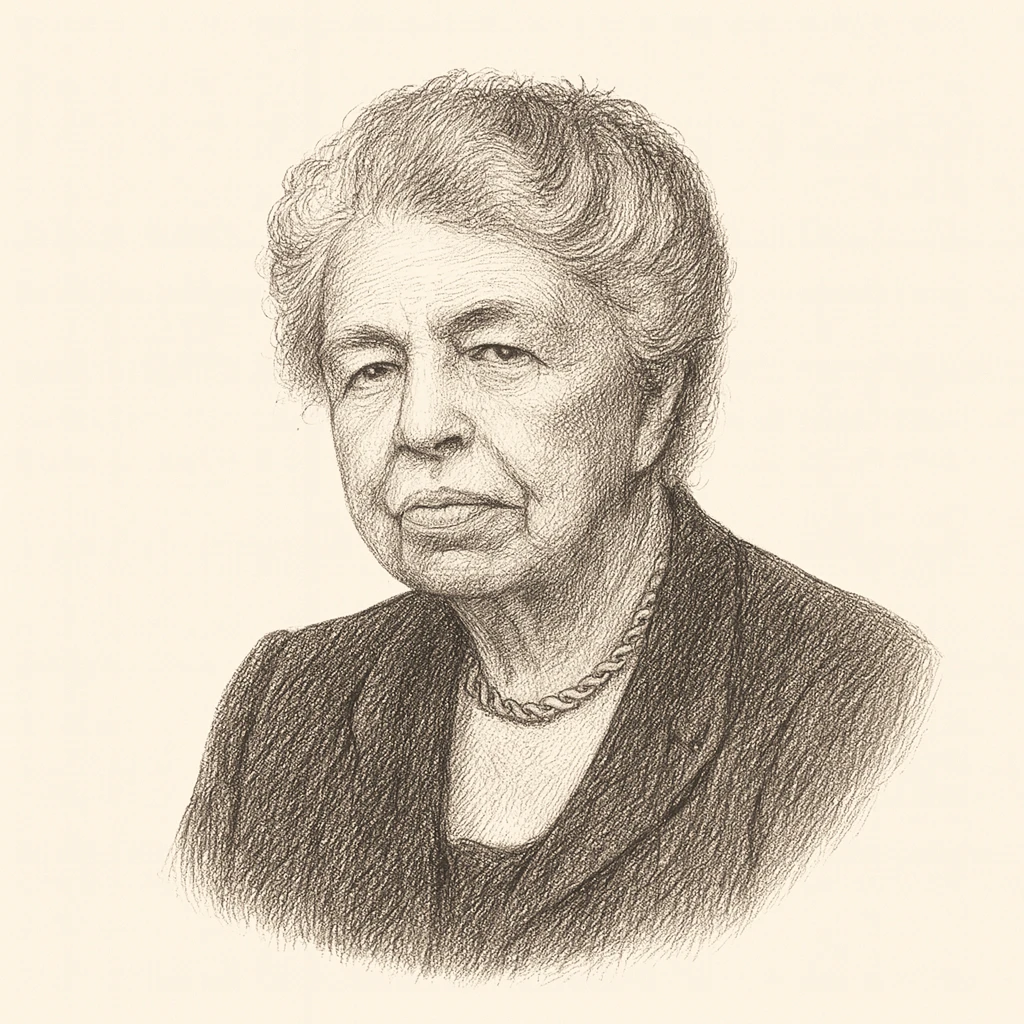
Eleanor Roosevelt transformed the role of First Lady from ceremonial figure to political force and became, after FDR's death, a global champion of human rights. Born to privilege but orphaned young, Eleanor married her distant cousin Franklin, supporting his career while developing her own voice on social issues. Her early activism in women's organizations, labor reform circles, and Democratic Party politics gave her an independent political identity before she reached the White House.
As First Lady (1933-45), Eleanor held press conferences open only to women reporters, which helped women journalists keep their jobs. She wrote a syndicated column and traveled relentlessly; she was FDR's eyes, ears, and conscience. She used these platforms to argue that the New Deal's obligations extended to those the recovery often overlooked: the unemployed, the young, and sharecroppers. She championed civil rights, meeting with Black leaders when her husband wouldn't, and resigned from the Daughters of the American Revolution when they barred Marian Anderson from Constitution Hall.
After FDR's death, Truman appointed Eleanor to the United Nations, where she chaired the UN Commission on Human Rights and its drafting committee, which prepared the Universal Declaration of Human Rights (1948). She worked to include economic, social, and cultural rights alongside civil and political liberties, and insisted the Declaration must not be seen as an American or Western document. She described it as having no legal value but carrying moral weight. She called it her greatest accomplishment.
During the Cold War she was the first nationally prominent liberal to oppose Joseph McCarthy, and she defended civil liberties while criticizing communist activism in the United States.
Eleanor remained active in Democratic politics and human rights causes until her death, later chairing a federal commission examining the status of women. Harry Truman called her 'First Lady of the World', in recognition of her advocacy for human rights and for the marginalized.
Eleanor Roosevelt is associated with Social Liberal. See the archetype