
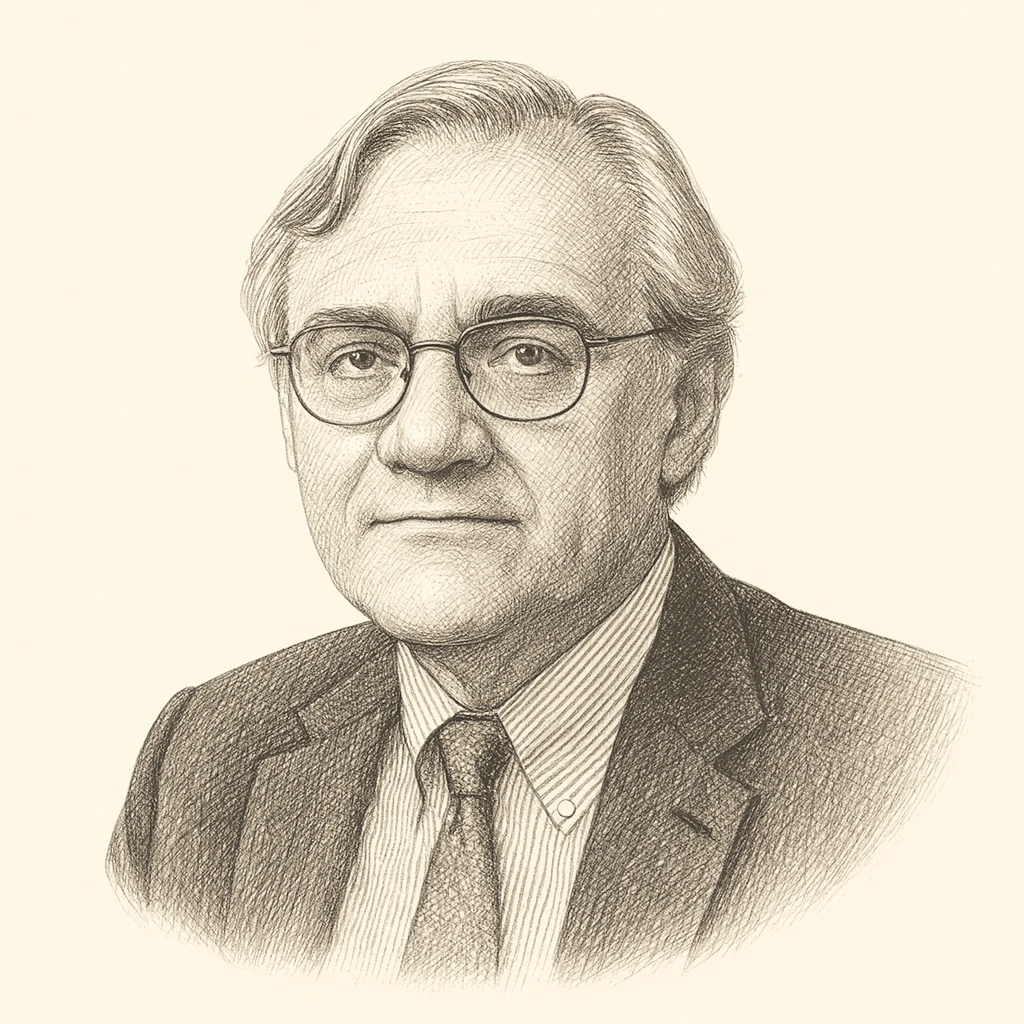
E.J. Dionne Jr. is an American journalist and political commentator whose writing has helped define the intellectual self-understanding of American liberalism over the past several decades. A longtime columnist for The Washington Post and a fixture in public broadcasting and radio commentary, Dionne is also affiliated with the Brookings Institution and Georgetown University, positions that reflect his role as a bridge between working journalism and academic political analysis. His work is grounded in a Catholic social tradition and a communitarian sensibility, emphasizing the moral obligations that bind citizens together rather than a purely individualist account of rights and markets.
Dionne is best known for a sustained critique of the way American politics has become polarized and reduced to symbolic culture-war conflicts that crowd out substantive debate. His widely read book on why Americans came to distrust and disengage from politics argued that partisan combat over polarizing wedge issues had left many citizens feeling that political debate no longer spoke to their real concerns. Across his columns and books, he has traced the internal tensions of both American liberalism and conservatism, urging liberals to recover a confident, values-based public philosophy and warning that the right's drift toward ideological rigidity threatened a healthier balance in American life.
A recurring theme in his thought is the compatibility of religious faith and progressive politics. Dionne has argued against the assumption that piety belongs only to the political right, drawing on Catholic social teaching and the broader tradition of religiously motivated reform to insist that concern for the poor, social justice, and the common good is deeply rooted in American religious life. He has also written about the balance between community and individual liberty, presenting these not as opposites but as values that a well-ordered polity must hold in tension.
As a commentator, Dionne occupies a center-left position that is reformist rather than radical, defending institutions, incremental progress, and the possibility of civic renewal. His influence lies less in a single systematic theory than in his consistent articulation of a liberalism attentive to community, tradition, and moral seriousness, offered to a broad public audience through decades of column-writing, books, and broadcast commentary. In this way he has shaped how many educated readers frame debates about polarization, faith, and the purposes of American democracy.
E.J. Dionne is associated with Social Liberal. See the archetype