
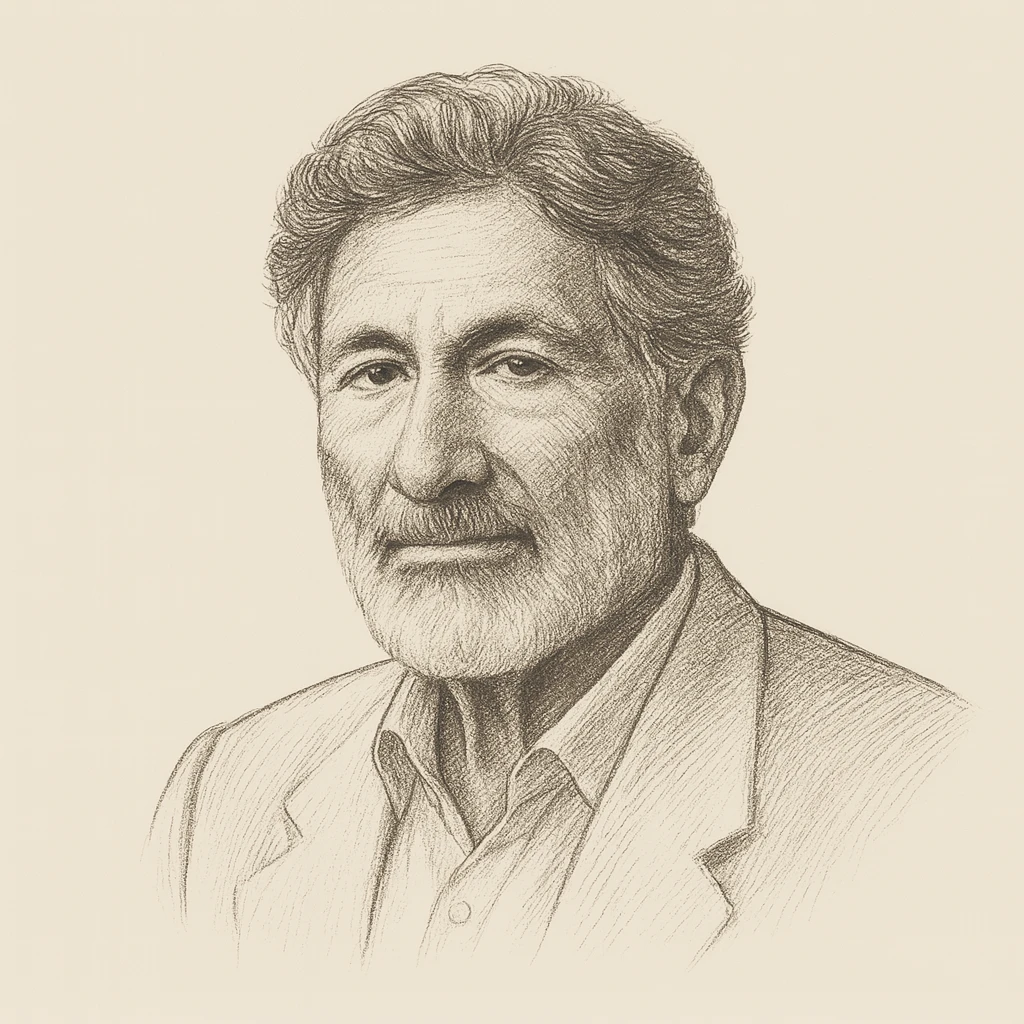
Edward Said was a Palestinian-American literary scholar who became one of the most influential intellectuals of the late twentieth century, best known for founding the field of postcolonial studies. A professor of comparative literature at Columbia University for most of his career, he argued that scholarship, art, and popular culture are never politically neutral: they carry and reinforce structures of power. His central claim was that knowledge and domination are entangled, and that understanding this link is essential to understanding modern politics.
In Orientalism, Said argued that Western academic, literary, and political depictions of "the East"—especially the Arab and Islamic world—constructed it as exotic, backward, and irrational, and that this body of representation both justified and enabled colonial rule. Drawing on Foucault's account of the relationship between knowledge and power, and on Gramsci's ideas about cultural hegemony, he treated culture as a battleground rather than an ornament. The book reframed how scholars across the humanities and social sciences think about representation, difference, and empire, and it remains foundational to postcolonial critique.
Said was also an outspoken advocate for Palestinian rights, giving that cause a prominent voice in Western intellectual life and writing extensively on the politics of representation surrounding it. He served for a time as a member of the Palestinian National Council but broke publicly with the leadership over the Oslo Accords, which he criticized as capitulation. Admirers saw in his activism a principled defense of the dispossessed, and Orientalism drew objections for overgeneralizing and for reading Western scholarship too selectively. That debate over the book's scholarly rigor continues among historians and area-studies specialists.
Beyond his polemics, Said theorized the role of the intellectual as an independent figure who speaks truth to power and refuses easy affiliation with states or orthodoxies. His insistence that critics remain "amateur" outsiders, resisting professional and political co-optation, shaped how many scholars and activists understand their public responsibilities. His body of work continues to inform debates about culture, imperialism, and identity worldwide.
Edward Said is associated with Progressive Activist. See the archetype