
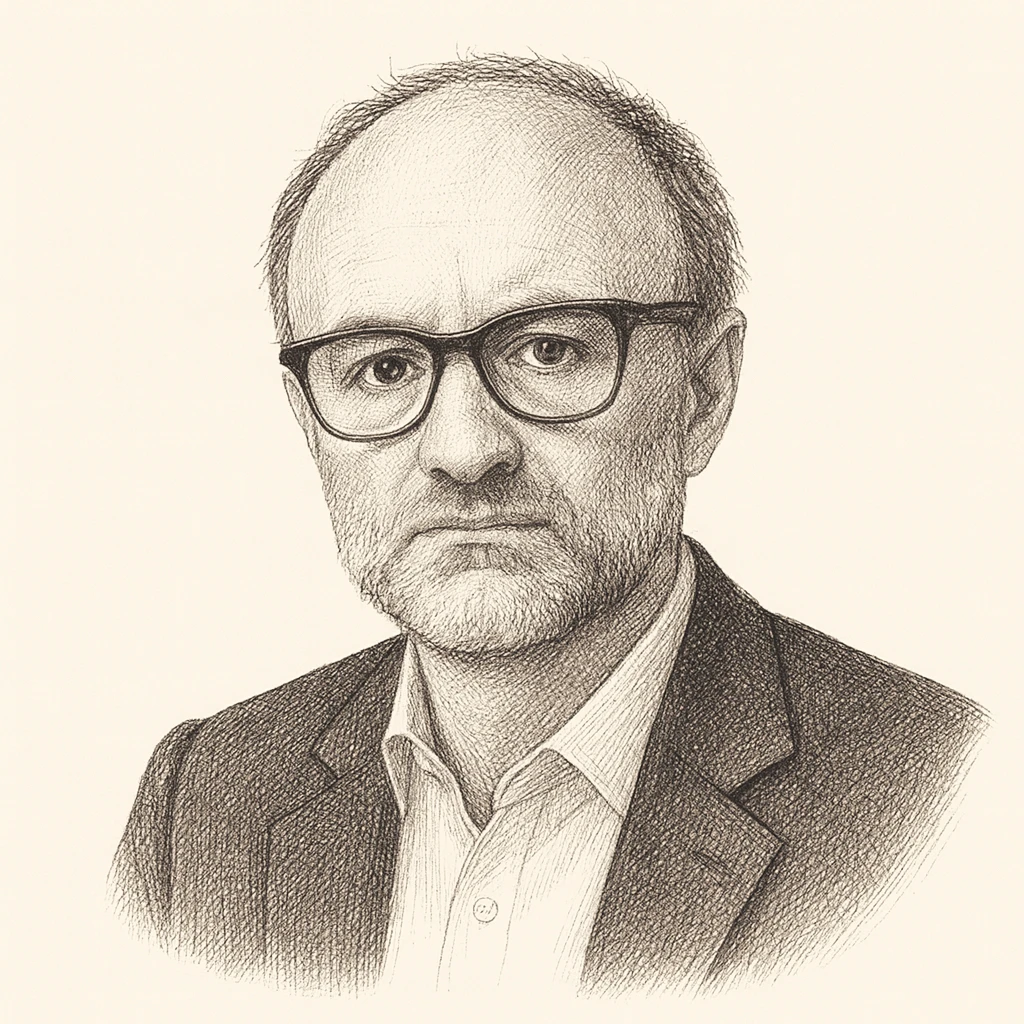
Dominic Cummings is a British political strategist best known as the campaign director of Vote Leave, the official campaign for the United Kingdom's departure from the European Union in the 2016 referendum, and subsequently as chief adviser to Prime Minister Boris Johnson. His political thought is defined less by allegiance to a party tradition than by a distinctive theory of how modern states fail and how they might be reformed. He is associated with an insurgent, anti-establishment style that treats conventional political and bureaucratic wisdom as ripe for disruption, and with a conviction that data, measurement and communications discipline can decisively shift political outcomes.
At the core of his thinking is a preoccupation with state capacity: the argument that Western governments, and Britain's civil service in particular, are poorly structured to make good decisions, manage complex projects, or absorb expertise from science and technology. He has repeatedly argued that Whitehall rewards generalists over specialists, mismanages large procurement and infrastructure efforts, and lacks the analytical and forecasting tools common in high-performing organizations. From this he draws a reform agenda emphasizeng recruitment of scientists, mathematicians and data specialists into government, greater use of quantitative methods, and a willingness to break institutional norms in pursuit of results. His outlook draws on management and decision-science literatures and an admiration for high-ambition technological projects, giving his politics a strongly technocratic and at times utopian cast.
His influence has been double-edged. Supporters credit him with demonstrating the power of tightly focused messaging and data-driven targeting in referendum and electoral campaigning, and with pushing questions of institutional competence and "state capacity" into mainstream debate on both the right and, increasingly, parts of the left. Critics regard his approach as corrosive of constitutional convention, contemptuous of expertise it does not share, and willing to concentrate power in unaccountable ways. His prolific writing, much of it published on his personal blog, has made him an unusually visible practitioner-theorist, circulating his arguments about bureaucracy, forecasting and reform well beyond Britain. His ideas about how to remake the machinery of government continue to be debated.
Dominic Cummings is associated with Techno-Authoritarian. See the archetype