
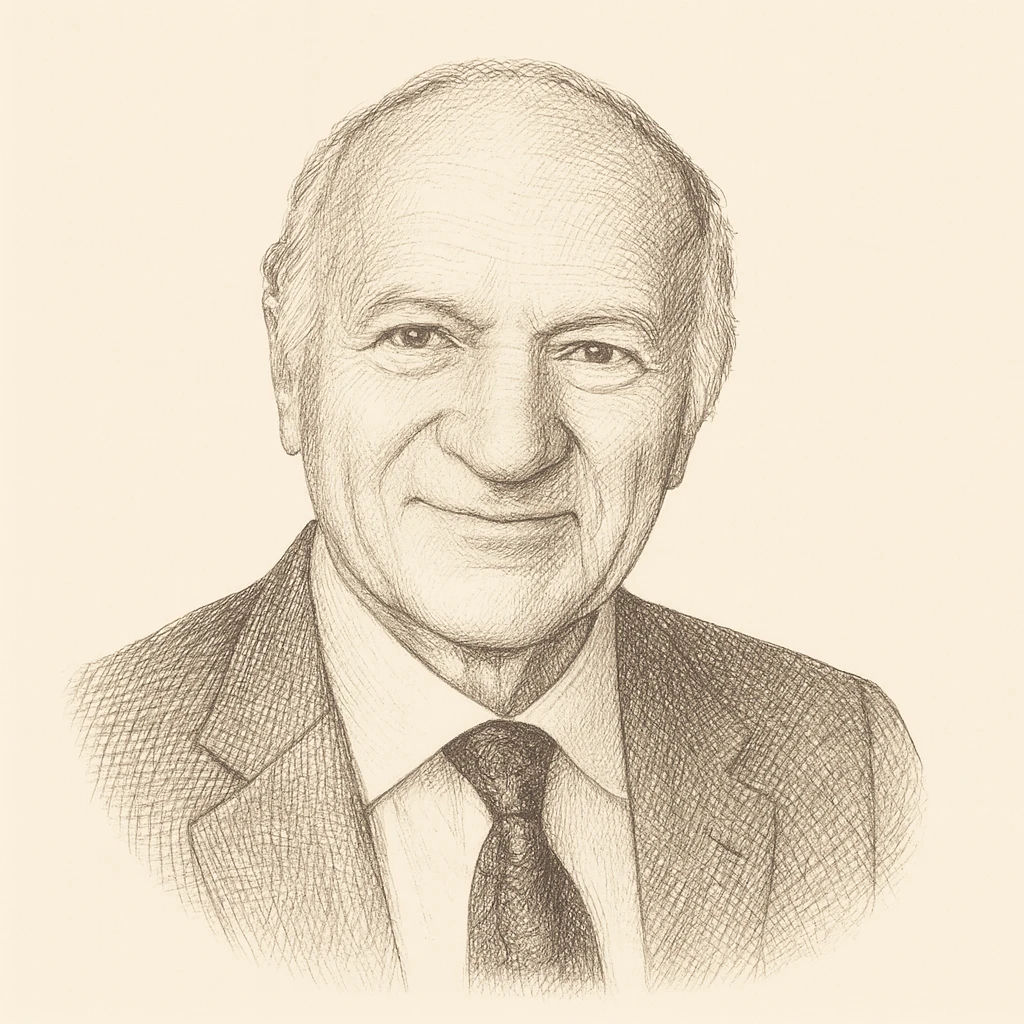
Domenico Losurdo (1941–2018) was an Italian philosopher who worked within the Marxist tradition while drawing heavily on classical German thought, especially Hegel. For much of his career he taught at the University of Urbino, and he was a prominent figure in international Hegel and Marx scholarship. His writing combined intellectual history with sharply polemical political intent, aiming to reconstruct the actual historical record behind celebrated political ideas rather than accept their idealized self-image.
Losurdo is best known for his "counter-history" of liberalism, in which he argued that the liberal tradition, from its early modern origins through the nineteenth century, developed alongside and was deeply implicated in slavery, colonial domination, and the exclusion of large parts of humanity from the rights it proclaimed. He emphasized how canonical liberal thinkers could champion liberty for a propertied minority while defending or tolerating bondage and empire, treating this not as hypocrisy to be waved away but as constitutive of the tradition itself. This approach made him a widely cited, and widely contested, voice in debates over the moral genealogy of Western political thought.
His broader method rested on identifying what he saw as ideological "legends" that shape historical judgment. In this spirit he wrote a controversial reassessment of Stalin that challenged what he called a "black legend," seeking to situate Soviet history in the context of war, encirclement, and comparative violence rather than accept a purely condemnatory narrative. He was similarly interested in reinterpreting figures such as Nietzsche as fundamentally reactionary political thinkers, and in defending revolutionary and anti-colonial movements, including the trajectory of communism in the twentieth century, against liberal triumphalism.
Losurdo's influence lies in providing intellectual ammunition for a critical, anti-imperialist reading of Western political history that resonates on the Marxist and postcolonial left. Admirers value his erudition and his insistence on reading political ideals against their material and imperial contexts. His relativizing of the crimes of communist states, and his rehabilitative treatment of Stalin and Mao, have been read as apologetics. Either way, his work remains a reference point in ongoing arguments about liberalism, revolution, and how political traditions should reckon with their own histories.
Domenico Losurdo is associated with Vanguard Collectivist. See the archetype