
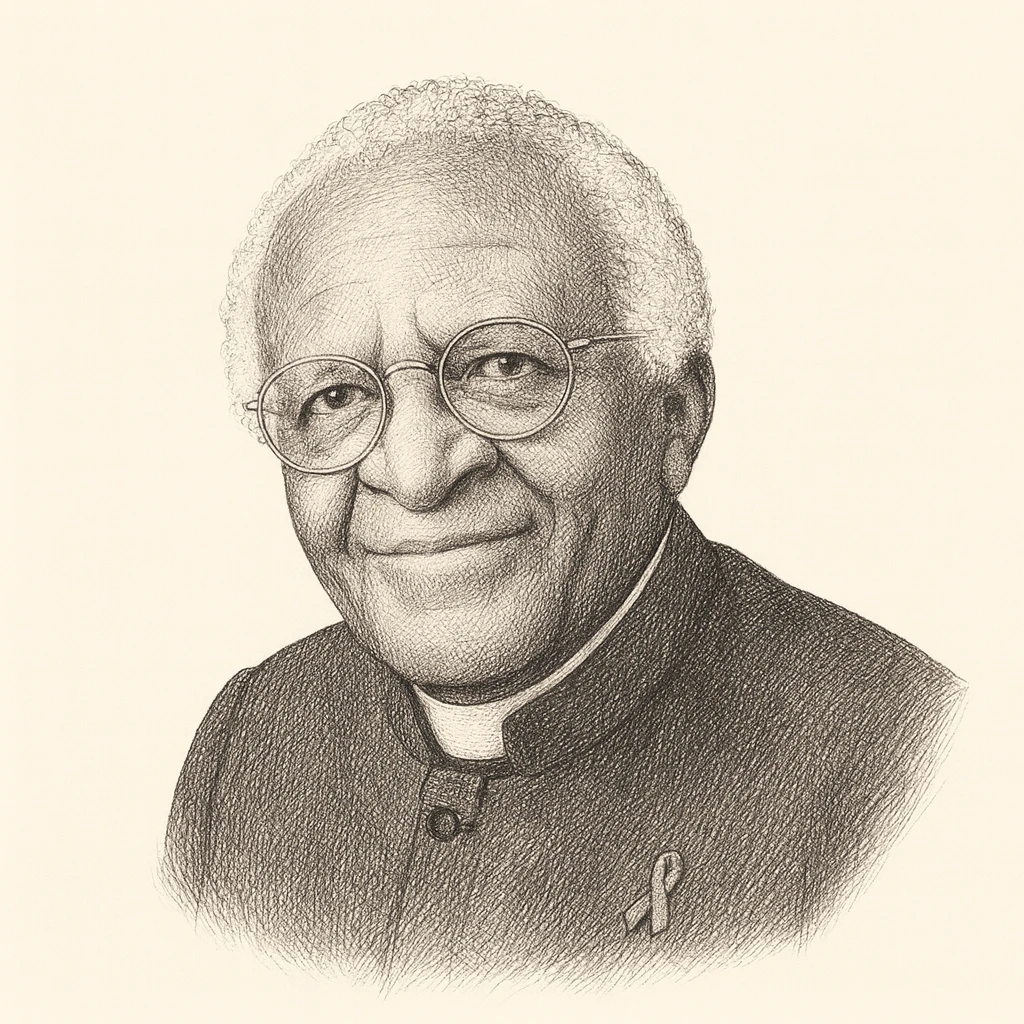
Desmond Mpilo Tutu was the voice of South Africa's anti-apartheid struggle through the years when its political leadership was imprisoned or exiled. Born in Klerksdorp in 1931, he taught school until the Bantu Education Act made the work an instrument of apartheid, then turned to the priesthood and was ordained in the Anglican Church in 1961. He rose quickly and visibly: first Black Dean of Johannesburg in 1975, Bishop of Lesotho, then general secretary of the South African Council of Churches from 1978 — the platform from which he campaigned for nonviolent resistance and international sanctions. The Nobel Peace Prize followed in 1984; the archbishopric of Cape Town, the first held by a Black cleric, in 1986.
His theology ran on ubuntu, the Southern African idea that a person is a person through other persons. On that ground apartheid was more than unjust law; it was a lie about human nature, a heresy that denied the image of God in Black South Africans and disfigured the humanity of their oppressors too. The same conviction produced his phrase for the country apartheid could not prevent: the rainbow nation.
Nelson Mandela made him chair of the Truth and Reconciliation Commission in 1995, which traded amnesty for full public disclosure rather than staging trials; No Future Without Forgiveness (1999) is Tutu's account and defense of that wager. He never retired from the prophet's office. He denounced corruption in the post-apartheid ANC as fiercely as he had denounced the old regime, and championed LGBT rights within a reluctant church, declaring that he would not worship a homophobic God. He died in Cape Town on 26 December 2021.
Desmond Tutu is associated with Christian Socialist. See the archetype