
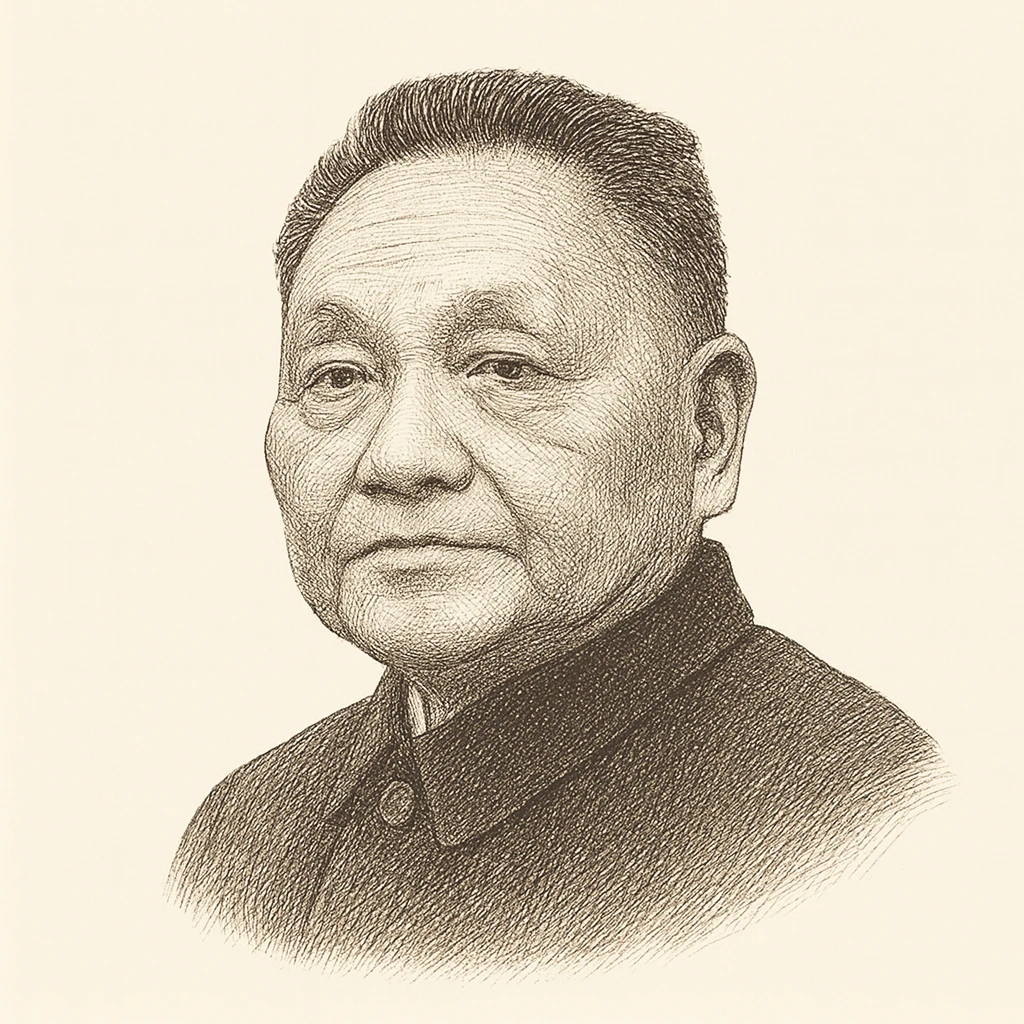
Deng Xiaoping was the paramount leader of China from the late 1970s into the early 1990s, and the figure most associated with steering the People's Republic away from Maoist economic dogma toward what became known as "socialism with Chinese characteristics." A veteran of the Communist revolution who was purged more than once during the Cultural Revolution, Deng returned to power after Mao Zedong's death and set in motion the "reform and opening" program that transformed China's economy while keeping political authority firmly monopolized by the Communist Party.
Deng's political thought is defined less by systematic doctrine than by a pragmatic, results-oriented disposition, captured in his emphasis on practice and outcomes over ideological purity. He is popularly associated with the idea that it does not matter whether a cat is black or white so long as it catches mice, and with slogans urging that China "seek truth from facts." This pragmatism licensed the introduction of market mechanisms, special economic zones, foreign investment, and the dismantling of collective agriculture — all framed not as a repudiation of socialism but as a means to strengthen it. Crucially, Deng insisted that economic opening not be accompanied by political liberalization; he articulated commitments to upholding party leadership and the socialist path as non-negotiable limits.
That combination — economic dynamism under authoritarian political control — is what gives Deng enduring influence on how people think about governance and development. His model challenged the widely held Western assumption that markets and prosperity would inevitably generate demands for democracy, and it became a reference point for regimes seeking growth without pluralism. The most severe stain on his record is the violent suppression of the Tiananmen Square protests in 1989, in which the military killed large numbers of demonstrators; Deng backed the crackdown, and it stands as the definitive demonstration of the boundaries he placed around reform.
Deng largely retired from formal office while retaining decisive influence, and his approach continued to shape Chinese policy after his death. Assessments of his legacy remain sharply divided: admirers credit him with lifting hundreds of millions out of poverty and modernizing a vast country, while critics emphasize the authoritarian repression and the human costs that accompanied his rule.
Deng Xiaoping is associated with Techno-Authoritarian. See the archetype