
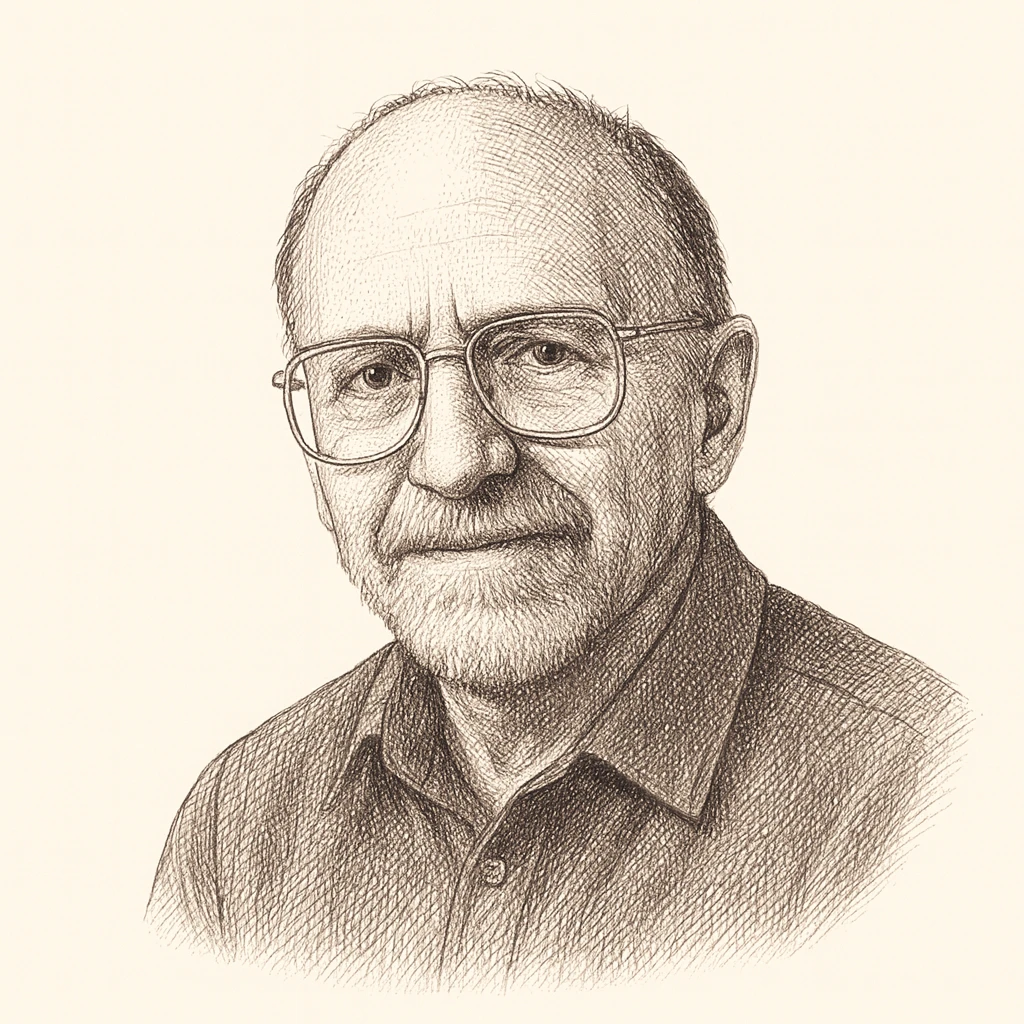
David Schweickart is an American philosopher associated with the revival of serious theoretical work on market socialism and economic democracy in the late twentieth century. Trained in both mathematics and philosophy and long affiliated with Loyola University Chicago, he became known for arguing that the central problems people attribute to capitalism stem not from markets as such but from the private ownership and control of productive capital. His work sits within the broader tradition of democratic socialist and analytical Marxist thought, engaging the question of whether a coherent, workable alternative to capitalism can be specified rather than merely wished for.
Schweickart's signature contribution is a systematic model he calls Economic Democracy, elaborated in works such as "Against Capitalism" and "After Capitalism." The model combines three institutional features: firms run democratically by the workers who staff them, a market for goods and services rather than central planning, and social rather than private control over investment, typically financed through a capital-assets tax and allocated through public banking institutions. By retaining markets for products while socializing capital and democratizing the workplace, he sought to answer both the socialist critique of exploitation and the standard objections that planned economies are inefficient and authoritarian.
His political thought is deliberately comparative and argumentative: he defends economic democracy not only on grounds of fairness and workplace dignity but by claiming it can match or exceed capitalism on efficiency, growth discipline, and freedom, while avoiding the concentrated private power he regards as corrosive to genuine democracy. In doing so he entered debates with defenders of capitalism, with proponents of central planning, and with fellow market socialists over how investment should be governed and how worker-managed firms would behave. He has also connected his model to concerns about globalization, inequality, and ecological limits, presenting economic democracy as a response to the instabilities of contemporary capitalism.
Schweickart's influence lies less in any mass political movement than in the intellectual sphere, where his blueprint became a widely cited reference point for discussions of feasible post-capitalist institutions, workplace democracy, and the ethics of ownership. For students and theorists asking what socialism could concretely mean after the discrediting of command economies, his careful, model-building approach offered one of the more fully specified answers on offer.
David Schweickart is associated with Market Socialist. See the archetype