
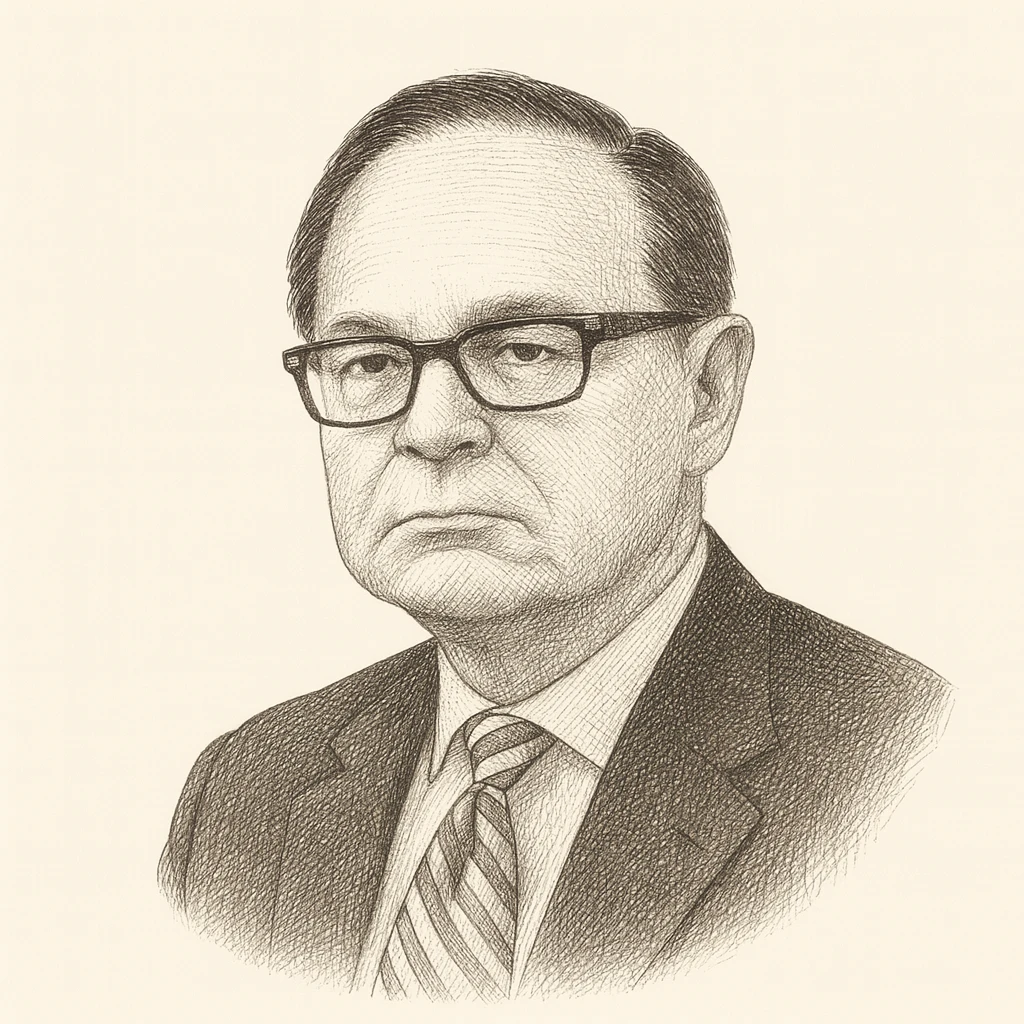
David Boaz spent most of his career at the Cato Institute, the Washington-based think tank where he served for decades as executive vice president and its principal editorial voice. More than an administrator, he functioned as a synthesizer and popularizer of libertarian ideas, working to translate a body of thought often associated with academic economists and philosophers into arguments that ordinary readers, journalists, and policymakers could follow. His central project was to present libertarianism not as a fringe eccentricity but as a coherent political tradition rooted in individual liberty, limited government, private property, free markets, and the rule of law.
His best-known work, published in the 1990s and later revised and reissued as The Libertarian Mind, laid out that vision as a unified whole. Boaz argued that freedom in personal life and freedom in economic life were not separable domains to be traded against each other but expressions of the same principle: that adults should be left to run their own lives and make their own bargains so long as they respect the equal rights of others. This framing let him fault both major American parties—the left for its faith in economic regulation and redistribution, the right for its willingness to police private conduct and expand state power in the name of order or security.
Boaz was insistent that libertarianism drew on a long liberal lineage rather than springing from postwar economics alone, tracing its themes back through classical liberal thinkers and the anti-statist strands of the American founding. He edited anthologies gathering those sources, seeking to give the movement a usable intellectual pedigree. Within the broader libertarian world he generally represented its more moderate, pragmatic wing, favoring incremental reform, engagement with mainstream debate, and a civil-libertarian emphasis on free speech, due process, drug-policy reform, and skepticism of surveillance and militarized foreign policy.
His influence lay less in original theory than in curation and communication: shaping how a generation encountered libertarian arguments, and helping make "libertarian" a recognized position in American political discourse rather than a slur. Critics from the left questioned the movement's tolerance for economic inequality and its faith in markets, while some on the right saw its social liberalism as corrosive. Boaz, for his part, treated those tensions as the price of a consistent commitment to individual freedom, and he defended that consistency until his death in 2024.
David Boaz is associated with Civil Libertarian. See the archetype