
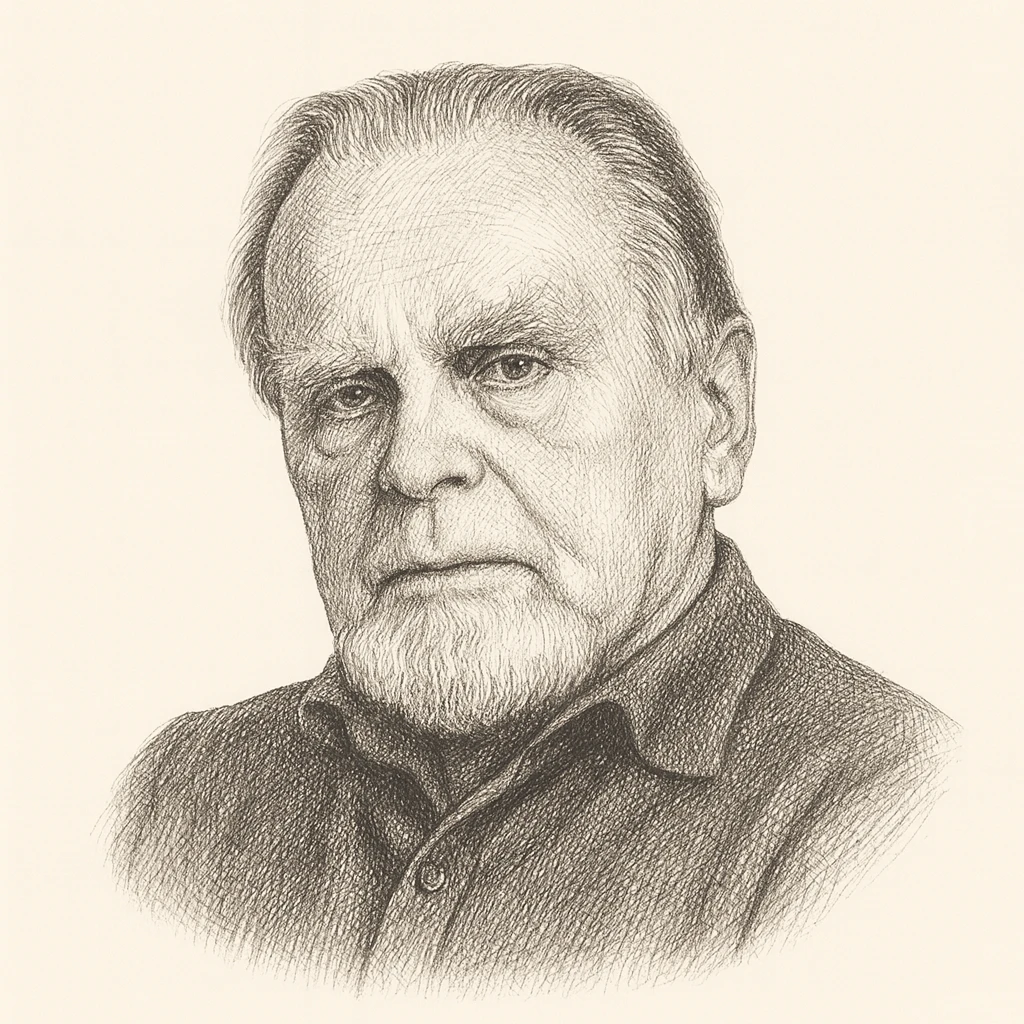
Czesław Miłosz (1911–2004) was a Polish-Lithuanian poet, essayist, and translator whose political significance rests above all on his anatomy of the intellectual under totalitarianism. Having lived through the Nazi occupation of Poland and the subsequent Stalinist consolidation, and having served briefly as a cultural diplomat for the postwar communist government before defecting to the West in the early 1950s, he wrote from the standpoint of someone who had witnessed the pressures of ideology from inside. His experience of both fascist violence and communist regimentation shaped a lifelong concern with the fate of individual conscience under systems demanding total allegiance.
His best-known work of political reflection, The Captive Mind, examines why educated people—writers, artists, intellectuals—accommodate themselves to oppressive doctrines. Rather than treating collaboration as simple cowardice or opportunism, Miłosz portrayed it as a subtle psychological process, in which people persuade themselves of a doctrine's necessity, adopt patterns of self-censorship, and cultivate an inner reservation while outwardly conforming. He described mechanisms of accommodation that allowed intellectuals to embrace what he saw as a seductive, seemingly rational historical creed. The book became one of the most influential twentieth-century analyses of ideology's grip on the mind and a touchstone for Cold War-era anti-totalitarian thought.
Miłosz resisted easy categorization. Though embraced by Western critics of communism, he was wary of triumphalist anti-communism and equally skeptical of the materialism and spiritual emptiness he perceived in the West. His thought drew on a deep engagement with Catholic and metaphysical traditions, and he consistently defended the value of individual memory, particularity, and moral truth against abstractions that subordinated persons to historical schemes. This emphasis on the concrete and the human against ideological totality runs through his essays and poetry alike.
Awarded the Nobel Prize in Literature in 1980, Miłosz became an important reference for dissident movements in Eastern Europe, where his work circulated as a resource for those resisting communist rule. His reflections on exile, on the responsibilities of the poet, and on the relationship between political power and language continue to inform discussions of how intellectuals confront authoritarianism and how societies preserve moral memory against enforced forgetting.
Czesław Miłosz is associated with Independent Localist. See the archetype