
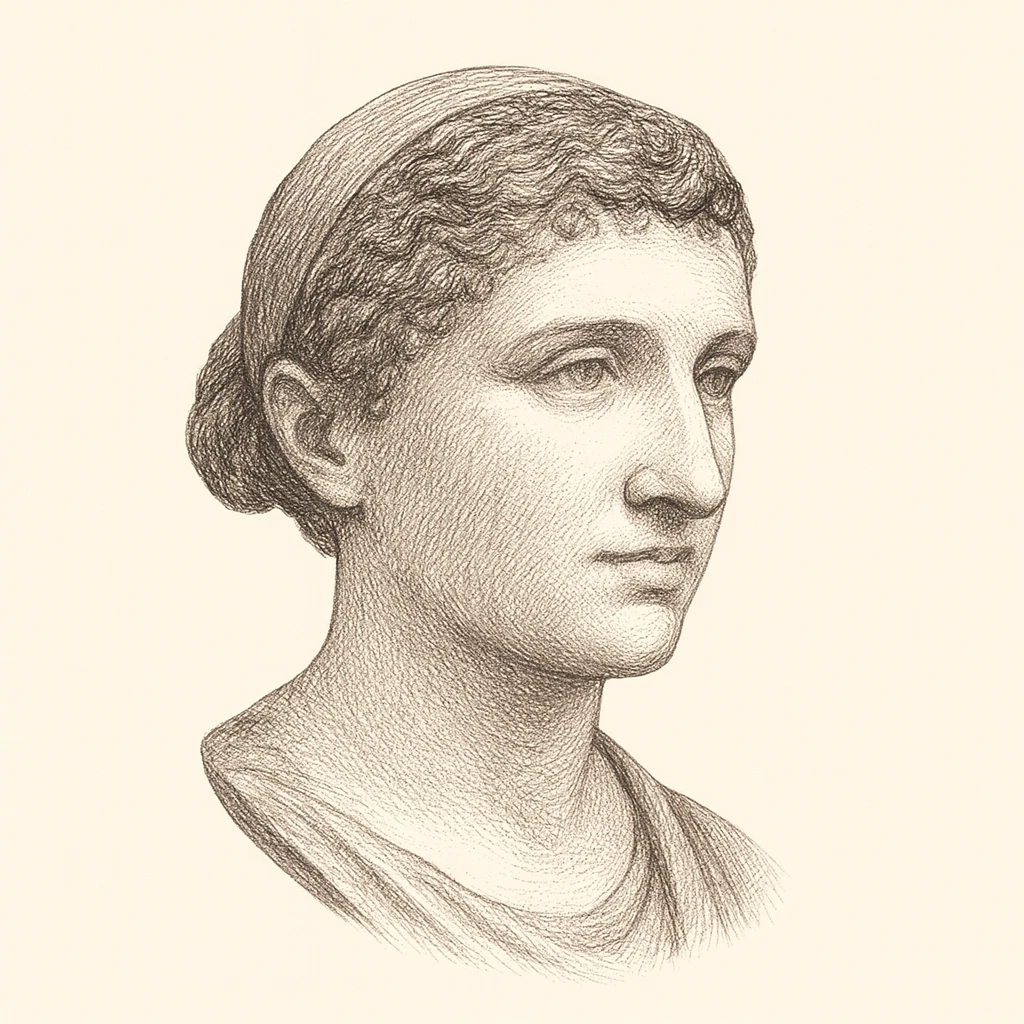
Cleopatra VII was the last active ruler of Ptolemaic Egypt, whose relationships with Julius Caesar and Mark Antony made her antiquity's most famous woman. A Macedonian Greek ruling Egypt, she belonged to a dynasty founded by one of Alexander the Great's generals, yet she was the first Ptolemy to learn the Egyptian language and to embrace pharaonic traditions—presenting herself in the guise of the goddess Isis and thereby fusing Hellenistic kingship with native religious authority to broaden her legitimacy among her subjects.
Cleopatra's central challenge was preserving Egyptian independence against Roman expansion. Egypt, the richest state in the Mediterranean world and the last to remain independent of Rome, drew its wealth from agriculture and a grain surplus, and that wealth was itself a diplomatic instrument. Her alliance with Caesar (and their son Caesarion) protected Egypt during Rome's civil wars, and after Caesar's assassination her partnership with Mark Antony sought to build an eastern Mediterranean order in which Egypt and its dynasty would survive as a great power rivaling Rome rather than as a province.
Her political strategy treated Roman leaders not as conquerors to be resisted militarily but as partners to be bound through personal alliance, shared children, and financial and naval support. Antony's grants of territory to her children advertised this vision of a Ptolemaic hegemony across the East. It was a wager that Rome's own divisions could be turned to Egypt's advantage, and it ended with the defeat by Octavian at Actium in 31 BC, which ended Egyptian independence.
Cleopatra's suicide, by asp if the legend is true, spared her, as the ancient writers tell it, from being led in Octavian's triumph. Octavian and the Augustan poets who followed him crafted a lasting image of a dangerous foreign seductress corrupting virtuous Romans, an image that served to justify the annexation of Egypt and to recast a war between Romans as a defense of Rome against an eastern threat. The record of her reign shows a ruler using every tool available (diplomacy, wealth, religion, and dynastic alliance) to preserve her kingdom.
Her death ended the Hellenistic age and Egypt's independence for nearly two millennia. She has been reinterpreted ever since, by dramatists from Shakespeare onward and by historians who read the hostile Roman sources against the grain.
Wondering where you land? Take the 4-minute assessment