
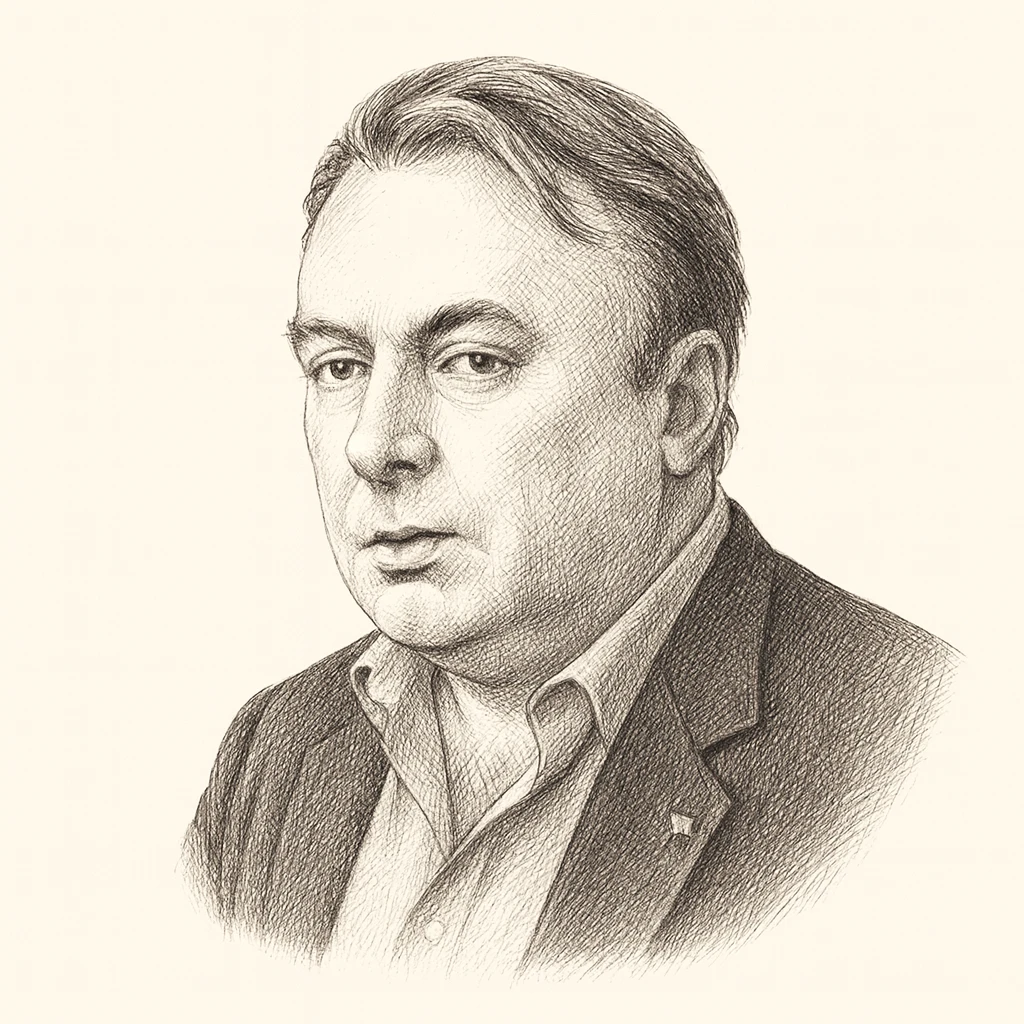
Christopher Hitchens built his reputation as a literary journalist and polemicist whose politics resisted easy classification. Emerging from the British Trotskyist and New Left milieu of the late 1960s, he wrote for decades in a tradition of anti-imperialist and internationalist socialism, taking aim at figures across the political spectrum and celebrating dissidents and secular radicals. His model was George Orwell, about whom he wrote admiringly, and from whom he drew an ideal of the writer who tells uncomfortable truths regardless of tribal loyalty. Much of his early work championed causes on the left, from opposition to Western support for authoritarian regimes to sustained criticism of established power.
His political thought is best understood as a commitment to individual conscience over collective allegiance. He attacked what he saw as cant and hypocrisy wherever he found it, targeting religious authority, political dynasties, and sacred cows of both left and right. This contrarian streak produced some of his most controversial interventions, including polemics against widely revered figures. His relish for provocation was the usual complaint against him; his refusal to defer to consensus was what admirers valued.
The defining rupture of his career came with his support for the 2003 invasion of Iraq. Framing the conflict as a struggle against theocratic and totalitarian forces, he broke publicly with much of the left he had long inhabited and aligned himself with the "liberal hawk" position. This stance permanently divided assessments of him: to some it was a principled extension of anti-fascist internationalism, to others a betrayal that lent intellectual cover to a costly and contested war. He never recanted.
In his final decade he became a leading voice of the "New Atheism," arguing that organized religion was a source of authoritarianism and violence and that secular reason was a moral necessity. This work, along with his prolific essays and combative public debates, cemented his influence as a public intellectual who prized argument, plain speech, and independence of mind. His legacy remains genuinely contested—celebrated for its courage and eloquence, criticized for its wartime advocacy and occasional cruelty—but his insistence that the thinking individual owes nothing to any orthodoxy endures.
Christopher Hitchens is associated with Independent Localist. See the archetype