
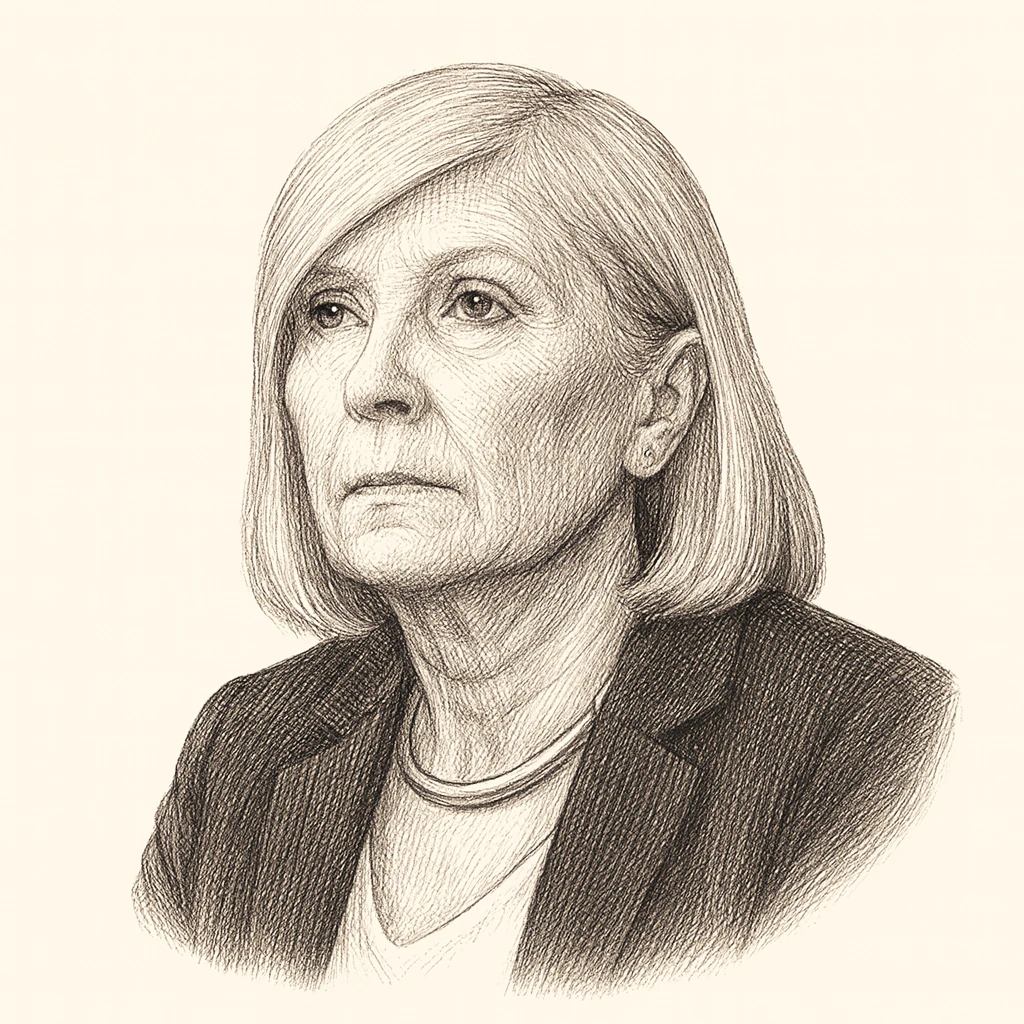
Chantal Mouffe is a Belgian political theorist whose work centers on the nature of the political and the limits of liberal democratic theory. She is best known for the book "Hegemony and Socialist Strategy," co-written with Ernesto Laclau, which became a foundational text of what is often called post-Marxism. In it, they broke with economic determinism and class essentialism, arguing that political identities and social order are not given by underlying material structures but are constructed through discourse and "hegemonic" articulation. Drawing on Antonio Gramsci's concept of hegemony alongside post-structuralist thought, they contended that there is no fixed foundation to society and that any social order is a contingent settlement of competing forces.
Central to Mouffe's thought is a critique of liberal rationalism and the ideal of consensus. Against theorists who imagine politics as the pursuit of rational agreement, she insists that antagonism is constitutive of social life and cannot be eliminated. Her influential concept of "agonistic pluralism" seeks to transform potentially destructive antagonism between enemies into a legitimate contest between adversaries who respect shared democratic institutions while continuing to disagree fundamentally. She draws on Carl Schmitt's account of the friend/enemy distinction, using his critique of liberalism to strengthen democracy rather than to reject it.
Mouffe has also written extensively on the distinction between "politics" and "the political," arguing that the ordinary machinery of governance rests on a deeper dimension of conflict and power that liberalism tends to obscure. She has been sharply critical of what she views as a post-political centrist consensus that narrows genuine democratic choice and, she argues, opens space for right-wing reaction.
In her later work she developed the case for a "left populism," arguing that the construction of a popular collective will—a "people" set against an oligarchic establishment—is a legitimate and necessary strategy for the democratic left. These arguments have had considerable influence on left-wing movements and parties in Europe and beyond, shaping debates about populism, hegemony, and the future of democratic politics. Her ideas remain contested, both by liberals who defend deliberation and consensus and by critics who question the risks of populist mobilization, but they have durably reshaped how theorists think about conflict, identity, and the boundaries of democratic life.
Chantal Mouffe is associated with Rooted Progressive. See the archetype