
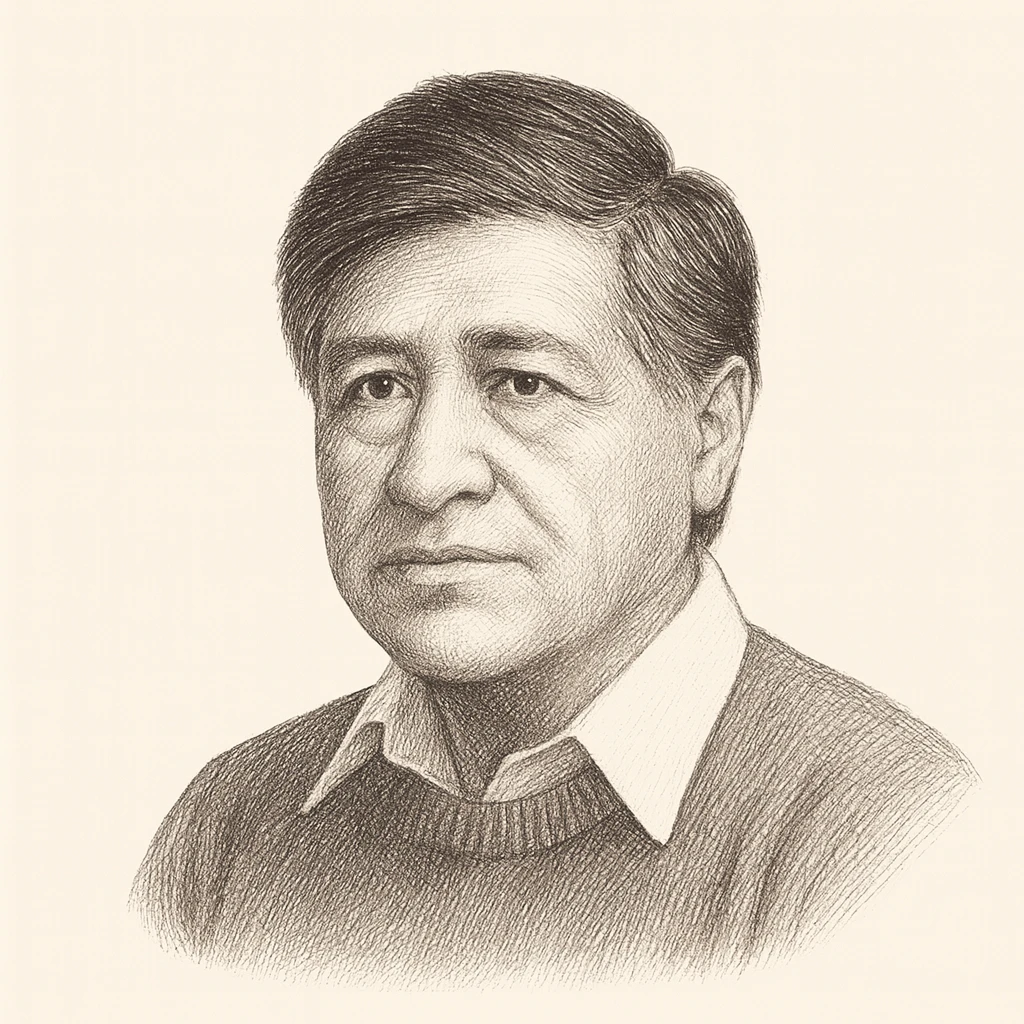
César Chávez was a Latino civil rights and labor leader, organizing California's farm workers into the United Farm Workers union and bringing national attention to the working conditions of migrant agricultural labor. Born to an Arizona farming family that lost their land during the Depression, Chávez experienced migrant work firsthand.
Chávez co-founded the National Farm Workers Association (later UFW) with Dolores Huerta in 1962. His tactics combined labor organizing with civil rights activism and Catholic social teaching. The Delano grape strike (1965-1970), begun by Filipino workers organized by Larry Itliong and joined by Chávez's association, and the nationwide grape boycott brought farm worker conditions to national consciousness. For the boycott, organizers and volunteers gathered in cities across the country to picket grocery stores and other businesses. '¡Sí, se puede!' ('Yes, we can!') became the movement's rallying cry and was later taken up by immigration reform groups and labor unions.
Chávez's methods were explicitly nonviolent, inspired by Gandhi and King. His public fasts drew national attention and were meant as demonstrations of moral seriousness. The UFW won contracts and legal protections, including California's farm labor law recognizing farm workers' right to organize, though the union struggled after these initial victories.
In the union's early years Chávez opposed illegal immigration, arguing that growers used undocumented labor to break strikes and undercut wages. In the late 1970s he tightened personal control of the union; internal purges drove out many longtime organizers and staff, and UFW membership fell sharply in the years that followed.
Chávez's work is associated with farm worker rights, Latino political mobilization, and a model of combining labor, civil rights, and faith-based organizing.
In March 2026 a New York Times investigation reported that Chávez had sexually abused two girls in the 1970s, beginning when they were 12 and 13, and Dolores Huerta, who co-founded the union with him, said he had forced two sexual encounters on her. The United Farm Workers said his conduct was "incompatible with our organization's values" and withdrew from Cesar Chavez Day events, and California renamed the March 31 holiday Farmworkers Day.
César Chávez is associated with Progressive Activist. See the archetype