
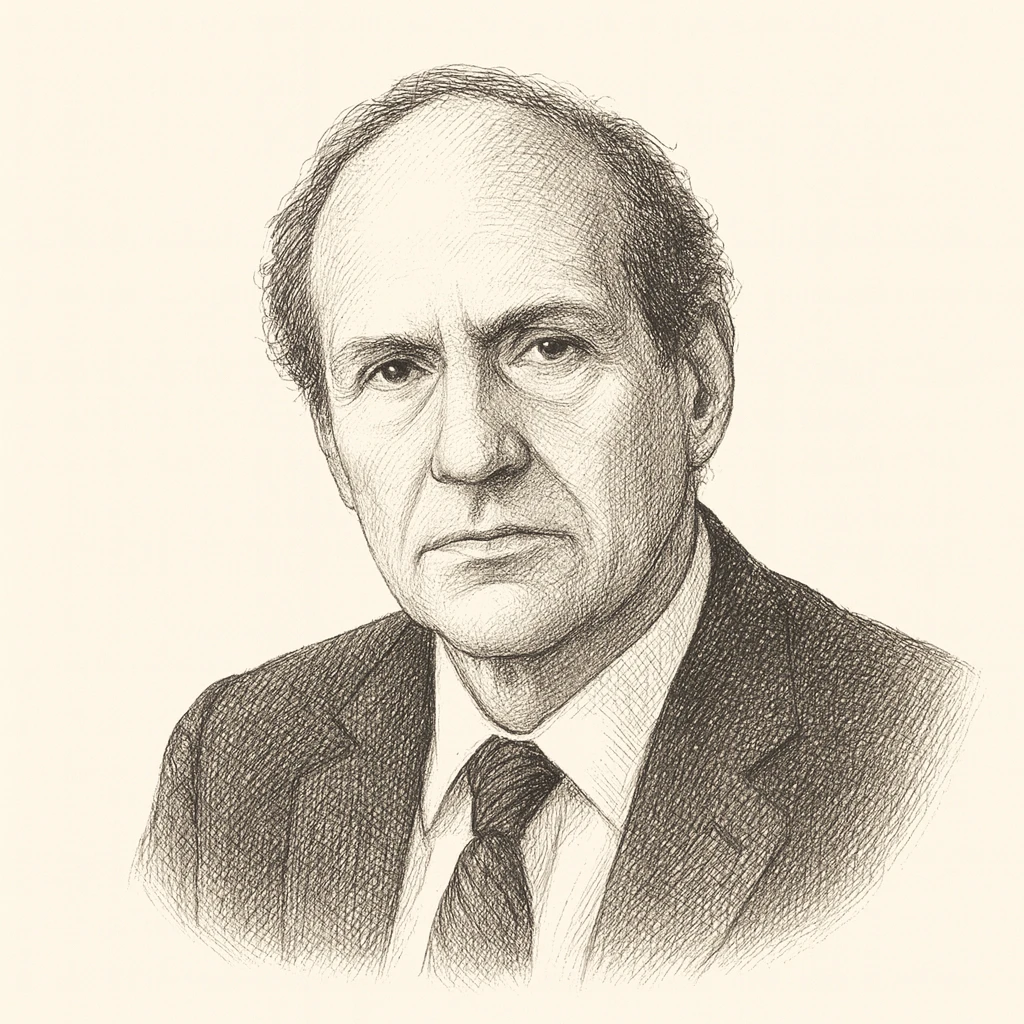
Cass Sunstein is an American legal scholar whose work spans constitutional law, administrative and regulatory law, and the application of behavioral science to public policy. He is most widely associated with the concept of the "nudge," developed with the economist Richard Thaler, which argues that governments and institutions can structure the choices people face—through defaults, framing, and the arrangement of options—to steer behavior toward better outcomes while preserving freedom of choice. Sunstein and Thaler labeled this approach "libertarian paternalism," a deliberately provocative pairing meant to reconcile respect for individual autonomy with the recognition that people are subject to predictable cognitive biases and often benefit from thoughtful "choice architecture."
Sunstein's political thought sits at the intersection of liberalism, pragmatism, and empirical social science. He has argued that regulation should be evaluated through careful cost-benefit analysis and evidence rather than ideology, a view he brought into government during his service in the Obama administration, where he oversaw regulatory review. This experience reinforced his reputation as a proponent of technocratic, welfare-oriented governance—an approach that treats policy as a problem of institutional design informed by how humans actually reason and decide, rather than how idealized rational actors are assumed to behave.
Beyond nudging, Sunstein has written extensively on deliberative democracy, free speech, and the risks that new media and self-selected information environments pose to public reasoning. He has warned about group polarization and the tendency of like-minded people to reinforce one another's views, arguing that a healthy democracy depends on citizens encountering perspectives they did not choose. His constitutional writing has emphasized judicial minimalism—the idea that courts should generally decide cases narrowly and leave broad questions to democratic deliberation.
Sunstein's influence has been considerable and also contested. Behavioral approaches to policy have been adopted by governments and organizations internationally, spawning "nudge units" and a broader field of behavioral public policy. Critics from the left have questioned whether nudging substitutes managerial tinkering for structural reform, while some on the right and among civil libertarians worry that even soft paternalism concentrates too much steering power in the hands of experts and the state. These debates have made Sunstein a central figure in ongoing arguments about the proper scope of government, the authority of expertise, and the balance between individual liberty and collective welfare.
Cass Sunstein is associated with Social Liberal. See the archetype