
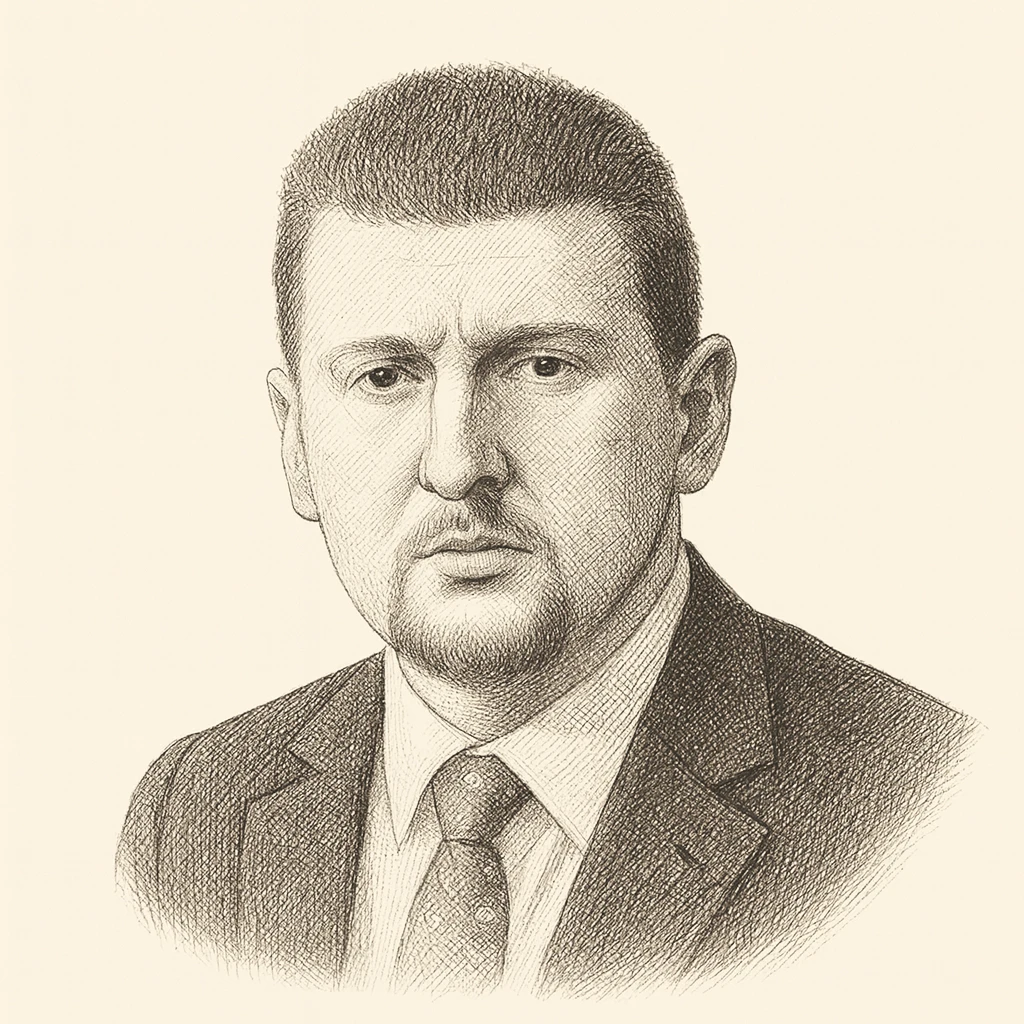
Caleb Maupin is an American journalist, political activist, and organizer identified with the Marxist-Leninist tradition and a militant, anti-imperialist reading of world politics. He came out of the far-left milieu associated with the Workers World Party and the International Action Center before founding the Center for Political Innovation, a small organization through which he promotes his writing, lectures, and organizing. Much of his public profile has been built through commentary for state-linked and alternative media outlets and through prolific online video and lecture output, making him a recognizable voice within a particular corner of American radical politics.
Maupin's political thought centers on anti-imperialism as the organizing lens for understanding global conflict. He frames the United States and the broader West as the principal drivers of war and economic domination, and correspondingly defends states and movements he sees as resisting that order, including Russia, China, Iran, and other governments in tension with Washington. This orientation places him within what critics on the left call "campist" politics: the tendency to divide the world into an imperialist camp and an anti-imperialist camp, and to extend political sympathy to any state opposed to U.S. power. He combines this with a strong emphasis on national sovereignty and a critique of Western liberalism and cultural politics, which distinguishes his socialism from more cosmopolitan or social-democratic currents.
He has advanced a version of what he describes as socialist patriotism, arguing that revolutionary politics in the United States should appeal to working-class national sentiment rather than reject it. This has drawn both interest and sharp criticism, with detractors accusing his synthesis of drifting toward nationalism and of overlapping uncomfortably with elements of the anti-liberal right. Within left debates his uncompromising anti-imperialism wins him admirers, while his defense of authoritarian states is attacked as an abandonment of internationalist principles.
Maupin's influence lies less in formal theoretical innovation than in his role as a popularizer and organizer, channeling older Leninist and third-worldist arguments to online and youth audiences. He exemplifies a contemporary tendency in which anti-imperialism, hostility to Western liberalism, and appeals to national identity are fused into a single political stance, and he serves as a useful reference point for understanding the fault lines running through the twenty-first-century American radical left.
Caleb Maupin is associated with Vanguard Collectivist. See the archetype