
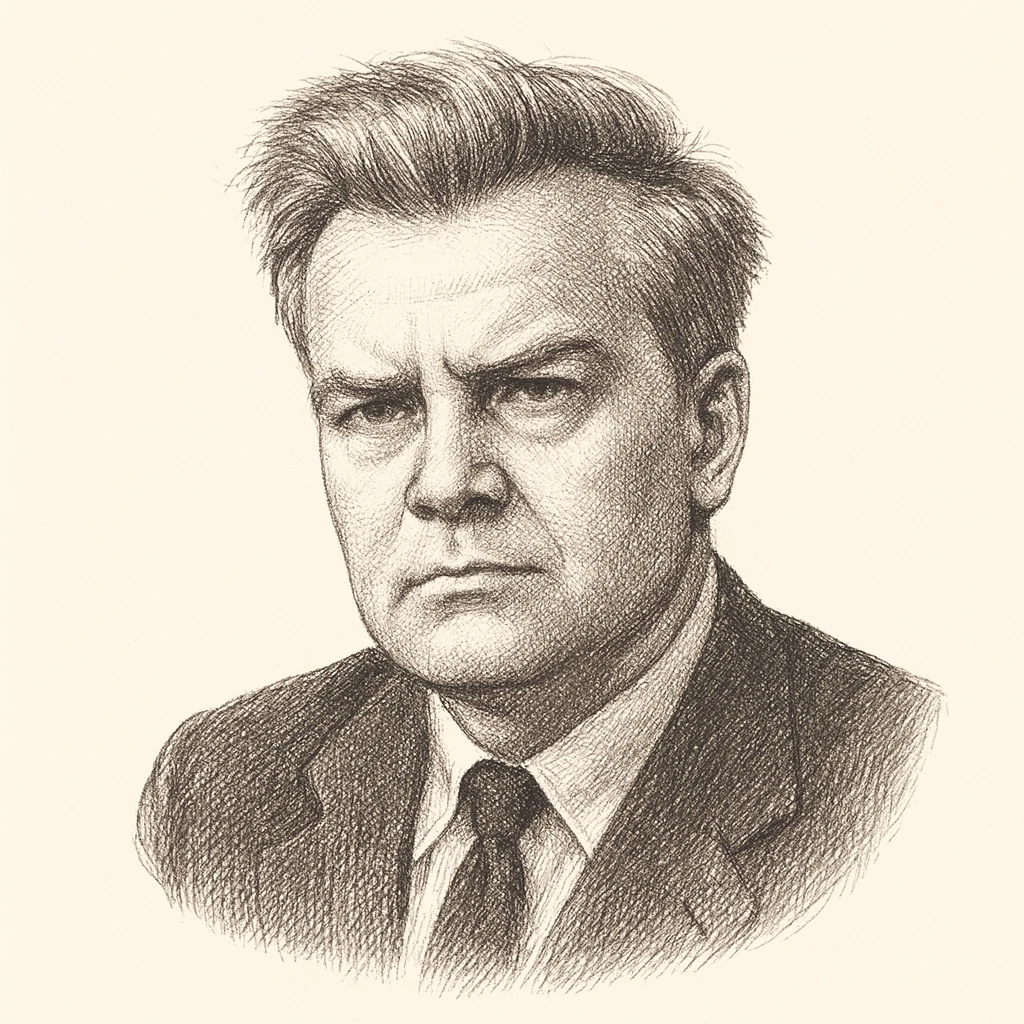
C. Wright Mills (1916–1962) was an American sociologist whose critical, publicly engaged work made him one of the most provocative social thinkers of the mid-twentieth century. Trained in the pragmatist and social-scientific currents of American academic life and influenced by classical European sociology, particularly Max Weber, Mills combined rigorous institutional analysis with a restless moral urgency. He rejected what he saw as the detached, jargon-heavy "grand theory" and hyper-empirical "abstracted empiricism" that dominated postwar sociology, arguing instead for a discipline that confronted questions of power, freedom, and historical change directly.
Mills is best known for his account of the "power elite," the argument that in modern America a small, interconnected group of leaders drawn from the top of the corporate economy, the military establishment, and the executive branch of government held disproportionate command over major national decisions. He contended that this concentration of power operated largely outside meaningful democratic accountability, while the broader public was reduced to a fragmented "mass" and legislative and party politics occupied a middle level rather than the commanding heights. This analysis challenged pluralist assumptions that power in the United States was widely dispersed and balanced among competing groups, and it became a touchstone for later debates over elite versus pluralist theories of power.
Equally influential was his concept of the "sociological imagination," the capacity to connect personal, individual experience to larger historical structures and public issues. For Mills, the task of social inquiry was to help people see how their private circumstances were shaped by impersonal institutions and historical forces, thereby making them more capable of political understanding and action. He also examined the anxieties and dependence of the expanding salaried middle classes, and he wrote critically of Cold War intellectuals and what he regarded as their complacency.
A political radical who stood apart from both Soviet-style communism and orthodox liberalism, Mills sought a revived critical left and engaged with movements and figures beyond the United States, including the Cuban Revolution. His combative, accessible writing and his insistence that social science serve human freedom made him an intellectual precursor and inspiration for the New Left of the 1960s. His ideas continue to inform discussions of elites, democracy, militarism, and the political responsibilities of scholarship.
C. Wright Mills is associated with Progressive Activist. See the archetype