
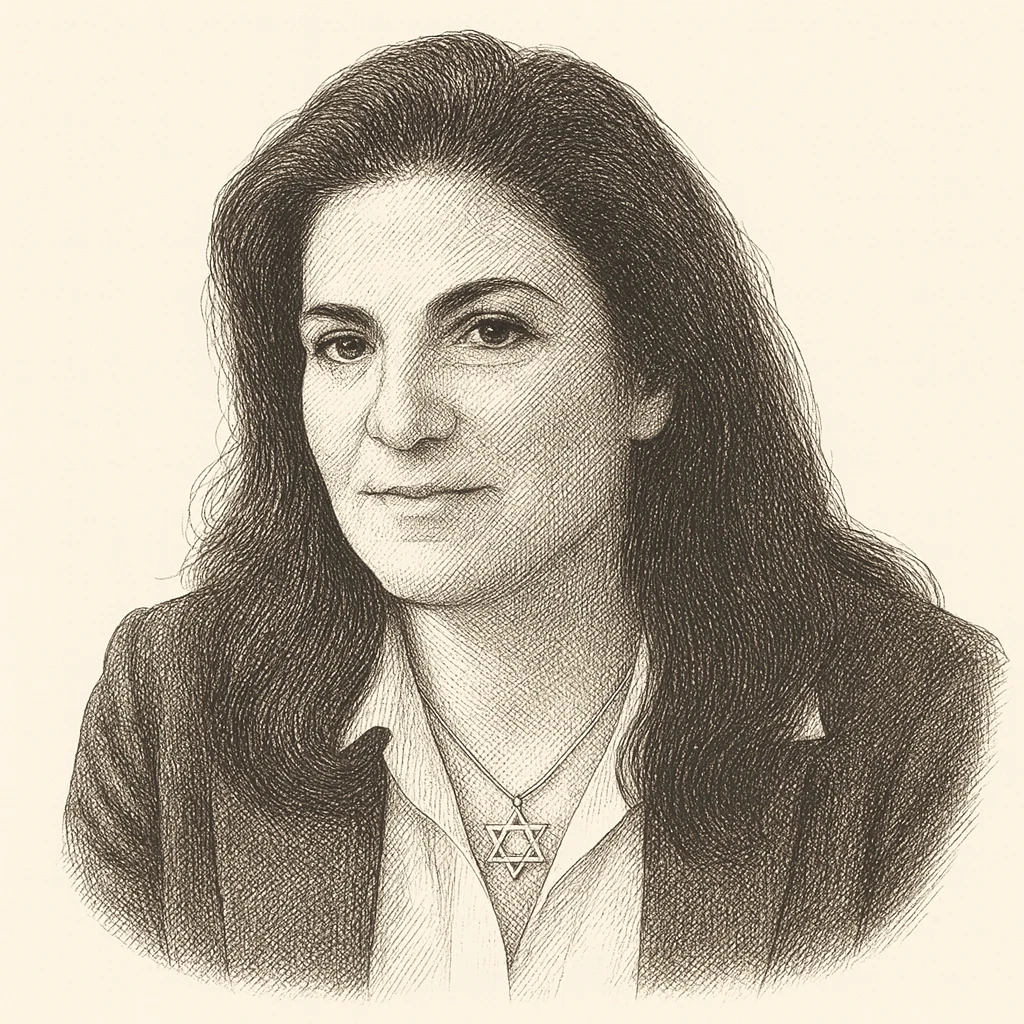
Batya Ungar-Sargon is an American journalist and author known for arguing that the central fault line in contemporary politics is class rather than race or identity. She has worked as an opinion editor at Newsweek and earlier held an editorial role at the Jewish publication The Forward, and she has become a frequent commentator across cable news, podcasts, and online debate programs, where she is often positioned as a heterodox voice willing to challenge mainstream progressive assumptions.
Her thought coalesces around a critique of American media and the professional class. In her book on journalism, she argues that the news industry has been transformed by the rise of a highly educated, affluent workforce whose values and economic interests diverge sharply from those of ordinary Americans, producing coverage skewed toward the preoccupations of a coastal elite. This analysis extends into her broader claim that debates framed in terms of identity often obscure underlying material inequalities, and that a language of social justice can serve the status and moral self-image of the professional class more than it serves the poor.
In her subsequent work on the working class, Ungar-Sargon presents interviews and reporting intended to show that many working Americans hold coherent political priorities—economic security, dignity, national cohesion—that both major parties have neglected. She has become associated with a realignment thesis holding that the Democratic Party has increasingly become the party of the credentialed professional class while a segment of the multiracial working class has drifted toward populist conservatism. Once identifying with the left, she has grown more sympathetic to elements of the populist right, and she has been a notable defender of aspects of Donald Trump's appeal to working-class voters, framing that support as economically rational rather than merely reactionary.
Ungar-Sargon's influence lies in giving accessible, journalistic form to arguments about class dealignment that circulate among both left-populist and national-conservative thinkers. Admirers credit her with foregrounding economic class at a moment when many commentators emphasize identity, though her account has been disputed for understating the role of racism and cultural grievance in populist politics and overstating media homogeneity. She functions as a bridge figure in debates over populism, meritocracy, and the politics of the professional-managerial class.
Batya Ungar-Sargon is associated with Left Nationalist. See the archetype