
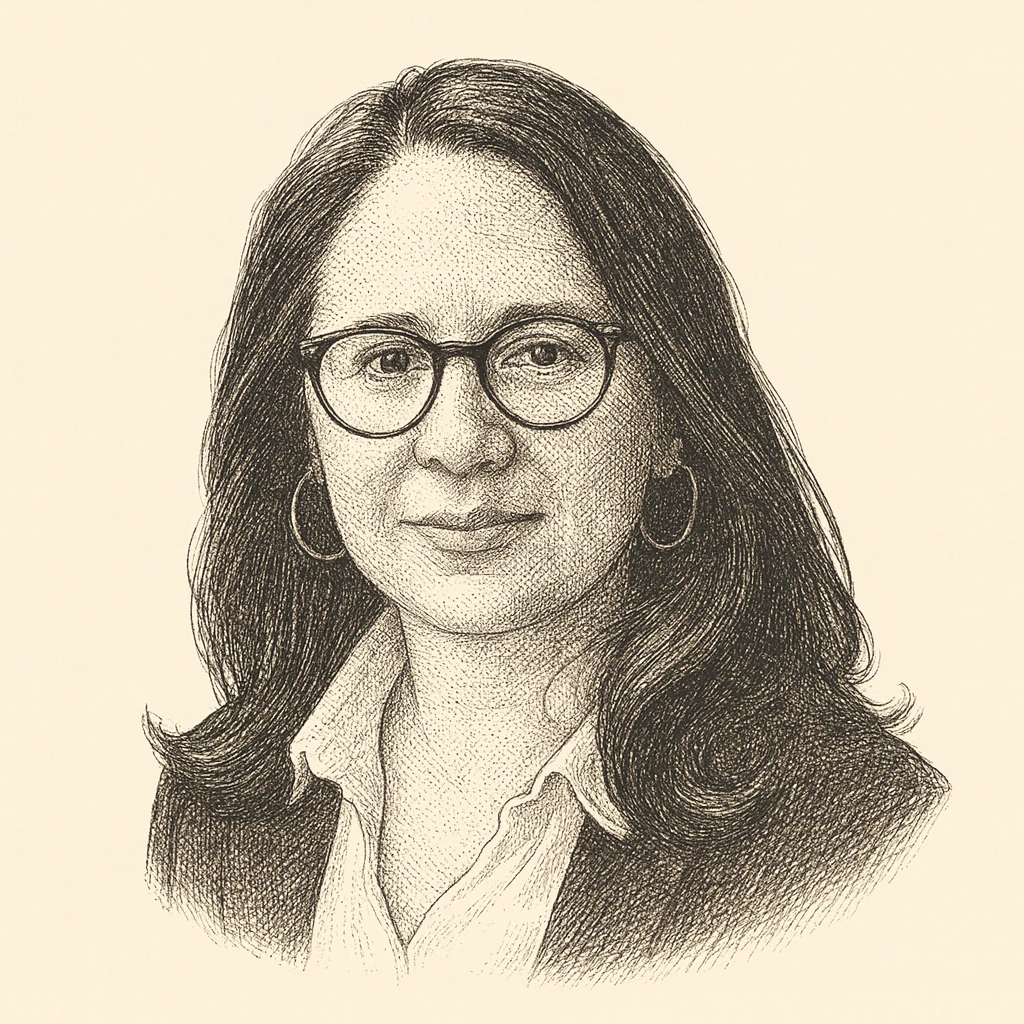
Bari Weiss is an American writer and editor whose political thought centers on the defense of free expression, intellectual pluralism, and resistance to what she characterizes as ideological conformity within elite cultural institutions. Emerging as a public voice through her work as an opinion writer and editor, first at The Wall Street Journal and later at The New York Times, Weiss positioned herself as a critic of what she saw as an intolerant progressivism taking hold in newsrooms, universities, and other centers of cultural authority. Her public resignation from The New York Times, accompanied by an open letter alleging a hostile climate toward dissenting views, became a widely discussed episode in ongoing debates about media bias, self-censorship, and the boundaries of acceptable opinion.
Weiss subsequently founded The Free Press, a subscription-based media venture built around the premise that mainstream outlets had abandoned viewpoint diversity and rigorous debate. Through it she has promoted a broadly "heterodox" sensibility—an outlook that resists partisan labeling and prizes the airing of unpopular or contrarian arguments. Her intellectual affinities align her with a loose network of writers and academics concerned with free speech, opposition to identity-based political frameworks, and criticism of campus and institutional culture. She is frequently associated with what has been called the "intellectual dark web," a term describing thinkers who cast themselves as defenders of open inquiry against orthodoxy.
Politically, Weiss is difficult to place on a conventional left-right axis. She has described her own views as evolving, and her stances combine socially liberal instincts with sharp criticism of the progressive left, particularly on questions of speech, antisemitism, and Israel, about which she has written extensively and defended a strongly pro-Israel position. Her arguments tend to frame contemporary politics as a contest between liberal norms of tolerance and free debate on one side and various forms of illiberalism—whether from the identitarian left or authoritarian tendencies more broadly—on the other.
Weiss's influence lies less in a systematic body of theory than in her role as an organizer of, and prominent voice within, a wider reaction against progressive cultural dominance. Supporters view her as a principled defender of liberal openness and journalistic independence; the dispute is over whether her framing overstates threats to free speech and applies its principles selectively. Either way, she has become a significant figure in debates over the health of American public discourse.
Bari Weiss is associated with Independent Localist. See the archetype