
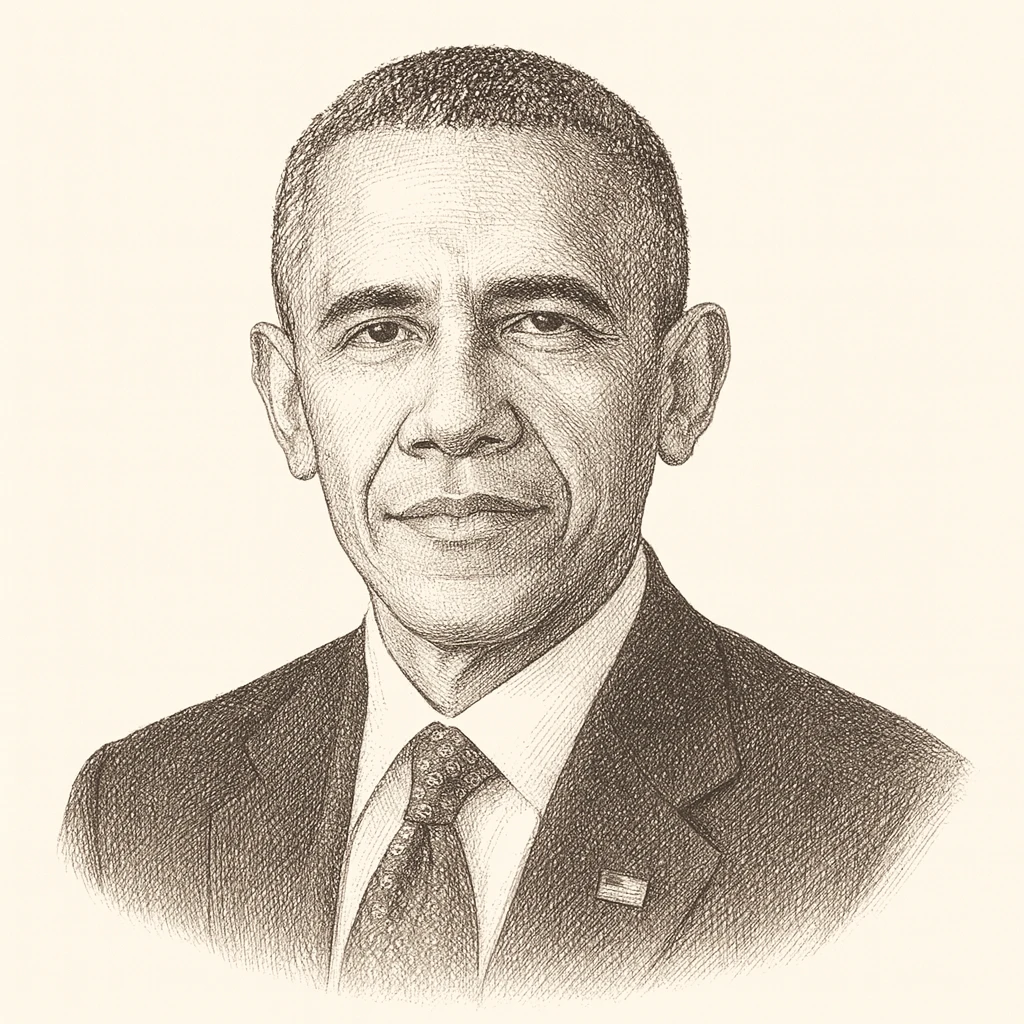
Barack Obama's political thought is defined by a synthesis of pragmatic problem-solving and an aspirational vision of American civic identity. Emerging as a national figure with his 2004 Democratic convention address, he built his appeal around the idea that the divisions of "red" and "blue" America were less fundamental than a shared national creed. This unifying rhetoric, drawing on the language of the civil rights movement and the founding documents, positioned him within a liberal tradition that treats American ideals as unfinished promises to be progressively realized rather than as settled achievements.
In substance, Obama is associated with a centrist, evidence-driven progressivism sometimes described as pragmatic liberalism. He favored working within existing institutions and seeking incremental, negotiated reform over more radical restructuring, a disposition reflected in his signature domestic achievement, the Affordable Care Act, which expanded coverage through a market-based framework rather than a single-payer system. His approach reflected a belief that durable change comes through consensus-building, technocratic competence, and respect for constitutional norms and deliberation. Critics on the left argued this caution blunted the ambition of his agenda, while critics on the right saw overreach; taken together, the two critiques place him near the political center.
His thinking on race and national belonging has been especially influential. Obama consistently framed racial progress as part of a broader American story of gradual moral expansion, emphasizing common ground and mutual obligation rather than confrontation. As the first African American president, his career itself became a text in debates about representation, post-racial optimism, and the persistence of structural inequality. In foreign affairs, he articulated a restrained internationalism—skeptical of large-scale military intervention, favoring diplomacy, multilateral cooperation, and a recalibration of American power after the post-9/11 era.
Obama's lasting influence on political thought lies partly in his rhetorical model of hope and reconciliation and partly in the arguments his presidency provoked. His emphasis on norms, institutions, and deliberative democracy has shaped how many liberals conceive of governance, while the limits of his consensus politics helped fuel subsequent debates within the American left about whether incrementalism is adequate to contemporary challenges. He remains a reference point for discussions of pragmatism, civic nationalism, and the possibilities and constraints of reform within a divided democracy.
Barack Obama is associated with Establishment Progressive. See the archetype